How is Kansas City to make itself sustainable? This blog offers 13 strategies, one posted a day, from experts in different fields.


"Strategy 3: Develop corridors of activity along transit routes
Until recently, transit has proven a hard sell in Greater Kansas City, which prides itself as being among America's least congested cities. But alleviating traffic congestion is not the only, nor is it necessarily the primary, rationale for investments in public transit. Effective public transit enables choice in how we travel. To create a robust regional transit system, we need to recognize the many ways that transit supports other community goals, such as stimulating economic development, managing growth and ensuring community livability.
Living in a sprawled-out city also means spending an inordinate amount of your family's money on transportation. A recent study by the Brookings Institution showed that, even before the recent spike in gasoline prices, the median household in Kansas City spends more each year on transportation than on housing. We also spend an inordinate amount of our day behind the wheel, wasting time that could be used for relaxation, reading, recreation or visiting with friends and family."
Read the full story: Imagine KC’s 13-part blog series on strategies for regional sustainability

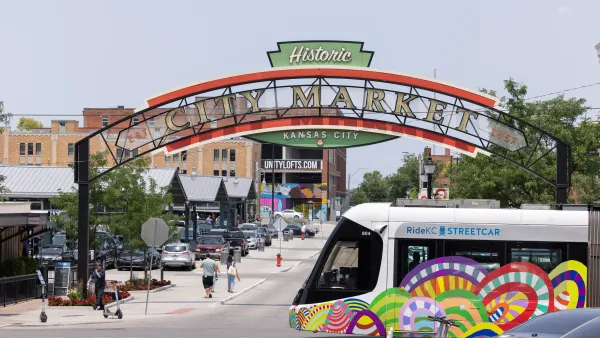
How Kansas City quietly built one of the best streetcars in America
A detailed and completely unbiased history of one of American transit's greatest comebacks.

Swapping your gas car for an EV is greener than keeping it, research shows
An EV repays the 'carbon debt' caused by building it after 4,400 miles.

Climate change could double household water costs in some cities, study finds
New research suggests that climate change-related stressors are straining municipal water systems.

Planetizen Federal Action Tracker
A weekly monitor of how Trump’s orders and actions are impacting planners and planning in America.

‘Going backwards:’ Baltimore mayor, students rally against state's transit funding plan
Maryland's proposed six-year plan provides no funding for Baltimore’s BMORE bus program and reduces its road maintenance funding.
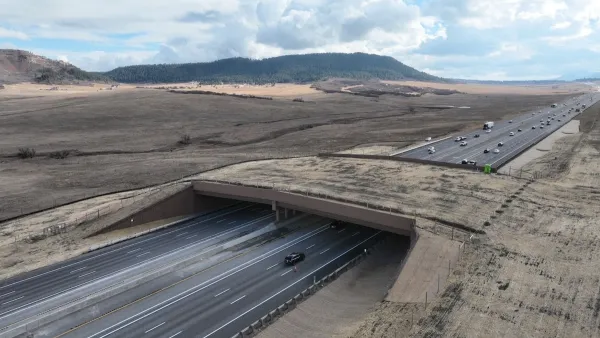
Record-breaking wildlife overpass in Colorado brings 91% reduction in animal collisions
Prior to the overpass, vehicles were hitting one deer per day on Colorado’s Interstate 25.

Mamdani sent nearly 6,000 pied-à-terre tax warnings to homes that didn’t qualify
A judge has ordered the administration to cancel thousands of pied-à-terre tax notices after it sent 35% of them erroneously.

Detroit to transform waterfront with $2.2 billion investment
Developers will convert about 18 acres of unused parking lot space into civic spaces.

‘Going backwards:’ Baltimore mayor, students rally against state's transit funding plan
Maryland's proposed six-year plan provides no funding for Baltimore’s BMORE bus program and reduces its road maintenance funding.

FREE Course: Walkable City 1: Why Walkability?
After describing his path towards focusing on walkability as the essence of good planning, Jeff Speck marches through his five principal reasons for making more walkable places.
Reinventing Malls: Planning Alchemy—Turning Gray Fields Into Gold
The course focuses on the opportunities and imperatives that shape reinvention of mall sites.

City of Thousand Oaks
City of Wisconsin Rapids
Harvard University Graduate School of Design
The Architects Foundation
University of Cincinnati Online
Northern Illinois Transit Authority (NITA)
The Pocatello Development Authority
The Urban Renewal Agency of the City of Pocatello