With unprecedented demand, Amtrak is hampered by years of neglect. The agency is unable to handle all the new customers resulting from high gas prices and plane tickets and is struggling to replace aged equipment and pay for increased fuel costs.


"Amtrak set records in May, both for the number of passengers it carried and for ticket revenues - all the more remarkable because May is not usually a strong travel month.
But the railroad, and its suppliers, have shrunk so much, largely because of financial constraints, that they would have difficulty growing quickly to meet the demand. Many of the long-distance trains are already sold out for some days this summer
The railroad carried about 25 million passengers last year and may hit 27 million this year"
"We're starting to bump up against our own capacity constraints," said R. Clifford Black, a spokesman for Amtrak.
"The problem is that rail has shriveled. The number of "passenger miles" traveled on intercity rail has dropped by about two-thirds since 1960, and the companies that build rail cars and locomotives have also shrunk, making it hard to expand.
Oil costs hurt Amtrak, too. Fuel is projected to reach 11 percent of Amtrak's budget this year, up from 6 percent in 2004. The railroad is not radically more energy-efficient than other means of travel. Amtrak can move a passenger a mile with 17.4 percent less fuel than a passenger car can, and about 32.9 percent less than an airline can, according to the Oak Ridge National Laboratory."
Thanks to Mark Boshnack
FULL STORY: Travelers Shift to Rail as Cost of Fuel Rises

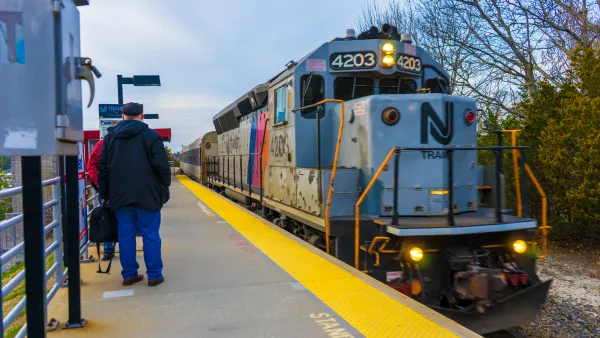
Amtrak not solely to blame for New Jersey commuter rail's unreliability, report finds
A new study from the Garden State Initiative found that NJ Transit’s budget grew 20% across a 4 year period, but reliability declined significantly over the same period.
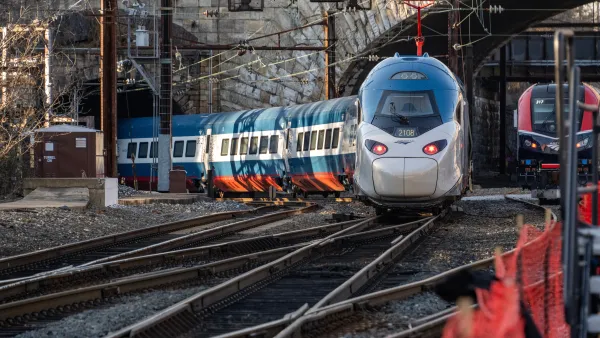
Amtrak’s $6 billion tunnel project moves closer to a faster Northeast Corridor
The Baltimore & Potomac Tunnel Replacement Program is Amtrak's largest-ever single infrastructure investment, and will pave the way for more reliable passenger rail service between Baltimore, Washington and Virginia.
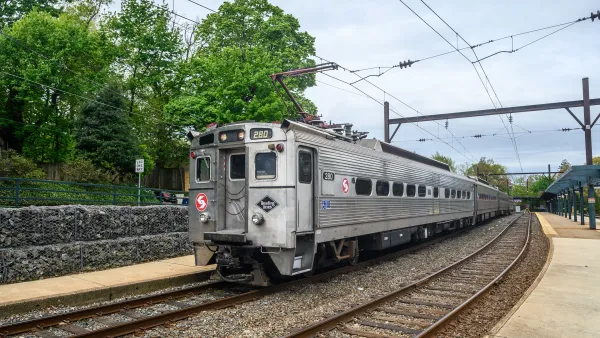
SEPTA receives $13.3 million to replace fire-prone train cars
The transit agency said it could be seven years before the replacement train cars come to Philadelphia.

Planetizen Federal Action Tracker
A weekly monitor of how Trump’s orders and actions are impacting planners and planning in America.

The state-sanctioned urbicide of Austin
People don’t kill cities. Freeways do.

US to reduce Colorado River water deliveries to Mexico
A new Colorado Treaty amendment reduces Mexico’s Colorado River water allocation by 250,000 acre feet.

5 New England states march closer to 800 megawatt wind energy project
Securing federal approval for the project may be complicated under the Trump administration, which has historically been hostile towards domestic wind power.

Baltimore to break ground on $50 million Transit Priority Project
The project will bring faster bus trips, safer streets and better bike connections to Baltimore.

Airbnb launches $250 million 'last-dollar financing' housing accelerator, makes first investment in Austin
The company will put $6.4 million towards affordable housing development in Texas’ capital.

FREE Course: Walkable City 1: Why Walkability?
After describing his path towards focusing on walkability as the essence of good planning, Jeff Speck marches through his five principal reasons for making more walkable places.
Reinventing Malls: Planning Alchemy—Turning Gray Fields Into Gold
The course focuses on the opportunities and imperatives that shape reinvention of mall sites.

Eagle County Government
Harvard University Graduate School of Design
Nashville Planning Department
The Architects Foundation
University of Cincinnati Online
The Pocatello Development Authority
The Urban Renewal Agency of the City of Pocatello
Journal of the American Planning Association