205,800 passengers have boarded the St. Paul to Chicago line, well above initial MDOT projections.


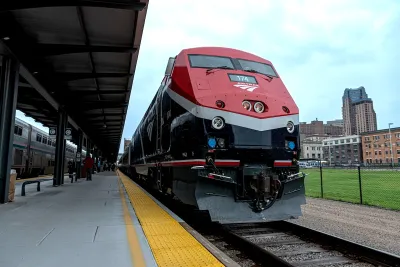
The Amtrak Borealis line, which runs from St. Paul to Chicago, surpassed ridership expectations during its first year, serving over 200,000 passengers as of April 30 (May numbers are yet to be finalized).
As Tm Harlow reports in The Minnesota Star Tribune, original estimates projected just up to 135,000 annual riders. But the line, which connects the two cities via a 7.5 hour daily trip, has proven much more popular. “In Minnesota, Borealis traffic by station, including total boardings and getting off the train, was 106,581 in St. Paul, 11,336 in Red Wing and 11,372 in Winona, according to Amtrak.”
Another Minnesota Amtrak line, the Empire Builder, also saw a growth in ridership, signaling strong demand for intercity trains in the region. Advocacy group All Aboard Minnesota is pushing for extending the Borealis line to St. Cloud, Detroit Lakes, and the Fargo-Moorhead area, as well as advocating for a Twin Cities-to-Kansas City line that would connect to other national routes.
FULL STORY: Amtrak’s Borealis beat ridership expectations in first year. Minnesota wants to build on its success.

Amtrak Borealis Line Celebrates 100,000 Passengers
The St. Paul-to-Chicago train served more than 22,000 passengers in August.

New Chicago-to-St. Paul Amtrak Line Makes Profit in First Months
The Borealis line provided more than 18,500 rides since its first trips in May.

The Subversive Car-Free Guide to Trump's Great American Road Trip
Car-free ways to access Chicagoland’s best tourist attractions.

The state-sanctioned urbicide of Austin
People don’t kill cities. Freeways do.

US to reduce Colorado River water deliveries to Mexico
A new Colorado Treaty amendment reduces Mexico’s Colorado River water allocation by 250,000 acre feet.

New Jersey’s second-largest city bans standalone data centers
Jersey City will continue to allow co-location facilities, such as those meant for research institutions that store their own data.

Amtrak not solely to blame for New Jersey commuter rail's unreliability, report finds
A new study from the Garden State Initiative found that NJ Transit’s budget grew 20% across a 4 year period, but reliability declined significantly over the same period.

EPA erases limits on planet-warming pollution from power plants
Under Monday’s plan, power plants would still have some limits on how much mercury, arsenic and other contaminants they can emit.

Phoenix announces new on-demand transit service, more frequent RAPID buses
Both new services will launch in October, and are part of Phoenix's Project Effective Access Solutions for Easing Congestion.

FREE Course: Walkable City 1: Why Walkability?
After describing his path towards focusing on walkability as the essence of good planning, Jeff Speck marches through his five principal reasons for making more walkable places.
Reinventing Malls: Planning Alchemy—Turning Gray Fields Into Gold
The course focuses on the opportunities and imperatives that shape reinvention of mall sites.

Eagle County Government
Harvard University Graduate School of Design
Nashville Planning Department
The Architects Foundation
University of Cincinnati Online
The Pocatello Development Authority
The Urban Renewal Agency of the City of Pocatello
Journal of the American Planning Association