Los Angeles County is leading a coordinated effort to help fire-impacted communities rebuild with resilience by providing recovery resources, promoting fire-wise design, and aligning reconstruction with broader sustainability and climate goals.



In the aftermath of the Eaton and Palisades fires, Los Angeles County is playing a central role in recovery efforts, working across multiple jurisdictions and in coordination with cities, state and federal agencies, and local organizations. The County has activated numerous task forces addressing a wide range of needs — from debris removal and temporary housing to infrastructure and long-term rebuilding — and launched one-stop permitting centers and a comprehensive recovery website to guide residents. With diverse conditions across affected areas like Altadena, Sunset Mesa, and the Santa Monica Mountains, the County is taking a tailored, place-based approach to recovery.
The Chief Sustainability Office (CSO), led by Climate Resilience Officer Matthew Gonser, is spearheading efforts to integrate fire resilience into rebuilding plans through participation in the Rebuilding and Long-Term Recovery Task Force. The County is preparing a Resilient Rebuild Resource Guide that will provide property owners and design teams with guidance on sustainable, fire-wise building strategies, incentives, and landscape design tips. Gonser emphasizes the alignment between rebuilding strategies and the County’s broader climate and sustainability goals, noting that practices like building hardening and defensible space not only help individual properties but significantly improve neighborhood-scale resilience.
Key lessons from these fires point to the urgent need for smarter planning and construction in fire-prone areas. Embers, not just flames, are the leading cause of building ignition during wildfires, making structural materials and landscape design critical. Gonser highlights that while new state fire hazard maps will require stricter codes in some areas, others — like parts of the Eaton Fire zone — may not be covered unless policy changes are made. Moving forward, prevention strategies, property retrofits, and coordinated planning across entire communities will be essential to reduce future wildfire risks and support long-term regional resilience.
Read the full story: Rebuilding With Resilience


Report Outlines Strategies for Resilient Wildfire Recovery in LA
Project Recovery offers a roadmap for rebuilding more sustainable and climate-resilient communities after wildfires and other disasters.
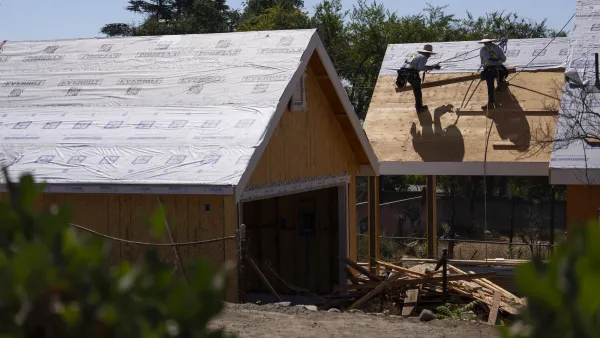
One Year After the LA Fires, Just 13% of Damaged Homes Have a Rebuilding Permit
After a slow start, permitting is starting to pick up.
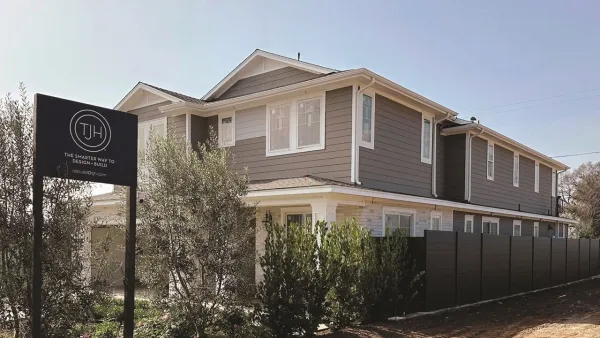
Los Angeles Issues First Occupancy Permit in Pacific Palisades Since Wildfires
Permits in the Palisades are being issued at nearly three times the typical rate as before the wildfires.

Planetizen Federal Action Tracker
A weekly monitor of how Trump’s orders and actions are impacting planners and planning in America.

California plans to bury El Niño’s downpour
If the state plays its cards right, it may be able to store a billion acre-feet of El Niño’s water in aquifers.

Chicago breaks ground on $3 billion megadevelopment
The new neighborhood, titled Foundry Park, will one day host 3,700 residences.

Satanic Place Names
From streams and lakes to valleys and canyons, I mapped more than 1,000 places named after the Devil.

California High-Speed Rail Authority CEO resigns after $600,000 scandal
Under Ian Choudri, the authority used taxpayer dollars to fund first class flights and trips to nightclubs.

Want to study the Missouri River? Soon, you may need unanimous approval from 10 states
Legislation would require 10 governors’ permission to study or build projects moving water outside the basin.

FREE Course: Walkable City 1: Why Walkability?
After describing his path towards focusing on walkability as the essence of good planning, Jeff Speck marches through his five principal reasons for making more walkable places.
Reinventing Malls: Planning Alchemy—Turning Gray Fields Into Gold
The course focuses on the opportunities and imperatives that shape reinvention of mall sites.

City of Rosemead
Rutgers University, Edward J. Bloustein School of Planning and Public Policy
One Hundred Miles
Hunter College, City University of New York (CUNY)
The Architects Foundation
University of Cincinnati Online
City of Cambridge
Montrose County
The Pocatello Development Authority