According to preliminary data, crashes and injuries dropped dramatically within the city’s new congestion relief zone.


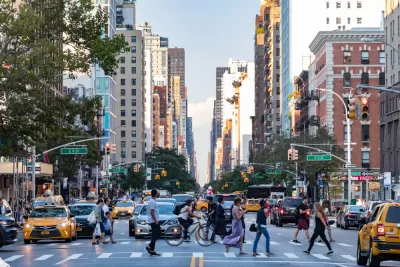
New York City’s new congestion pricing program is reducing congestion and also making streets safer, with data gathered by Streetsblog NYC indicating a 51 percent drop in crash-related injuries in the program’s first 12 days compared to the same time period the prior year. “According to just-updated city statistics, in the first 12 days of congestion pricing — Jan. 6 through Jan. 17, which includes 10 business days and one weekend — 37 people were injured in 90 total reported crashes, down from 76 injuries in 199 crashes over the same 12-day period in 2024.”
As Gersh Kuntzman explains, “It's obviously too early for officials to take a victory lap — a safe one, that is — but a spokesperson for the Department of Transportation said the agency was ‘pleased’ by Streetsblog's number-crunching, though added, ‘It’s too soon to draw conclusions.’”
Read the full story: Congestion Relief Zone is Also a CRASH Relief Zone: Data
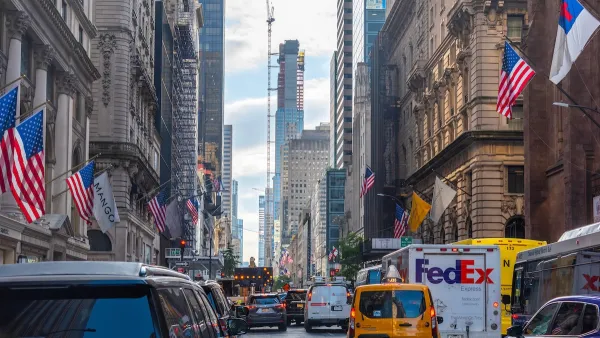
NYC Congestion Pricing: Still Working
10 million fewer vehicles entered the congestion pricing zone in the first six months of the program than last year, while pedestrian fatalities are at ‘historic lows.’
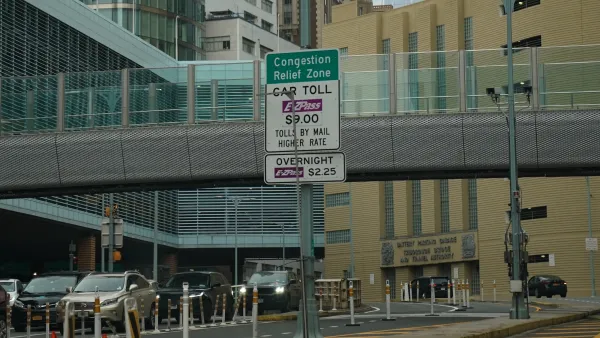
Judge Rules to Keep NYC Congestion Pricing, Ending Trump's Legal Challenge
The decision likely deals a fatal blow to efforts to end the program, but the Trump administration says it will explore other avenues for reversing the congestion pricing scheme.
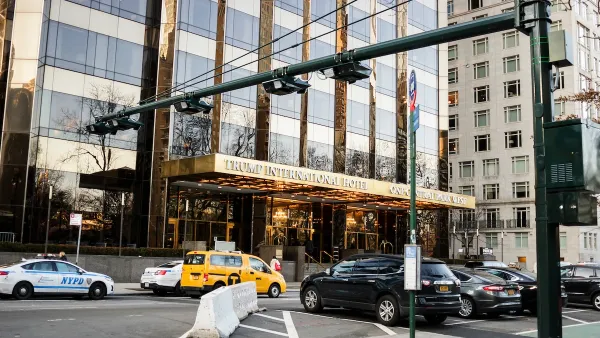
Judge Extends NYC Congestion Pricing Through at Least June 9
A federal judge halted the Trump administration’s effort to kill the program, which remains in limbo as a lawsuit filed by the MTA moves forward.

Planetizen Federal Action Tracker
A weekly monitor of how Trump’s orders and actions are impacting planners and planning in America.

California plans to bury El Niño’s downpour
If the state plays its cards right, it may be able to store a billion acre-feet of El Niño’s water in aquifers.

Desperate measures: Advocates weigh draining Lake Powell to fill Colorado River
Draining the reservoir could reduce evaporation losses by a couple hundred thousand acre-feet.

In Texas, data centers are swallowing promised parkland
Residents who moved to Taylor, Texas for a rural community now have to contend with three data centers in their backyard.

How a Chicago-sized wind farm beat the odds and powered on
The project spanned five presidential administrations and a standoff with a U.S. military base.

MTA gives itself 30 days to transform pit into basketball court
The site has been under construction since 2022; the city originally estimated it would finish the court in 2024.

FREE Course: Walkable City 1: Why Walkability?
After describing his path towards focusing on walkability as the essence of good planning, Jeff Speck marches through his five principal reasons for making more walkable places.
Reinventing Malls: Planning Alchemy—Turning Gray Fields Into Gold
The course focuses on the opportunities and imperatives that shape reinvention of mall sites.

City of Rosemead
Rutgers University, Edward J. Bloustein School of Planning and Public Policy
One Hundred Miles
Hunter College, City University of New York (CUNY)
The Architects Foundation
University of Cincinnati Online
City of Cambridge
Montrose County
The Pocatello Development Authority