The queue to apply for California’s new e-bike incentive program, which only offered 1,500 vouchers, reached 100,000 people.


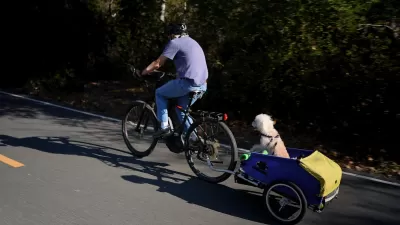
The California Air Resources Board (CARB)’s new e-bike incentive program launched with “no technical issues,” but the 1,500 vouchers were snapped up within minutes due to high demand, according to the agency.
As Melanie Curry explains in Streetsblog California, the long-awaited program only made 1,500 vouchers available, while the queue on the CARB website at one point reached 100,000. “People who tried to apply were frustrated that there was a lot of waiting, with little communication about that wait, and were surprised that the window to apply closed abruptly about forty minutes into the launch, leaving many people out.”
As Curry notes, CARB could have communicated more effectively about the timing of the application and the documentation required. However, the larger problem is the small number of vouchers available. Demand for e-bikes is encouraging — and the state could support it by expanding the program. “Note as well that California invests far more in incentives for electric cars than in cheaper, cleaner, more efficient, healthier, and much less damaging e-bikes.”
FULL STORY: E-bike Incentive Launch a “Mess”?

Washington’s E-Bike Rebate Rollout Shows Success for $1,200 Incentive, Low Redemption Rate for $300 Vouchers
The state’s first e-bike rebate program offers some valuable lessons for future rollouts.
California Cuts Funding for E-bike Rebates
The state cancelled an upcoming round of applications for the wildly popular e-bike incentive program that provided up to $2,000 toward the cost of an electric bike.

Pilot Project Offers E-Bike Rebates in New York State
The program will start in the Village of Ossining with plans to expand in the greater Hudson River region.

Planetizen Federal Action Tracker
A weekly monitor of how Trump’s orders and actions are impacting planners and planning in America.

The state-sanctioned urbicide of Austin
People don’t kill cities. Freeways do.

US to reduce Colorado River water deliveries to Mexico
A new Colorado Treaty amendment reduces Mexico’s Colorado River water allocation by 250,000 acre feet.

5 New England states march closer to 800 megawatt wind energy project
Securing federal approval for the project may be complicated under the Trump administration, which has historically been hostile towards domestic wind power.

Baltimore to break ground on $50 million Transit Priority Project
The project will bring faster bus trips, safer streets and better bike connections to Baltimore.

Airbnb launches $250 million 'last-dollar financing' housing accelerator, makes first investment in Austin
The company will put $6.4 million towards affordable housing development in Texas’ capital.

FREE Course: Walkable City 1: Why Walkability?
After describing his path towards focusing on walkability as the essence of good planning, Jeff Speck marches through his five principal reasons for making more walkable places.
Reinventing Malls: Planning Alchemy—Turning Gray Fields Into Gold
The course focuses on the opportunities and imperatives that shape reinvention of mall sites.

Eagle County Government
Harvard University Graduate School of Design
Nashville Planning Department
The Architects Foundation
University of Cincinnati Online
The Pocatello Development Authority
The Urban Renewal Agency of the City of Pocatello
Journal of the American Planning Association