The agency will lose hundreds of millions in projected congestion pricing revenue, forcing cuts to expansion plans.



As the ripple effects of the delay of New York City’s congestion pricing program become more clear, the head of the New York Metropolitan Transportation Authority (MTA) says the agency’s budget could take a hit of $800 million.
According to an article by Dan Zukowski in Smart Cities Dive, the loss could delay equipment purchases, raise maintenance costs for existing, aging equipment, and force MTA to pay thousands of employees from the operations rather than capital budget. “As part of the pause, if cash flow is required, the MTA would need to issue billion dollars of debt earlier in the financial plan than previously planned,” said MTA deputy CFO Jai Patel.
MTA CFO Kevin Willens added, “The impact of the congestion pricing pause has not yet been incorporated into the budget beyond 2024 under the assumption either that the pause will be lifted or the replacement revenue will be provided.” If the program is never implemented, the MTA’s future budget will be significantly impacted.
More on New York City’s congestion pricing program:
- Tri-State Economies to Lose Billions From Congestion Pricing Pause
- NYC Traffic Moving At Under 7 MPH, Congestion Pricing Remains Suspended
- New York MTA Upholds Pause on Congestion Pricing, Scales Back Projects
- Congestion Pricing Compromise?
- NYC Congestion Pricing Postponed Indefinitely in 'Stunning Reversal'
FULL STORY: New York transit chief paints grim picture for MTA without congestion pricing revenue

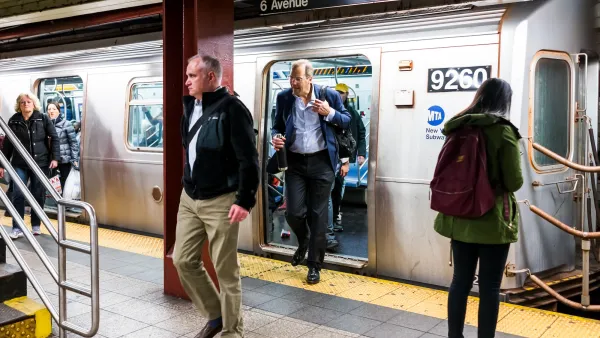
NYC to Upgrade 1/3 of its Subway Car Fleet
The MTA is seeking proposals for up to 2,390 new subway cars to upgrade its aging fleet.
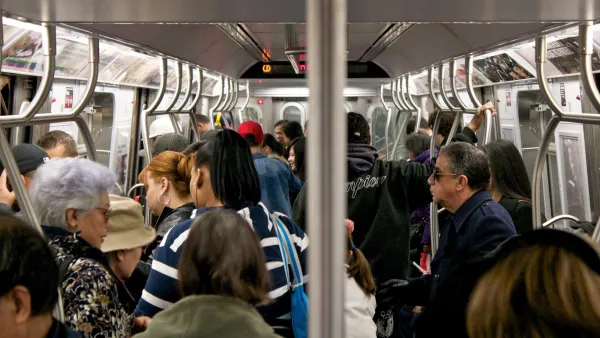
New York MTA Seeks New Funding Sources
The agency plans to negotiate new options for operational funding as farebox and toll revenue lingers far below pre-pandemic levels.
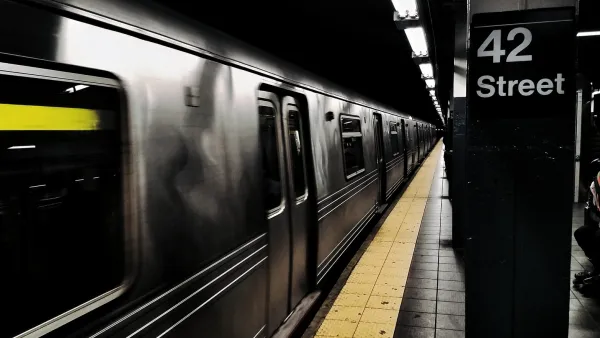
Op-Ed: NYC Transit Service Cuts Wrong Way to Bolster Budget
The agency could see an influx of capital funds from congestion pricing, but cuts to bus and rail service to make up for budget shortfalls would result in long-term setbacks to the system.

The state-sanctioned urbicide of Austin
People don’t kill cities. Freeways do.

US to reduce Colorado River water deliveries to Mexico
A new Colorado Treaty amendment reduces Mexico’s Colorado River water allocation by 250,000 acre feet.

New Jersey’s second-largest city bans standalone data centers
Jersey City will continue to allow co-location facilities, such as those meant for research institutions that store their own data.

Amtrak not solely to blame for New Jersey commuter rail's unreliability, report finds
A new study from the Garden State Initiative found that NJ Transit’s budget grew 20% across a 4 year period, but reliability declined significantly over the same period.

EPA erases limits on planet-warming pollution from power plants
Under Monday’s plan, power plants would still have some limits on how much mercury, arsenic and other contaminants they can emit.

Phoenix announces new on-demand transit service, more frequent RAPID buses
Both new services will launch in October, and are part of Phoenix's Project Effective Access Solutions for Easing Congestion.

FREE Course: Walkable City 1: Why Walkability?
After describing his path towards focusing on walkability as the essence of good planning, Jeff Speck marches through his five principal reasons for making more walkable places.
Reinventing Malls: Planning Alchemy—Turning Gray Fields Into Gold
The course focuses on the opportunities and imperatives that shape reinvention of mall sites.

Eagle County Government
Harvard University Graduate School of Design
Nashville Planning Department
The Architects Foundation
University of Cincinnati Online
The Pocatello Development Authority
The Urban Renewal Agency of the City of Pocatello
Journal of the American Planning Association