New York City’s congestion pricing program, suspended by Governor Hochul earlier this year, would have pumped $12 billion into local projects and jobs.



Companies in the tri-state region surrounding New York City will lose about $12 billion in MTA contracts and 100,000 jobs due to Governor Hochul’s suspension of New York City’s congestion pricing program, a new analysis reveals.
As Gersh Kuntzman points out in an article for Streetsblog NYC, roughly $12 billion in capital investments that would have been funded through congestion pricing revenue was set to pay for contracts with private-sector companies throughout the region. “Those companies have done well, and provided thousands of well-paying jobs, in the prior decade of MTA capital expenditures, and would likely have tapped into the 2020-24 capital plan that was partly funded by congestion pricing, but is now being slashed.”
Paradoxically, “Many of the biggest recipients of MTA contracts over the past decades are in districts represented by avowed congestion pricing opponents.” A senior policy advisor for Reinvent Albany, the group that conducted the analysis, “was surprised that so many lawmakers object to a plan to fund MTA capital improvements that end up benefitting so many of their constituents and local businesses.”
FULL STORY: Hochul’s Congestion Pricing ‘Pause’ Will Cost Area Companies Billions

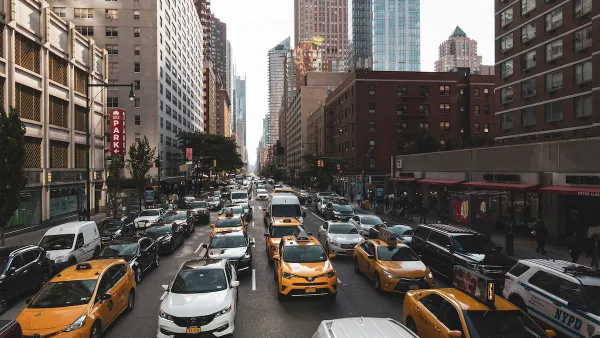
Congestion Pricing: New York City’s Next Hero
Big problems need big solutions.
Judge Extends NYC Congestion Pricing Through at Least June 9
A federal judge halted the Trump administration’s effort to kill the program, which remains in limbo as a lawsuit filed by the MTA moves forward.
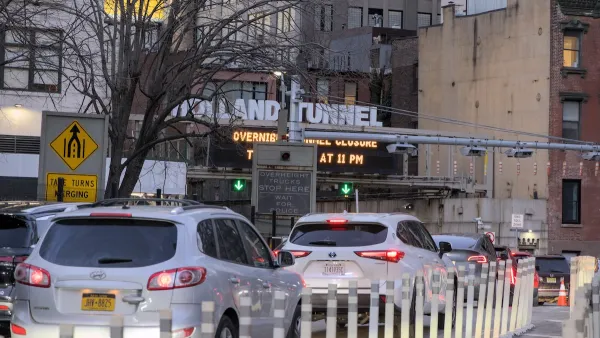
NYC Congestion Pricing Continues to Show Positive Results
While the Trump administration attempts to revoke the program’s federal approval, congestion pricing continues to reduce traffic, speed up bus travel times, and improve air quality in Manhattan.

Planetizen Federal Action Tracker
A weekly monitor of how Trump’s orders and actions are impacting planners and planning in America.

The state-sanctioned urbicide of Austin
People don’t kill cities. Freeways do.

US to reduce Colorado River water deliveries to Mexico
A new Colorado Treaty amendment reduces Mexico’s Colorado River water allocation by 250,000 acre feet.

5 New England states march closer to 800 megawatt wind energy project
Securing federal approval for the project may be complicated under the Trump administration, which has historically been hostile towards domestic wind power.

Baltimore to break ground on $50 million Transit Priority Project
The project will bring faster bus trips, safer streets and better bike connections to Baltimore.

Airbnb launches $250 million 'last-dollar financing' housing accelerator, makes first investment in Austin
The company will put $6.4 million towards affordable housing development in Texas’ capital.

FREE Course: Walkable City 1: Why Walkability?
After describing his path towards focusing on walkability as the essence of good planning, Jeff Speck marches through his five principal reasons for making more walkable places.
Reinventing Malls: Planning Alchemy—Turning Gray Fields Into Gold
The course focuses on the opportunities and imperatives that shape reinvention of mall sites.

Eagle County Government
Harvard University Graduate School of Design
Nashville Planning Department
The Architects Foundation
University of Cincinnati Online
The Pocatello Development Authority
The Urban Renewal Agency of the City of Pocatello
Journal of the American Planning Association