Congestion is making driving in the city slower than ever.


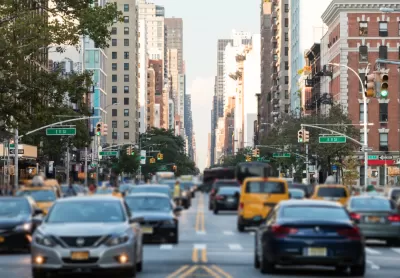
On the heels of New York Governor Kathy Hochul’s decision to suspend the city’s congestion pricing program, traffic in Midtown Manhattan “is moving slower than ever,” according to an article by David Meyer in Streetsblog NYC.
“Average speeds in the CBD for 2024 dropped below 7 miles per hour last month, according to taxi and for-hire vehicle speed data analyzed by former city Traffic Commissioner Sam ‘Gridlock Sam’ Schwartz.” According to Schwartz, “Traffic volumes are about 2 to 3 percent higher than they were in 2019, and truck volumes are about 10 to 15 percent higher.”
Schwartz says traffic in the CBD moved at 6.8 miles per hour, while midtown traffic moved at 4.6 mph, a drop of 25 percent since 2010. “Congestion pricing tolls, which the MTA was set to charge once per day on vehicles that enter Manhattan below 60th Street, would have reduced the number of cars and trucks in the CBD by 17 percent, according to official forecasts.”
FULL STORY: Midtown Traffic Slower Than Ever After Hochul’s Congestion Pricing Betrayal

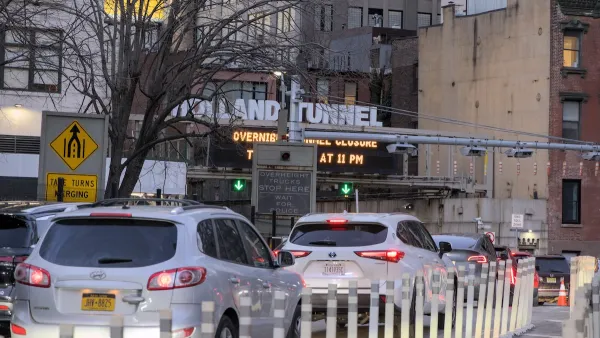
NYC Congestion Pricing Continues to Show Positive Results
While the Trump administration attempts to revoke the program’s federal approval, congestion pricing continues to reduce traffic, speed up bus travel times, and improve air quality in Manhattan.
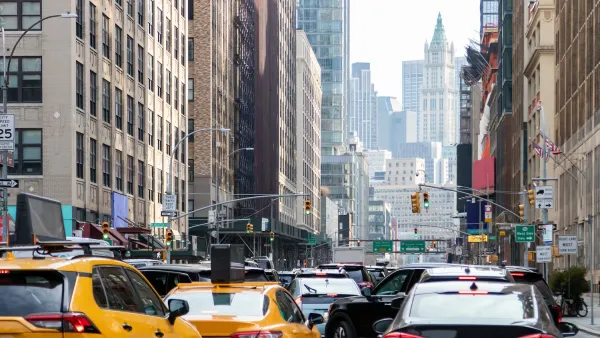
Agreement Keeps NYC Congestion Pricing Alive Through Summer
The tolling program will continue while a court considers the city’s lawsuit against the Trump administration.

Tri-State Economies to Lose Billions From Congestion Pricing Pause
New York City’s congestion pricing program, suspended by Governor Hochul earlier this year, would have pumped $12 billion into local projects and jobs.

Planetizen Federal Action Tracker
A weekly monitor of how Trump’s orders and actions are impacting planners and planning in America.

The state-sanctioned urbicide of Austin
People don’t kill cities. Freeways do.

US to reduce Colorado River water deliveries to Mexico
A new Colorado Treaty amendment reduces Mexico’s Colorado River water allocation by 250,000 acre feet.

5 New England states march closer to 800 megawatt wind energy project
Securing federal approval for the project may be complicated under the Trump administration, which has historically been hostile towards domestic wind power.

Baltimore to break ground on $50 million Transit Priority Project
The project will bring faster bus trips, safer streets and better bike connections to Baltimore.

Airbnb launches $250 million 'last-dollar financing' housing accelerator, makes first investment in Austin
The company will put $6.4 million towards affordable housing development in Texas’ capital.

FREE Course: Walkable City 1: Why Walkability?
After describing his path towards focusing on walkability as the essence of good planning, Jeff Speck marches through his five principal reasons for making more walkable places.
Reinventing Malls: Planning Alchemy—Turning Gray Fields Into Gold
The course focuses on the opportunities and imperatives that shape reinvention of mall sites.

Eagle County Government
Harvard University Graduate School of Design
Nashville Planning Department
The Architects Foundation
University of Cincinnati Online
The Pocatello Development Authority
The Urban Renewal Agency of the City of Pocatello
Journal of the American Planning Association