The Pacific Gas and Electric Company's Diablo Canyon Nuclear Power Plant received approval from the California PUC to operate its two reactors until 2029 and 2030. Five days later, the NRC issued a temporary license renewal.


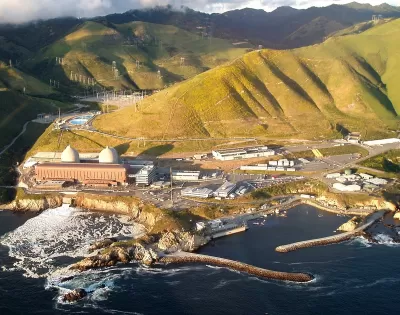
“PG&E has won approval to keep operating the aging Diablo Canyon nuclear plant in San Luis Obispo County,” reported George Avalos of the Bay Area News Group on December 14, 2023 for The Mercury News.
The five-member state Public Utilities Commission (PUC) voted 3-0 to approve an extension of the operating license for the Diablo Canyon nuclear complex, perched near Avila Beach next to the Pacific Ocean. One commissioner was absent, while another abstained.
Diablo Canyon’s Unit 1 reactor is now slated to cease operations in October 2029 while the Unit 2 reactor will end its operations in October 2030.
[See pg. 51 of 72 of PUC agenda [pdf] for Dec. 14: “Extended Operations at Diablo Canyon Nuclear Power Plant.”
Approval preordained, based on ‘energy reliability’
“The state regulatory decision to authorize the extended operations was the outcome of a September 2022 vote by the state legislature to approve SB 846 — a bill signed by Newsom,” adds Avalos in the subscription-only source article.
The legislature determined that extended operations of Diablo Canyon are necessary to ensure reliable electricity supplies until more green energy sources can come online.
[See related posts: Legislature Extends $1.4 Billion Lifeline to California's Last Operating Nuclear Power Plant, September 6, 2022, and the two earlier ones under “Related” below this post]
“Climate change is causing unprecedented stress on California's energy system and I appreciate the Legislature's action to maintain energy reliability as the State accelerates the transition to clean energy,” wrote Gov. Gavin Newsom in his signing letter [pdf] on Sept. 2, 2022.
“Energy reliability is critical to Americans’ daily lives,” notes the U.S. Department of Energy's description.
It is vital to human health, safety, and well-being and the nation’s economic prosperity and security...The effects of climate change and aging U.S. energy infrastructure are key challenges to energy reliability.
[See Planetizen's 'energy security' and 'electricity reliability' tags for related posts.]
Nuclear Regulatory Commission ruling follows
“The federal Nuclear Regulatory Commission (NRC) determined today that Pacific Gas and Electric Company's (PG&E) License Renewal Application (LRA) for extended operations of Diablo Canyon Power Plant (DCPP) is sufficient for its review,” notes PG&E's press release on Dec. 19.
The NRC's determination of sufficiency now allows PG&E to continue operating Units 1 and 2 at DCPP past their current licenses (2024 and 2025, respectively), while the LRA is under review.
Not to be forgotten: IIJA
Last but certainly not least, the federal bipartisan infrastructure legislation that made the 5-year extension possible, the Infrastructure Investment and Jobs Act. See May 31, 2022 post: Extending the Life of California's Largest Power Plant.
The passage of the Infrastructure Investment and Jobs Act (previously known as the bipartisan infrastructure framework) last November, specifically the inclusion of the $6 billion Civil Nuclear Credit Program to extend the life of nuclear power plants unable to compete with cheaper power from natural gas and renewable power facilities, influenced California Gov. Gavin Newsom's reconsideration of the decision made by PG&E six years ago to close the state's last nuclear power plant.
Accessible news report: The Santa Barbara Independent reported on Dec. 20 on both the PUC approval and NRC announcement on PG&E's Diablo Canyon Power Plant.
FULL STORY: PG&E gets OK to keep open Diablo Canyon nuclear plant: bills may jump


Legislature Extends $1.4 Billion Lifeline to California's Last Operating Nuclear Power Plant
A bipartisan bill, fiercely opposed by many in the environmental community, would keep the Diablo Canyon Power Plant operating beyond 2025. The bill received overwhelming approval after it was amended to shorten the duration of the extension.
Funding Allocated to Extend Life of Diablo Canyon Nuclear Power Plant
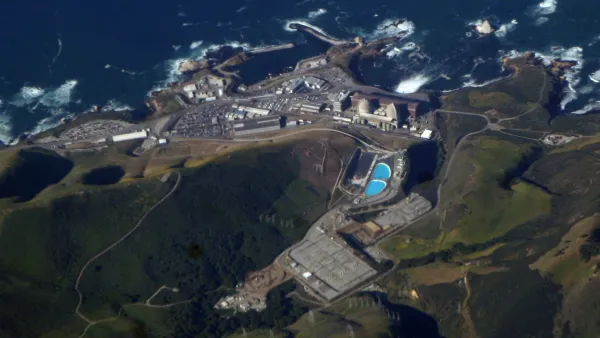
In order to to ensure that the lights stay on, the California legislature approved allocating up to $75 million to extend the life of the state's sole remaining nuclear plant and four natural gas powered plants, to the chagrin of environmentalists.
Extending the Life of California's Largest Power Plant
Gov. Gavin Newsom has notified the U.S. Department of Energy of his interest in using funding included in the Infrastructure Investment and Jobs Act to extend the life of the Diablo Canyon nuclear power plant slated to close in three years.

Planetizen Federal Action Tracker
A weekly monitor of how Trump’s orders and actions are impacting planners and planning in America.

The state-sanctioned urbicide of Austin
People don’t kill cities. Freeways do.

US to reduce Colorado River water deliveries to Mexico
A new Colorado Treaty amendment reduces Mexico’s Colorado River water allocation by 250,000 acre feet.

Mamdani overhauls NYC's Vision Zero plan with 100 new policy goals
The overhaul aims to reduce traffic deaths and make streets safer for pedestrians, cyclists and drivers through lower speed limits, new safety infrastructure and more.

Amtrak not solely to blame for New Jersey commuter rail's unreliability, report finds
A new study from the Garden State Initiative found that NJ Transit’s budget grew 20% across a 4 year period, but reliability declined significantly over the same period.

EPA erases limits on planet-warming pollution from power plants
Under Monday’s plan, power plants would still have some limits on how much mercury, arsenic and other contaminants they can emit.

FREE Course: Walkable City 1: Why Walkability?
After describing his path towards focusing on walkability as the essence of good planning, Jeff Speck marches through his five principal reasons for making more walkable places.
Reinventing Malls: Planning Alchemy—Turning Gray Fields Into Gold
The course focuses on the opportunities and imperatives that shape reinvention of mall sites.


Eagle County Government
Harvard University Graduate School of Design
Nashville Planning Department
The Architects Foundation
University of Cincinnati Online
The Pocatello Development Authority
The Urban Renewal Agency of the City of Pocatello
Journal of the American Planning Association