Despite its ambitious emissions reduction goals, California continues to spend a majority of transportation funds on car-centric infrastructure.


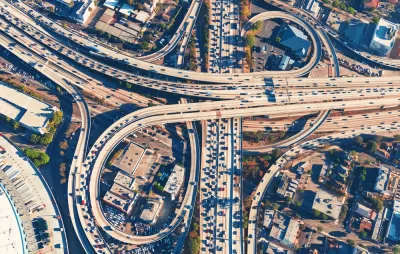
The Los Angeles Times editorial board takes California state leaders to task on its climate goals, charging that “when it comes to cutting the state’s biggest source of planet-warming emissions — cars, trucks, airplanes and other modes of transportation — the spending doesn’t match the rhetoric.”
The editorial references two recent reports that reveal a lack of progress on the state’s promise to cut vehicle miles driven and reduce greenhouse gas emissions. One report from NextGen Policy shows that “traffic and car dependence has increased in recent years.” The board writes that this is largely because the state “continues to spend the bulk of its transportation dollars to maintain and expand car-centric roads and freeways.”
However, “Instead of doubling down on the existing system that makes it inconvenient and unsafe to travel by bike, foot and transit, California should be spending the bulk of its transportation funding to remake the urban landscape so people have real choices in how they get around.” In fact, only 19 percent of transportation funding has gone to non-driving projects such as public transit, bike lanes, and pedestrian infrastructure.
According to the editorial, “About 70% of the state’s transportation dollars go to road maintenance, as required by the state’s gas tax spending plan.” But, if used strategically, this funding could also support bike and pedestrian infrastructure.
Ultimately, the board writes, “The state needs to radically redesign its transportation system to reduce the need for people to drive everywhere all the time.”
FULL STORY: Editorial: California’s transportation spending doesn’t match its climate promises

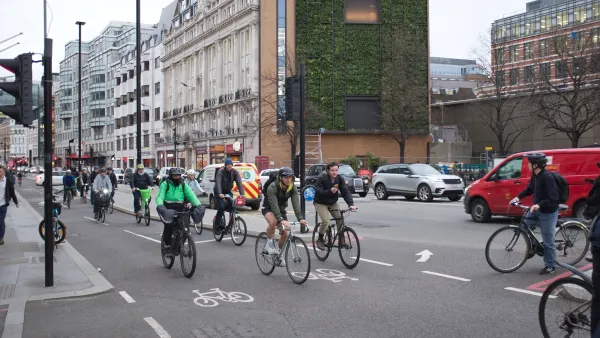
Study: Induced Demand Works for Bikes and Transit, too
If you build it — bike infrastructure, bus lanes, and sidewalks, that is — they will come.
California Governor Signs Complete Streets Bill Into Law
The state’s transportation agency will be required to prioritize multimodal transportation infrastructure and improve transparency.
Seattle Mayor Raises Transportation Levy by $100 Million
The proposal sent to City Council includes more funding for multimodal transportation and road safety.

Planetizen Federal Action Tracker
A weekly monitor of how Trump’s orders and actions are impacting planners and planning in America.

The state-sanctioned urbicide of Austin
People don’t kill cities. Freeways do.

US to reduce Colorado River water deliveries to Mexico
A new Colorado Treaty amendment reduces Mexico’s Colorado River water allocation by 250,000 acre feet.

5 New England states march closer to 800 megawatt wind energy project
Securing federal approval for the project may be complicated under the Trump administration, which has historically been hostile towards domestic wind power.

Baltimore to break ground on $50 million Transit Priority Project
The project will bring faster bus trips, safer streets and better bike connections to Baltimore.

Airbnb launches $250 million 'last-dollar financing' housing accelerator, makes first investment in Austin
The company will put $6.4 million towards affordable housing development in Texas’ capital.

FREE Course: Walkable City 1: Why Walkability?
After describing his path towards focusing on walkability as the essence of good planning, Jeff Speck marches through his five principal reasons for making more walkable places.
Reinventing Malls: Planning Alchemy—Turning Gray Fields Into Gold
The course focuses on the opportunities and imperatives that shape reinvention of mall sites.

Eagle County Government
Harvard University Graduate School of Design
Nashville Planning Department
The Architects Foundation
University of Cincinnati Online
The Pocatello Development Authority
The Urban Renewal Agency of the City of Pocatello
Journal of the American Planning Association