The city will now require its department of transportation to consider bike and pedestrian facilities when planning new projects or improvements.



The Cincinnati City Council approved a Complete Streets policy for the city, signaling a “historic shift” in how the city designs its roads and codifying the imperative to consider pedestrians and cyclists. As Chris Wetterich reports in the Business Journals, the policy requires the city’s transportation department to “consider how to add new street features when they rehabilitate a street, add new traffic lights or other safety measures or make improvements for pedestrian safety.”
According to Councilman Mark Jeffreys, “For 75 plus years, we designed streets and thought first (about) cars – how fast can we get cars through? Speed was more important. This flips it. We should be designing streets for people.”
For each street it changes, the city’s transportation department will have to issue a report showing how many miles of new bike facilities it has installed, the number of linear feet of new, repaired or widened sidewalks, traffic calming measures, safety improvements, comfort enhancements and the number of projects in each neighborhood.
Earlier this year, Cincinnati ended parking requirements in the West End neighborhood, citing complaints from local businesses that favored removing parking to make room for other amenities.
FULL STORY: Cincinnati plans to make room for more bikes, pedestrians, transit on streets

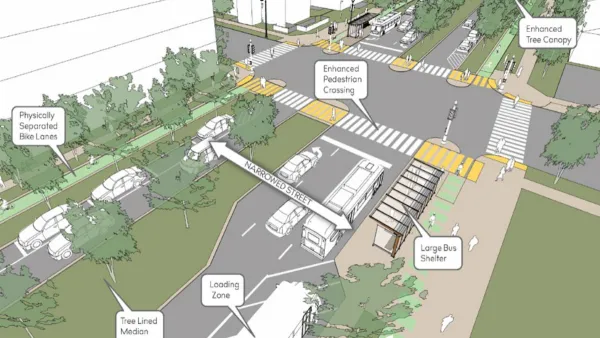
Trump Killed Funding for Milwaukee's Dreamy Multimodal Street. They're Determined to Make it Happen Anyway.
The administration rescinded a $36 million Reconnecting Communities grant aimed at redesigning a 2.6-mile segment of 6th Street.
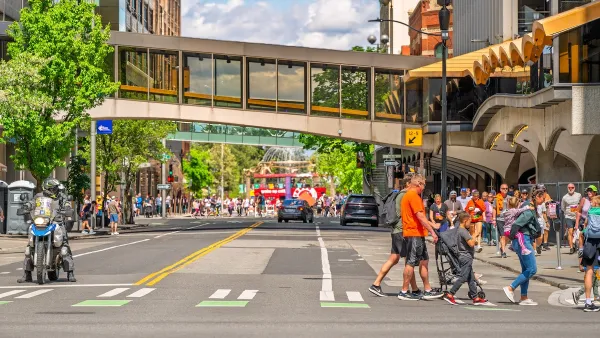
Spokane Updates its Complete Streets Policy
Mayor Lisa Brown signed a revised version of the city’s Complete Streets framework that more closely aligns with state law and the city’s municipal code.
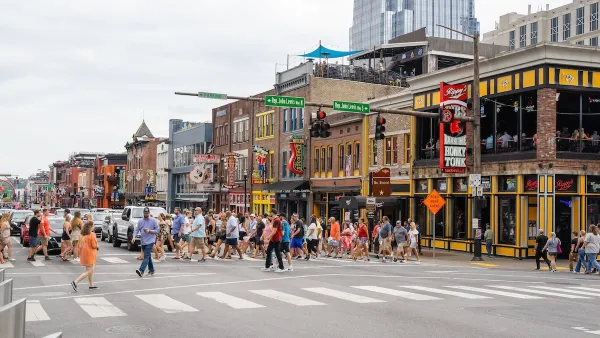
The Best Complete Streets Policies in the US, Ranked
San Antonio and Nashville top the list, with most large cities not making an appearance in the top 40.

Planetizen Federal Action Tracker
A weekly monitor of how Trump’s orders and actions are impacting planners and planning in America.

The state-sanctioned urbicide of Austin
People don’t kill cities. Freeways do.

US to reduce Colorado River water deliveries to Mexico
A new Colorado Treaty amendment reduces Mexico’s Colorado River water allocation by 250,000 acre feet.

5 New England states march closer to 800 megawatt wind energy project
Securing federal approval for the project may be complicated under the Trump administration, which has historically been hostile towards domestic wind power.

Baltimore to break ground on $50 million Transit Priority Project
The project will bring faster bus trips, safer streets and better bike connections to Baltimore.

Airbnb launches $250 million 'last-dollar financing' housing accelerator, makes first investment in Austin
The company will put $6.4 million towards affordable housing development in Texas’ capital.

FREE Course: Walkable City 1: Why Walkability?
After describing his path towards focusing on walkability as the essence of good planning, Jeff Speck marches through his five principal reasons for making more walkable places.
Reinventing Malls: Planning Alchemy—Turning Gray Fields Into Gold
The course focuses on the opportunities and imperatives that shape reinvention of mall sites.


Eagle County Government
Harvard University Graduate School of Design
Nashville Planning Department
The Architects Foundation
University of Cincinnati Online
The Pocatello Development Authority
The Urban Renewal Agency of the City of Pocatello
Journal of the American Planning Association