High gas prices are prompting more cities to invest in electric car charging infrastructure.


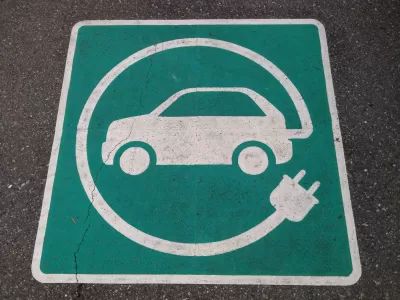
As interest in electric vehicles grows thanks to an increased focus on reducing fossil fuel use and rising gas prices, cities around the country are preparing with new efforts to install charging stations in public locations. An article by Wayne Parry of the Associated Press describes the initiatives undertaken by states and cities who want to ensure their communities aren't left behind as electric vehicle adoption becomes more widespread and charging stations become increasingly crucial pieces of infrastructure.
Electric car chargers can boost the economy of small communities by offering an essential service for passing motorists and reassuring visitors that they can charge their vehicles in out-of-the-way locations.
Some examples from the article: New Jersey granted $1 million to 24 tourist destinations for charging stations, including Asbury Park and Atlantic City, while Bellingham, Washington announced plans to install 90 stations in the next two years.
Read the full story: As gas prices rise, towns add electric car charging stations
New York State Finances $60M Loan for EV Charging Infrastructure
Gov. Hochul announced the investment just as a federal program for EV charging infrastructure was halted by administration officials.
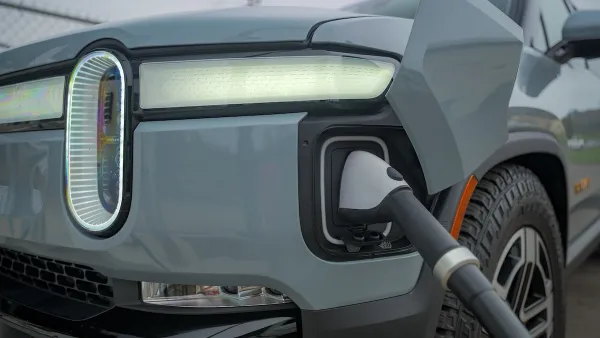
Rivian Joins Movement Toward Universal EV Charging
As more automakers like Tesla, Ford, and Rivian make their charging infrastructure compatible, the shift could lead to the faster development of a nationwide EV charging network.
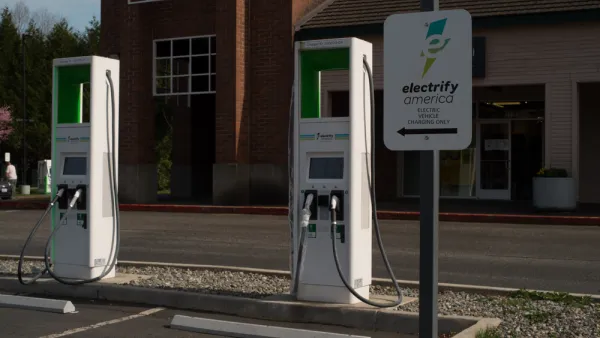
New 'Human-Centered' EV Charging Stations Aim To Improve User Experience
Volkswagen-owned Electrify America plans to make its new charging stations more user-friendly with solar panel awnings and waiting lounges.

Planetizen Federal Action Tracker
A weekly monitor of how Trump’s orders and actions are impacting planners and planning in America.

California plans to bury El Niño’s downpour
If the state plays its cards right, it may be able to store a billion acre-feet of El Niño’s water in aquifers.

Desperate measures: Advocates weigh draining Lake Powell to fill Colorado River
Draining the reservoir could reduce evaporation losses by a couple hundred thousand acre-feet.

In Texas, data centers are swallowing promised parkland
Residents who moved to Taylor, Texas for a rural community now have to contend with three data centers in their backyard.

How a Chicago-sized wind farm beat the odds and powered on
The project spanned five presidential administrations and a standoff with a U.S. military base.

MTA gives itself 30 days to transform pit into basketball court
The site has been under construction since 2022; the city originally estimated it would finish the court in 2024.

FREE Course: Walkable City 1: Why Walkability?
After describing his path towards focusing on walkability as the essence of good planning, Jeff Speck marches through his five principal reasons for making more walkable places.
Reinventing Malls: Planning Alchemy—Turning Gray Fields Into Gold
The course focuses on the opportunities and imperatives that shape reinvention of mall sites.

City of Rosemead
Rutgers University, Edward J. Bloustein School of Planning and Public Policy
One Hundred Miles
Hunter College, City University of New York (CUNY)
The Architects Foundation
University of Cincinnati Online
City of Cambridge
Montrose County
The Pocatello Development Authority