A group of young climate activists are demanding an end to traffic-inducing road expansion projects and a renewed commitment to sustainable, transit-oriented transportation.


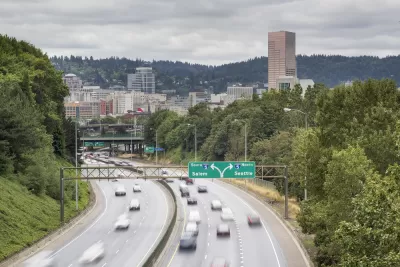
On the heels of a historic heat wave that devastated the Northwest, a group of Portland teenagers is protesting the Oregon DOT's plan to widen highways in the state, reports Laura Bliss. The protesters, who call their group Youth Vs. ODOT, are calling on the state to end freeway widening projects that contribute to increased congestion and carbon emissions.
Their demands might be having an effect, writes Bliss. "On Jan 18, the Federal Highway Administration rescinded a key approval of the controversial highway widening that’s been a prime target of the young protesters, the Rose Quarter Improvement Project along Portland’s Interstate 5," and requested a new environmental study.
As state transportation departments prepare to receive billions in federal funding, transportation advocates hope that sustainability will remain a top priority and that states will invest in public transit, bike lanes, and pedestrian infrastructure. But a slew of expansion projects planned around the country indicate these goals may not materialize.
The young Portland activists say by going forward with road projects, the city isn't living up to its progressive, bike-loving image. They call for increased investment in public transit, which would benefit more residents and help suburban dwellers reach the city more easily and efficiently. They want to see a change in the auto-oriented culture of Portland and, more broadly, the United States, which has enabled and subsidized car-dependent lifestyles. Even switching to electric vehicles, experts say, won't be enough to keep global warming from reaching catastrophic levels. Beyond stopping road expansion projects, Youth Vs. ODOT hopes to force even more drastic changes in how their state funds and prioritizes transportation projects.
FULL STORY: The Road Warriors

The Unceremonious Death of a Freeway Expansion Project
The end of an Oregon freeway project didn't get much fanfare, but the victory is worth celebrating.
Study: Cost of Expanding Roads Outweighs Benefits
New research shows that the economic benefits of roadbuilding projects don’t come close to exceeding most projects’ costs.
Federal Carbon Reduction Funds Could Finance Highway Projects in Texas
Transit advocates say the state’s carbon reduction strategy reveals a continued preference for car-oriented infrastructure.

Planetizen Federal Action Tracker
A weekly monitor of how Trump’s orders and actions are impacting planners and planning in America.

The state-sanctioned urbicide of Austin
People don’t kill cities. Freeways do.

US to reduce Colorado River water deliveries to Mexico
A new Colorado Treaty amendment reduces Mexico’s Colorado River water allocation by 250,000 acre feet.

5 New England states march closer to 800 megawatt wind energy project
Securing federal approval for the project may be complicated under the Trump administration, which has historically been hostile towards domestic wind power.

Baltimore to break ground on $50 million Transit Priority Project
The project will bring faster bus trips, safer streets and better bike connections to Baltimore.

Airbnb launches $250 million 'last-dollar financing' housing accelerator, makes first investment in Austin
The company will put $6.4 million towards affordable housing development in Texas’ capital.

FREE Course: Walkable City 1: Why Walkability?
After describing his path towards focusing on walkability as the essence of good planning, Jeff Speck marches through his five principal reasons for making more walkable places.
Reinventing Malls: Planning Alchemy—Turning Gray Fields Into Gold
The course focuses on the opportunities and imperatives that shape reinvention of mall sites.

Eagle County Government
Harvard University Graduate School of Design
Nashville Planning Department
The Architects Foundation
University of Cincinnati Online
The Pocatello Development Authority
The Urban Renewal Agency of the City of Pocatello
Journal of the American Planning Association