Bike advocates focus, with good reason, on bike lanes and safe routes. But secure bike parking and storage plays an essential role in encouraging more people to get on two wheels.


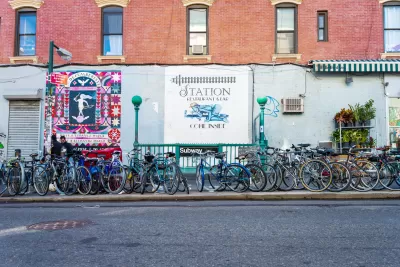
Pointing to Paris's recently announced plan to make the city '100 percent cyclable,' which includes a promise to install 30,000 bike parking stands in the city, plus 1,000 reserved for oversized cargo bikes, and 40,000 spaces at rail stations, Kea Wilson reminds American bicycling advocates to look beyond bike lanes and safe roads to address the similarly important challenge of bike parking and storage. Wilson writes,
The availability of cycle parking is sometimes, but not always, factored into the methodology that leading organizations use to rank the most bike-friendly communities in the country; cities themselves rarely track how many spots they have in any systematic way, much less assess those spots’ quality, convenience, accessibility to people with mobility challenges, or effectiveness at preventing common crimes like theft.
While most American cities still have minimum parking requirements, only some have started to require bike parking in new developments. Yet the lack of organized efforts to provide secure bike parking, Wilson argues, may discourage people from biking at all. A report from Transportation Alternatives earlier this year came to a similar conclusion.
Meanwhile, the rise in the popularity of electric bikes–boosted by the federal infrastructure bill–means cities will have to consider bike charging as an integral part of the sustainable, electrified city.
Read the full story: It’s Time for America to Talk About Bike Parking
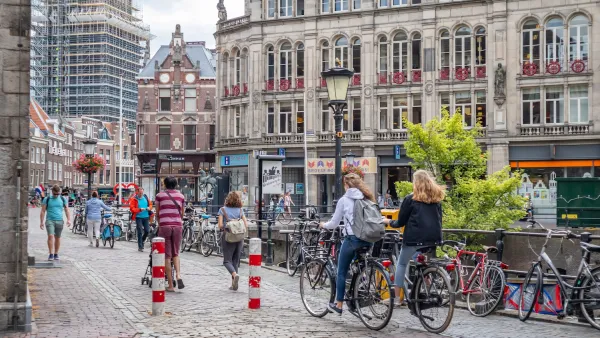
2025's 30 Most Bike-friendly Cities
Copenhagenize has released its list of top cities for cyclists. Spoiler alert: the United States doesn’t make the list.
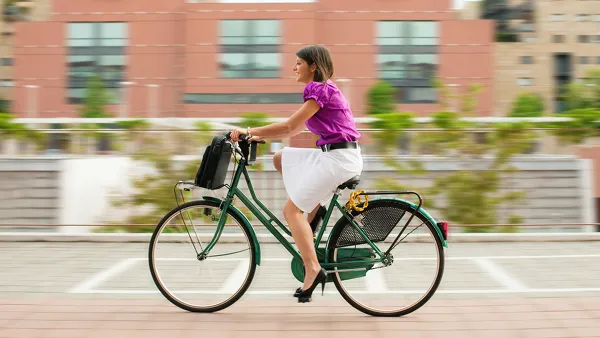
The Rippling Effects of Bike-to-Work Subsidies
A European movement to incentivize people to commute by bicycle is changing travel patterns and making mobility more sustainable.

Centering Bikes in the Future of Mobility
Those in search of high-tech solutions for urban congestion and pollution often overlook the bicycle as a powerful, if simple, tool for reducing both and improving urban transportation.

Planetizen Federal Action Tracker
A weekly monitor of how Trump’s orders and actions are impacting planners and planning in America.

California plans to bury El Niño’s downpour
If the state plays its cards right, it may be able to store a billion acre-feet of El Niño’s water in aquifers.

Desperate measures: Advocates weigh draining Lake Powell to fill Colorado River
Draining the reservoir could reduce evaporation losses by a couple hundred thousand acre-feet.

Housing is the top priority of Seattle’s sole new councilmember
Jenks campaigned on building 1,000 new units of affordable housing.

New tax cuts may slash $1.5 billion in funding for Miami transit, public parks
Amendment 3 will save Miami-Dade homeowners $2,700 in 2028.

Arizona, Wisconsin, Pennsylvania hope to finally advance climate goals post-midterms
The three states have spent years under Republican or divided control.

FREE Course: Walkable City 1: Why Walkability?
After describing his path towards focusing on walkability as the essence of good planning, Jeff Speck marches through his five principal reasons for making more walkable places.
Reinventing Malls: Planning Alchemy—Turning Gray Fields Into Gold
The course focuses on the opportunities and imperatives that shape reinvention of mall sites.

City of Rosemead
Rutgers University, Edward J. Bloustein School of Planning and Public Policy
One Hundred Miles
University of Michigan School for Environment and Sustainability (SEAS)
Hunter College, City University of New York (CUNY)
The Architects Foundation
City of Cambridge
Montrose County
The Pocatello Development Authority