Portland has updated its bicycle parking code for the first time since the code was adopted in 1996.


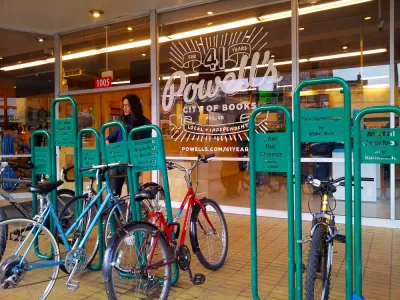
"[The] Portland City Council voted 4-0 (Commissioner Jo Ann Hardesty was absent) to adopt a new set of bicycle parking regulations that will become local law for all new developments (and some major remodels)," reports Jonathan Maus.
Maus, who says the article was significant to warrant a specific follow up post, wrote about the proposed policy in more detail in November. At the time, Maus said, "the code would create new requirements for building developers. It would mandate the amount, design, and location of both long-term (for employees and residents) and short-term (for business customers and visitors) bike parking spaces in new buildings."
PBOT Commissioner Chloe Eudaly agrees about the importance of the new regulations, saying the following at the hearing that approved the new regulations: "The availability and design of bicycle parking has a real impact on whether people can choose to use a bike to travel around Portland or not. We can’t expect people to replace car trips with bike trips if they don’t have an easily accessible place to store their bike securely."
FULL STORY: Portland City Council passes first major bike parking code update since 1996

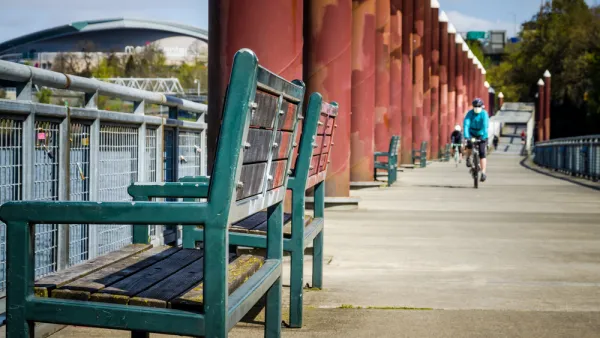
Can Portland's Bike Boom Outlast the Pandemic?
"Anytime the city does something to dramatically improve streets for people and limit car access...it’s hard to take them back."
Investing in the 'Smart Cities' Approach to Bike Planning
Smart cities tech isn't just for cars. Portland is out to prove that sensors and data can benefit all modes of travel.
SEPTA Cycle-Transit Plan a Model for Multi-Modal Commuting
As ridership grows on the Southeastern Pennsylvania Transportation Authority (SEPTA) rail system, system planners are looking to a novel approach to relieve crunched station parking: bikes.

Planetizen Federal Action Tracker
A weekly monitor of how Trump’s orders and actions are impacting planners and planning in America.

The state-sanctioned urbicide of Austin
People don’t kill cities. Freeways do.

US to reduce Colorado River water deliveries to Mexico
A new Colorado Treaty amendment reduces Mexico’s Colorado River water allocation by 250,000 acre feet.

Airbnb launches $250 million 'last-dollar financing' housing accelerator, makes first investment in Austin
The company will put $6.4 million towards affordable housing development in Texas’ capital.

Guerilla urbanists are building DIY bus stop benches in Chicago
A before-and-after of one of the bus stops with a new bench. The new benches are not officially sanctioned or permitted, but the residents who placed them hope they will be the start of a network of DIY benches across the city.

Mamdani overhauls NYC's Vision Zero plan with 100 new policy goals
The overhaul aims to reduce traffic deaths and make streets safer for pedestrians, cyclists and drivers through lower speed limits, new safety infrastructure and more.

FREE Course: Walkable City 1: Why Walkability?
After describing his path towards focusing on walkability as the essence of good planning, Jeff Speck marches through his five principal reasons for making more walkable places.
Reinventing Malls: Planning Alchemy—Turning Gray Fields Into Gold
The course focuses on the opportunities and imperatives that shape reinvention of mall sites.

Eagle County Government
Harvard University Graduate School of Design
Nashville Planning Department
The Architects Foundation
University of Cincinnati Online
The Pocatello Development Authority
The Urban Renewal Agency of the City of Pocatello
Journal of the American Planning Association