As ridership grows on the Southeastern Pennsylvania Transportation Authority (SEPTA) rail system, system planners are looking to a novel approach to relieve crunched station parking: bikes.


Jen Kinney reports: "With bicycling rates in Philadelphia more than doubling in the last 20 years and public transportation ridership at a 25-year high, the Southeastern Pennsylvania Transportation Authority (SEPTA) is looking for ways to bring these two modes of transit together."
"The agency’s first Cycle-Transit Plan [pdf], released this year, explores policy and infrastructure changes that could make it easier for riders to combine bicycling and public transportation in one commute. It’s one of just a few formal cycle-transit integration plans in the country."
In addition to the plan, SEPTA also has $3 million budgeted for the installation of new bike shelters "at 15 stations every year for the next three years," according to Kinney. The article includes more detail about the planning process behind the Cycle-Transit plan as well as more of the improvements commuters can expect when moving between the bike and the train on the SEPTA system.
FULL STORY: Philly Gets Ahead on the Bike-Plus-Train Commute

$3 Million for Bike Stations Backs Up SEPTA's Bike Planning Efforts
The Southeastern Pennsylvania Transportation Authority (SEPTA) recently released the budget that will back up the components of its first ever bike plan: the SEPTA Cycle-Transit Plan, released in April 2015.
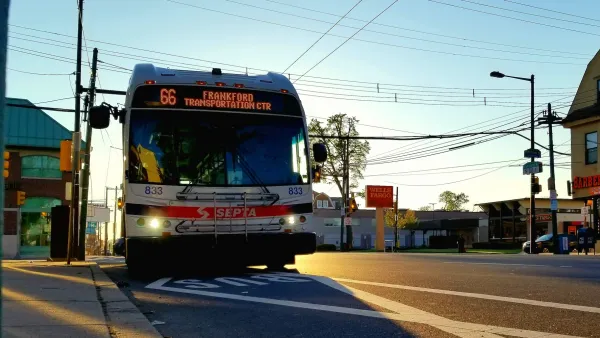
SEPTA's bus-mounted lane enforcement cameras cut travel times by up to 6%
The AI-assisted cameras have issued nearly 200,000 citations to drivers blocking bus lanes.
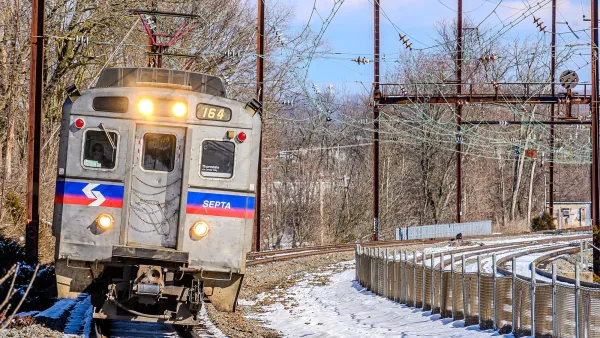
SEPTA Borrows Maryland's Rail Cars to Replace Fleet That Kept Catching Fire
The agency’s efforts to repair its Silverliner fleet is being hampered by supply chain delays.

Planetizen Federal Action Tracker
A weekly monitor of how Trump’s orders and actions are impacting planners and planning in America.

The state-sanctioned urbicide of Austin
People don’t kill cities. Freeways do.

US to reduce Colorado River water deliveries to Mexico
A new Colorado Treaty amendment reduces Mexico’s Colorado River water allocation by 250,000 acre feet.

Mamdani overhauls NYC's Vision Zero plan with 100 new policy goals
The overhaul aims to reduce traffic deaths and make streets safer for pedestrians, cyclists and drivers through lower speed limits, new safety infrastructure and more.

Amtrak not solely to blame for New Jersey commuter rail's unreliability, report finds
A new study from the Garden State Initiative found that NJ Transit’s budget grew 20% across a 4 year period, but reliability declined significantly over the same period.

EPA erases limits on planet-warming pollution from power plants
Under Monday’s plan, power plants would still have some limits on how much mercury, arsenic and other contaminants they can emit.

FREE Course: Walkable City 1: Why Walkability?
After describing his path towards focusing on walkability as the essence of good planning, Jeff Speck marches through his five principal reasons for making more walkable places.
Reinventing Malls: Planning Alchemy—Turning Gray Fields Into Gold
The course focuses on the opportunities and imperatives that shape reinvention of mall sites.

Eagle County Government
Harvard University Graduate School of Design
Nashville Planning Department
The Architects Foundation
University of Cincinnati Online
The Pocatello Development Authority
The Urban Renewal Agency of the City of Pocatello
Journal of the American Planning Association