The San Diego Association of Governments has proposed a mileage fee as part of its plan to modernize transportation and encourage public transit use as California aims to reduce carbon emissions and eliminate fossil fuel-powered vehicles.


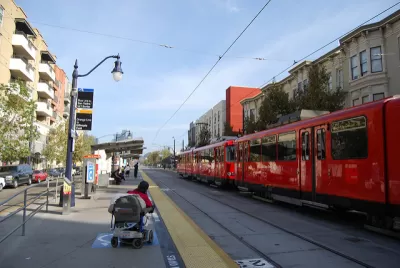
Joshua Emerson Smith describes San Diego's plan to institute a mileage-based driving fee while eliminating fares on the region's trolleys and buses. The plan, suggested by the San Diego Association of Governments (SANDAG), is part of the "$160 billion blueprint for modernizing transportation throughout the region, from dedicating highway lanes for buses and car pools to building an ambitious new high-speed transit system with a dozen new stations," reports Emerson Smith.
The article comes a week after the agency’s board approved free youth passes starting this spring through summer 2023. The pilot program, which would apply to those 18 years old and younger, still requires approval from the San Diego Metropolitan Transit System and North County Transit District.
The fare-free transit movement gained steam during the pandemic, as ridership fell drastically and transit agencies look to new ways to incentivize users and bring commuters back to the nation's trains and buses. Mileage fees, also known as vehicle miles traveled (VMT) fees, are getting a close look from states concerned about loss of fuel tax revenue due to the rising popularity of electric vehicles.
The San Diego fee would coincide with the launch of California's statewide road charge program, scheduled to begin in 2030. The state has also banned the sale of gas-powered vehicles starting in 2035, which will have a significant effect on the revenue generated from the state's gas tax—the primary source of funding for transportation projects in the state.
FULL STORY: San Diego region eye 'road charges' coupled with free public transit


Road Usage Charges Face Staunch Opposition
The resistance to a proposed mileage-based tax in San Diego County highlights the challenges of passing road usage fees.
San Diego Regional Transportation Plan Shifts Away From Big Projects to Focus on Improving Existing Infrastructure
SANDAG’s 2025 Regional Plan scales down plans for new rail lines in favor of expanding rapid bus service.
San Diego Region Developing Long-Range Transportation Plan
The new plan, set to take effect in 2025, accounts for changes in mobility patterns brought on by remote work.

Planetizen Federal Action Tracker
A weekly monitor of how Trump’s orders and actions are impacting planners and planning in America.

The state-sanctioned urbicide of Austin
People don’t kill cities. Freeways do.

US to reduce Colorado River water deliveries to Mexico
A new Colorado Treaty amendment reduces Mexico’s Colorado River water allocation by 250,000 acre feet.

5 New England states march closer to 800 megawatt wind energy project
Securing federal approval for the project may be complicated under the Trump administration, which has historically been hostile towards domestic wind power.

Baltimore to break ground on $50 million Transit Priority Project
The project will bring faster bus trips, safer streets and better bike connections to Baltimore.

Airbnb launches $250 million 'last-dollar financing' housing accelerator, makes first investment in Austin
The company will put $6.4 million towards affordable housing development in Texas’ capital.

FREE Course: Walkable City 1: Why Walkability?
After describing his path towards focusing on walkability as the essence of good planning, Jeff Speck marches through his five principal reasons for making more walkable places.
Reinventing Malls: Planning Alchemy—Turning Gray Fields Into Gold
The course focuses on the opportunities and imperatives that shape reinvention of mall sites.

Eagle County Government
Harvard University Graduate School of Design
Nashville Planning Department
The Architects Foundation
University of Cincinnati Online
The Pocatello Development Authority
The Urban Renewal Agency of the City of Pocatello
Journal of the American Planning Association