Slated to open in 2022, Culdesac Tempe contractually forbids personal vehicles from parking within a quarter-mile radius of the project site.


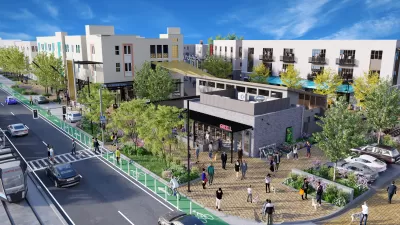
"[B]illed as the first and only zero-driving community built from scratch in the U.S.," Culdesac Tempe encourages its future residents to "rely on other modes, including a bundle of discounted mobility services provided for in their monthly rent, according to project leaders."
According to Laura Bliss, "[t]he $170 million residential development will feature a plaza with scooter docks, car-share parking, and ride-hail pickup zones, with a light rail station across the street." Tenant benefits will include "complimentary access to a Lyft Pink subscription, preferred pricing for a fleet of Bird scooters, an Envoy car share membership, and free unlimited passes on the Valley Metro transit system."
Lavanya Sunder, general manager at Culdesac Tempe, "said this marks one of the first times a U.S. real estate developer has included paid transportation options as part of the monthly rent, which starts at $1,090 for a studio and $1,250 for a one-bedroom." In addition to 761 apartments, the complex will house "a grocery store, restaurant, cafe and co-working space, carving out a pocket of walkable, car-free living into a corner of one of America’s most autocentric metropolises."
The project promises to be an instructive experiment in "retrofitting suburban sprawl for a post-car era" as critics question "if its residents will struggle to access the larger Phoenix area without their own cars."
Read the full story: Developers Offer Mobility Services to Lure Car-Free Renters

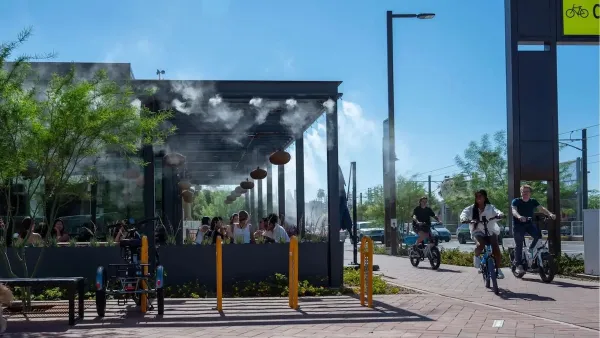
Car-Free Arizona Suburb Gains Residents
The project, dubbed Culdesac, offers EV rentals, free light rail passes, and other perks instead of private parking.
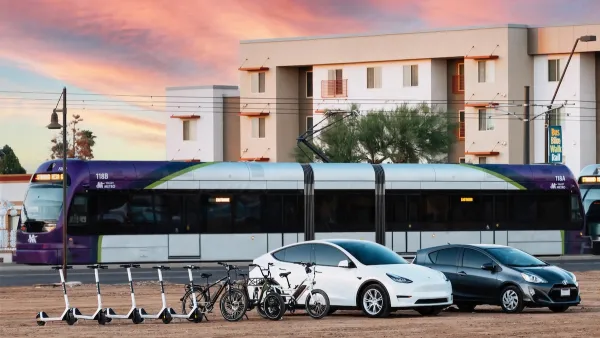
Arizona’s ‘Car-Free’ Community Takes Shape
Culdesac Tempe has been welcoming residents since last year.
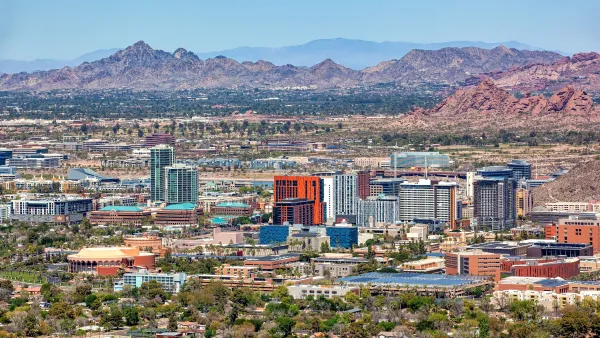
Arizona ‘Car-Free’ Neighborhood Nears Opening
Culdesac Tempe bans personal cars in exchange for access to scooters, bike facilities, and free transit. Is that enough to reduce car ownership in auto-centric Arizona?

Planetizen Federal Action Tracker
A weekly monitor of how Trump’s orders and actions are impacting planners and planning in America.

Northwest rail fans eager for Sept. 30 debut of Amtrak’s Airo fleet
Get ready for that new train smell and more seats. But they won’t go faster or run more frequently on the Cascades route in Washington and Oregon.
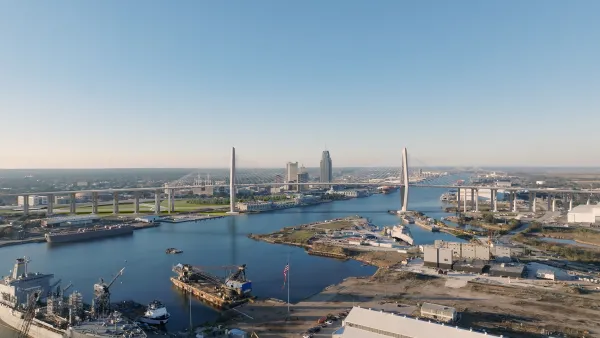
Alabama scores up to $2.5 billion federal loan for largest infrastructure project in state’s history
The Mobile River Bridge and Bayway Project aims to ease congestion at Alabama’s worst bottleneck.

Novel study finds extreme state-by-state disparity in housing construction timelines
The first comprehensive working paper on U.S. construction timelines also found that the permitting process for multi-family projects has slowed nationwide.

California may destroy its beaches trying to save homes from El Niño
Boulders and seawalls can protect homes from waves, but ultimately destroy sandy beaches.

California high-speed rail accomplishes only one legislative goal in 2026
The majority of the agency's failed pitches were never developed into written proposals.

FREE Course: Walkable City 1: Why Walkability?
After describing his path towards focusing on walkability as the essence of good planning, Jeff Speck marches through his five principal reasons for making more walkable places.
Reinventing Malls: Planning Alchemy—Turning Gray Fields Into Gold
The course focuses on the opportunities and imperatives that shape reinvention of mall sites.

City of Thousand Oaks
City of Wisconsin Rapids
Harvard University Graduate School of Design
The Architects Foundation
University of Cincinnati Online
Northern Illinois Transit Authority (NITA)
The Pocatello Development Authority
The Urban Renewal Agency of the City of Pocatello