Culdesac Tempe bans personal cars in exchange for access to scooters, bike facilities, and free transit. Is that enough to reduce car ownership in auto-centric Arizona?


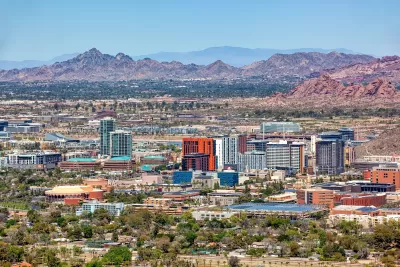
The community calling itself “the first car-free neighborhood built from scratch in the U.S.” is close to opening in Tempe, Arizona, reports Jeremiah Budin for Yahoo News.
Once complete, residents who move into Culdesac Tempe will not be able to park personal vehicles within the development. “The community will still make ample use of cars but in the form of rideshares via Lyft and car sharing via Envoy, a community-based electric car-sharing service and platform.”
The neighborhood will feature Bird e-scooters, ample bike parking, and free transit rides, making it easy to get around for short trips. Will residents give up their cars altogether or will they find the need to maintain vehicles to reach essential daily destinations and get around the rest of not-exactly-pedestrian-friendly Arizona?

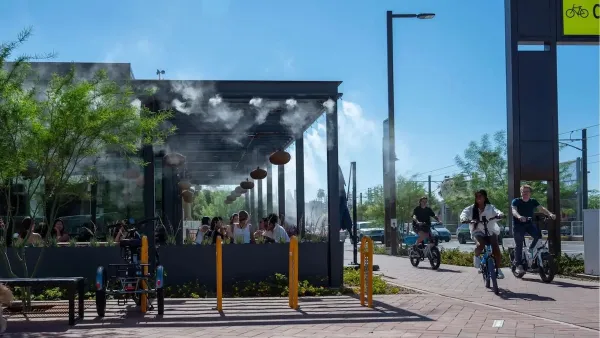
Car-Free Arizona Suburb Gains Residents
The project, dubbed Culdesac, offers EV rentals, free light rail passes, and other perks instead of private parking.
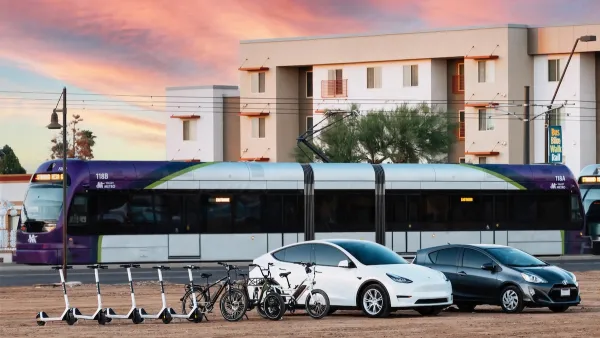
Arizona’s ‘Car-Free’ Community Takes Shape
Culdesac Tempe has been welcoming residents since last year.
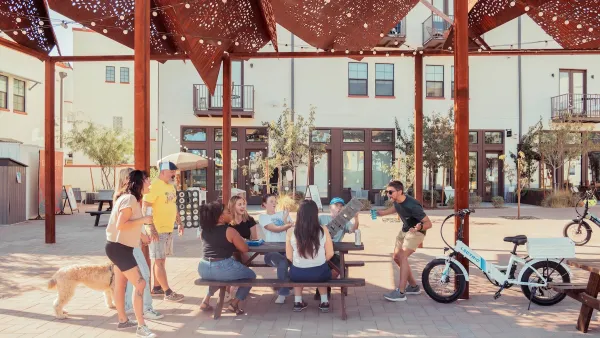
After Culdesac's success in Tempe, Mesa approves new 1,000-unit 'car-light' development
Culdesac Mesa will take the same transit-oriented approach with a compact, walkable design and access to transit and shared mobility options.

Planetizen Federal Action Tracker
A weekly monitor of how Trump’s orders and actions are impacting planners and planning in America.

The state-sanctioned urbicide of Austin
People don’t kill cities. Freeways do.

US to reduce Colorado River water deliveries to Mexico
A new Colorado Treaty amendment reduces Mexico’s Colorado River water allocation by 250,000 acre feet.

Baltimore to break ground on $50 million Transit Priority Project
The project will bring faster bus trips, safer streets and better bike connections to Baltimore.

Airbnb launches $250 million 'last-dollar financing' housing accelerator, makes first investment in Austin
The company will put $6.4 million towards affordable housing development in Texas’ capital.

Guerilla urbanists are building DIY bus stop benches in Chicago
A before-and-after of one of the bus stops with a new bench. The new benches are not officially sanctioned or permitted, but the residents who placed them hope they will be the start of a network of DIY benches across the city.

FREE Course: Walkable City 1: Why Walkability?
After describing his path towards focusing on walkability as the essence of good planning, Jeff Speck marches through his five principal reasons for making more walkable places.
Reinventing Malls: Planning Alchemy—Turning Gray Fields Into Gold
The course focuses on the opportunities and imperatives that shape reinvention of mall sites.

Eagle County Government
Harvard University Graduate School of Design
Nashville Planning Department
The Architects Foundation
University of Cincinnati Online
The Pocatello Development Authority
The Urban Renewal Agency of the City of Pocatello
Journal of the American Planning Association