The neighborhood community development corporation has created a new vision for a Cleveland neighborhood frequented by daytime work populations and people passing through.



Steven Litt reports on a new master plan, completed this summer by the nonprofit for the neighborhood of Midtown in Cleveland.
MidTown Cleveland Inc., the neighborhood’s community development corporation, funded the new master plan to "[transform] the area from a disconnected patchwork into a complete, healthy community." MidTown Cleveland Inc contracted Philadelphia-based consultant Interface Studio LLC to create the plan.
Litt explains more of the conditions that prompted the new master plan:
Sandwiched between downtown to the west and the Cleveland Clinic and University Circle to the east, Midtown has few residents, but its daytime population swells to 18,000, making it one of Northeast Ohio’s biggest job centers.
More:
And yet, despite $300 million in recent projects that have launched a nascent transformation, much of Midtown is still characterized by blank walls, chain link fences, parking lots, and streets without trees.
To achieve its lofty ambitions to create a more vibrant neighborhood, the plan calls for infill mixed-use development with active, street-level uses; new public spaces; and new greenery, among other measures. Litt provides more detail and background in the source article. Midtown Cleveland Inc. is expected to present the plan to the Cleveland City Planning Commission for review and approval later this summer.

U.S. DOT Releases First-Ever Pedestrian Safety Plan
Record numbers of pedestrians have been killed by drivers in recent years. The federal government says a "team effort" will be necessary to stop the carnage.
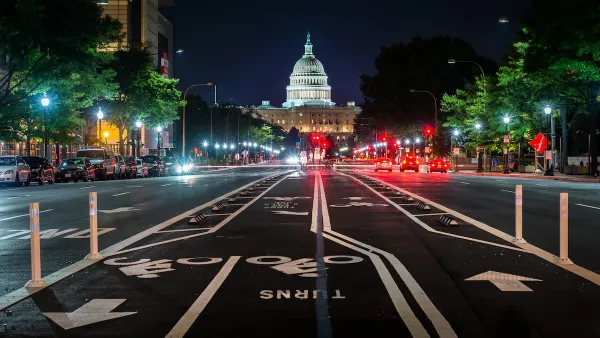
Safe Streets Funding in Jeopardy
The Trump administration is specifically targeting bike infrastructure and other road safety projects in its funding cuts.
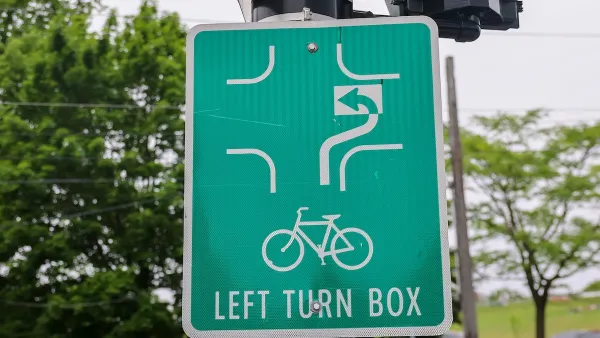
US Road Design Manual Gets Multimodal Update
The long-awaited changes include road design elements and signage aimed at improving safety for pedestrians and cyclists while planning for autonomous vehicles.

Planetizen Federal Action Tracker
A weekly monitor of how Trump’s orders and actions are impacting planners and planning in America.

California plans to bury El Niño’s downpour
If the state plays its cards right, it may be able to store a billion acre-feet of El Niño’s water in aquifers.

Desperate measures: Advocates weigh draining Lake Powell to fill Colorado River
Draining the reservoir could reduce evaporation losses by a couple hundred thousand acre-feet.

Chicago voters approve permanent festival grounds, penalty for vacant property owners
Currently, major summer and fall festivals take over public parks for weeks at a time, drawing criticism from nearby residents

NYC votes to cut outdoor dining red tape, speed up permitting
New York City also voted to allow the Department of Transportation to begin work on urgent projects before notifying elected officials.

California appears to reject Prop. 45
The proposition would have expanded the projects that qualify for a streamlined environmental review, effectively paring down the California Environmental Quality Act.

FREE Course: Walkable City 1: Why Walkability?
After describing his path towards focusing on walkability as the essence of good planning, Jeff Speck marches through his five principal reasons for making more walkable places.
Reinventing Malls: Planning Alchemy—Turning Gray Fields Into Gold
The course focuses on the opportunities and imperatives that shape reinvention of mall sites.

City of Rosemead
Rutgers University, Edward J. Bloustein School of Planning and Public Policy
One Hundred Miles
Hunter College, City University of New York (CUNY)
The Architects Foundation
University of Cincinnati Online
City of Cambridge
Montrose County
The Pocatello Development Authority