The National Capital Region Transportation Planning Board has almost completed the latest version fo the Visualize 2045 long-range transportation plan, but it is already making plans to add a climate plan to the final product.


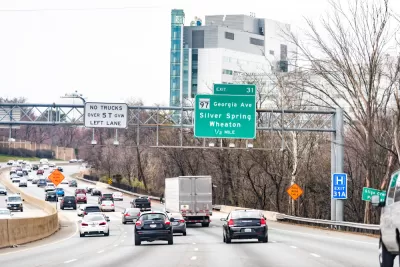
The National Capital Region Transportation Planning Board (TPB)—which serves as the metropolitan planning organization for the Washington, D.C. region—recently took the drastic step of deciding to completely redo the process with climate change in mind.
"The agency will proceed with the adoption of its current proposal, titled 'Visualize 2045,' by spring next year, but they also voted to start over and adopt a new vision for the region’s transportation system by 2024," according to Pugh.
"The vote to develop a new plan by 2024 that reduces greenhouse gas emissions follows months of advocacy by smart growth and conservation organizations, and pressure from local elected officials to act," explains Pugh of how the dramatic decision came about. Public comments of the current version of Visualize 2045 "overwhelmingly objected to its lack of commitment to regional climate policies," according to Pugh. Instead, the plan represents a "continuation of massive road and highway expansions."
Pugh's article includes more details on the controversy surrounding the plan, and why TPB has had such a hard time meeting its climate goals through two iterations of Visualize 2045. Pugh is optimistic that the climate addendum will do a better job connecting goals to action because of new leadership and commitment at, and around, TPB.
Read the full story: The region’s long-range transportation plan will be revamped to prioritize ways to curb climate change
D.C. Region Sets Goal to Reduce GHG Emissions From Transportation 50% by 2030
Transportation is the largest source of greenhouse gas emissions in the D.C. region—and the rest of the country. The D.C. region is committing to drastic actions to change their ways, however.
Colorado Could Reject Highway Expansion in Favor of Climate-Friendly Planning
A proposed transportation strategy could shift the state’s focus away from driving and toward incentivizing public transit use, walking, and biking.
Transportation Plan Approved for D.C. Region
Visualize 2045 makes plans for 600 projects totaling $291 billion in investments—there's some serious "blue sky" planning here.

Planetizen Federal Action Tracker
A weekly monitor of how Trump’s orders and actions are impacting planners and planning in America.

Eastern Nebraska is running out of electricity
Data centers and electrification are straining eastern Nebraska’s grid, throttling economic development.

Washington state to charge fee to drivers with fuel-efficient cars
Revenue from the fee will go towards supporting the state’s highways.

Instead of building new housing, LA developers are turning mansions into mega-mansions
In the richest areas, the number of houses valued at $30 million with demolition permits has skyrocketed since 2018.

Illinois considers spending $1 billion in taxpayer money on data center
A quantum computing campus and data center are currently under construction in Chicago.

As development costs rise, Boston moves to lessen affordable housing requirements
The Boston Zoning Commission and the City Council still need to approve Boston Mayor Michelle Wu’s proposed changes

FREE Course: Walkable City 1: Why Walkability?
After describing his path towards focusing on walkability as the essence of good planning, Jeff Speck marches through his five principal reasons for making more walkable places.
Reinventing Malls: Planning Alchemy—Turning Gray Fields Into Gold
The course focuses on the opportunities and imperatives that shape reinvention of mall sites.

City of Charlotte
City of Rosemead
Rutgers University, Edward J. Bloustein School of Planning and Public Policy
University of Michigan School for Environment and Sustainability (SEAS)
Hunter College, City University of New York (CUNY)
The Architects Foundation
City of Cambridge
The Pocatello Development Authority
The Urban Renewal Agency of the City of Pocatello