The state's consistent investment in passenger rail has resulted in one of the nation's most effective regional rail networks.


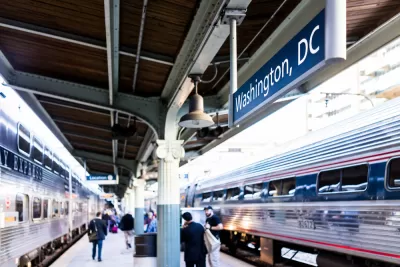
As Virginia's commuter traffic grew increasingly worse, state officials bet on passenger rail as a solution, making the state a nationwide leader in rail service. "The quest to get more residents on trains has earned Virginia accolades and a national spotlight, particularly as new transportation priorities in Washington elevate multimodal travel with an eye on reducing greenhouse gas emissions," writes Luz Lazo in the Washington Post. In March of this year, Virginia Governor Ralph Northam "signed a $3.7 billion, wide-ranging deal with Amtrak, commuter rail operator Virginia Railway Express and freight railroad CSX, promising to double passenger service in the state within the decade and create a path to separate freight and passenger traffic."
The state's efforts have included direct involvement such as "purchasing hundreds of miles of passenger right of way from private railroads and negotiating agreements to expand service." Support of rail services, writes Lazo, has brought together Democrats and Republicans in rare agreement. "Whether they’re a Republican from Southwest or a Democrat from Hampton Roads, everybody has wanted to bring better rail service to their communities," says Daniel L. Plaugher, executive director of Virginians for High Speed Rail. "In 2011, under Gov. Bob McDonnell (R), Virginia became one of a handful of states to create a dedicated funding source for rail projects, using a percentage of the state’s retail sales and use tax." Virginia transportation secretary Shannon Valentine argues that reliable, effective rail service is a bipartisan win-win that will make the region "healthier, more connected and more competitive."
FULL STORY: Virginia is a rising leader in passenger rail. Here’s how it happened.


Funding Approved for Key Rail Connection Between New Jersey and New York
The Portal Bridge is a key component of the larger Gateway Program that includes tunnels under the Hudson River. Fixing the Portal Bridge across the Hackensack River will provide tremendous relief to NJ Transit and Amtrak commuters.
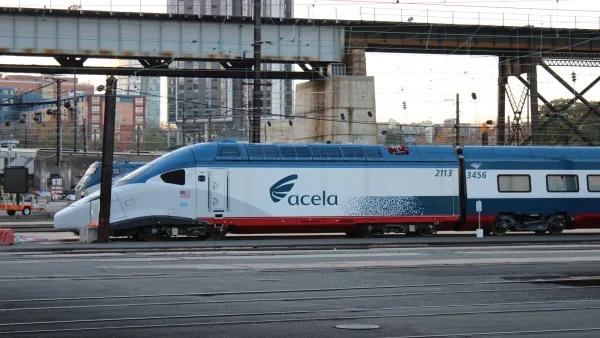
Amtrak expands $10 'Night Owl Fares' on Northeast Corridor
Passengers can buy $10-30 tickets for overnight trips between all Northeast Corridor destinations.
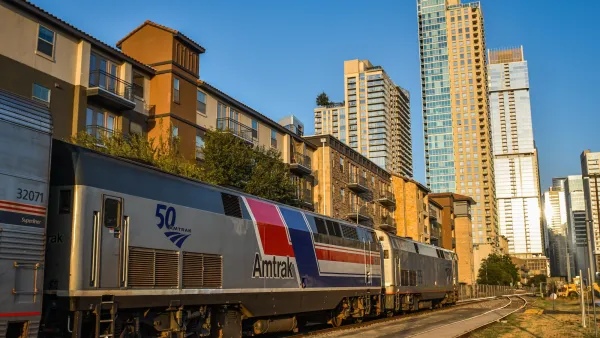
Texas DOT report outlines options for commuter rail between Austin and San Antonio
Amtrak currently operates just one trip per day between the two cities.

Planetizen Federal Action Tracker
A weekly monitor of how Trump’s orders and actions are impacting planners and planning in America.

The state-sanctioned urbicide of Austin
People don’t kill cities. Freeways do.

US to reduce Colorado River water deliveries to Mexico
A new Colorado Treaty amendment reduces Mexico’s Colorado River water allocation by 250,000 acre feet.

Baltimore to break ground on $50 million Transit Priority Project
The project will bring faster bus trips, safer streets and better bike connections to Baltimore.

Airbnb launches $250 million 'last-dollar financing' housing accelerator, makes first investment in Austin
The company will put $6.4 million towards affordable housing development in Texas’ capital.

Guerilla urbanists are building DIY bus stop benches in Chicago
A before-and-after of one of the bus stops with a new bench. The new benches are not officially sanctioned or permitted, but the residents who placed them hope they will be the start of a network of DIY benches across the city.

FREE Course: Walkable City 1: Why Walkability?
After describing his path towards focusing on walkability as the essence of good planning, Jeff Speck marches through his five principal reasons for making more walkable places.
Reinventing Malls: Planning Alchemy—Turning Gray Fields Into Gold
The course focuses on the opportunities and imperatives that shape reinvention of mall sites.

Eagle County Government
Harvard University Graduate School of Design
Nashville Planning Department
The Architects Foundation
University of Cincinnati Online
The Pocatello Development Authority
The Urban Renewal Agency of the City of Pocatello
Journal of the American Planning Association