The debate about whether the pedestrian-oriented changes made to the New York City streetscape during the pandemic should be permanent has a high-profile battleground on Park Avenue.


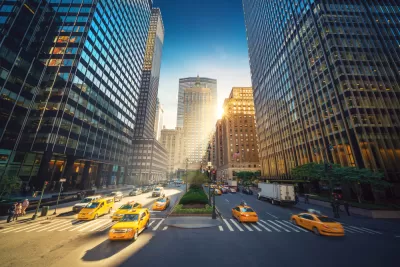
John Surico writes about a planning opportunity that could restore the median of Park Avenue in Manhattan to its former prominence as a pedestrian promenade.
"It has been a long time, but once it was possible and even fashionable to take a stroll through a far different Park Avenue, one with a green swath of lush lawn and shrubbery nearly 40 feet wide. It was the city’s first linear park, where pedestrians took precedence over cars and there were plenty of benches to take a break," according to Surico.
A project to repair an underground, "cavernous" shed used by Metro-North commuter trains traveling in and out of Grand Central Station also offers an opportunity to "transform Park Avenue’s malls and restore them to their original splendor," reports Surico.
"The work requires ripping up nearly a dozen streets along Park Avenue, from East 46th to East 57th Streets, making possible a new vision for that stretch of the thoroughfare."
"Among the options the city is considering is bringing back chairs and benches, along with more ambitious ideas like expanding the median, eliminating traffic lanes and carving out room for bike lanes and walking paths."
The Park Avenue project is just one example of an ongoing, citywide debate about whether the pandemic offered a chance to permanently rethink the city's streets, providing more space for pedestrians and people on bikes instead of more and more cars. As with other examples around the city, "the removal of traffic lanes along Park Avenue is likely to elicit backlash from drivers who complain that the addition of pedestrian plazas and bike lanes across the city has made it increasingly difficult to get around," writes Surico. The city has already retreated from some of the open streets and bus priority plans crafted during the pandemic.
FULL STORY: New York City Wants to Bring More Park to Park Avenue

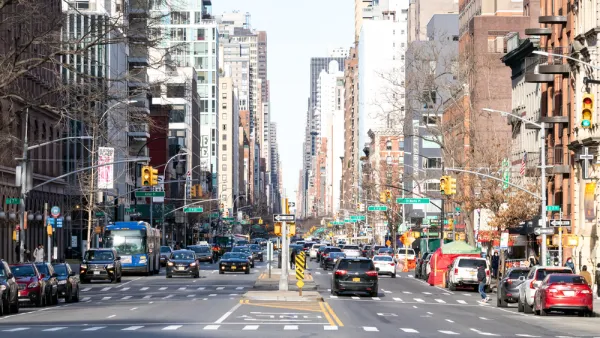
Third Avenue Redesign Plan Revealed
The plan to reimagine Manhattan’s Third Avenue to make it safer for pedestrians and cyclists is being applauded by advocates, but some say the city should go further to provide more space for multimodal transportation.
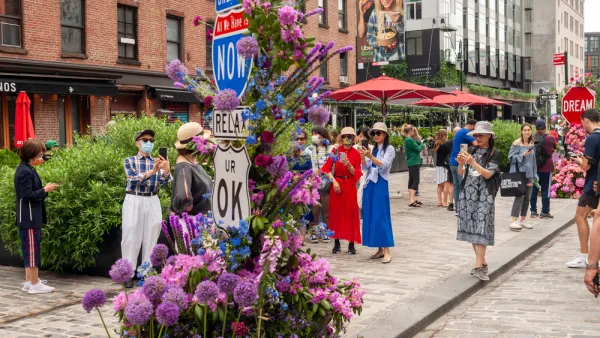
Permanent Car-Free Streets in Manhattan's Meatpacking District
The local Business Improvement District has decided to permanently block cars from a large swath of Manhattan's Meatpacking District.
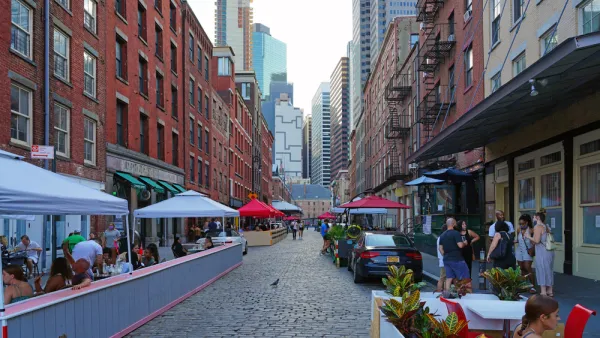
The Next Mayor Will Have to Decide in New York's Post-Pandemic Parking Conflicts
The ongoing political controversy about the priorities of the public realm in New York City is likely to last into the next mayoral administration.

Planetizen Federal Action Tracker
A weekly monitor of how Trump’s orders and actions are impacting planners and planning in America.

The state-sanctioned urbicide of Austin
People don’t kill cities. Freeways do.

US to reduce Colorado River water deliveries to Mexico
A new Colorado Treaty amendment reduces Mexico’s Colorado River water allocation by 250,000 acre feet.

5 New England states march closer to 800 megawatt wind energy project
Securing federal approval for the project may be complicated under the Trump administration, which has historically been hostile towards domestic wind power.

Baltimore to break ground on $50 million Transit Priority Project
The project will bring faster bus trips, safer streets and better bike connections to Baltimore.

Airbnb launches $250 million 'last-dollar financing' housing accelerator, makes first investment in Austin
The company will put $6.4 million towards affordable housing development in Texas’ capital.

FREE Course: Walkable City 1: Why Walkability?
After describing his path towards focusing on walkability as the essence of good planning, Jeff Speck marches through his five principal reasons for making more walkable places.
Reinventing Malls: Planning Alchemy—Turning Gray Fields Into Gold
The course focuses on the opportunities and imperatives that shape reinvention of mall sites.

Eagle County Government
Harvard University Graduate School of Design
Nashville Planning Department
The Architects Foundation
University of Cincinnati Online
The Pocatello Development Authority
The Urban Renewal Agency of the City of Pocatello
Journal of the American Planning Association