With dwindling revenue and a narrow scope for funding projects, it may be time for Washington State to re-evaluate its gas tax in favor of more sustainable revenue sources.


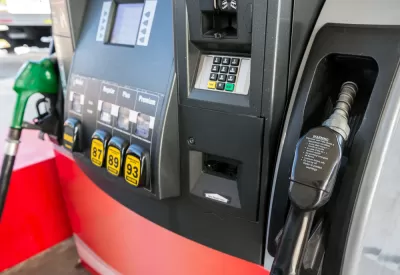
Anna Zivarts and Paulo Nunes-Ueno, in a guest post for PubliCola, advocate for ending the gas tax in Washington State, calling it "regressive and racist."
With gas consumption decreasing thanks to advancements in technology and transportation, the authors argue a gas tax "isn’t going to be a reliable revenue stream." The wealthy are more likely to own a fuel-efficient or electric vehicle, thus spending less, if anything, on gas taxes.
Furthermore, because of its mandate to fund exclusively highways, the gas tax does not benefit neighborhood roads or other forms of transportation. Zivarts and Nunes-Ueno claim "the gas tax restrictions are redlining on wheels, funneling investments away from BIPOC neighborhoods because of the restrictions in where revenue can be spent." Expanding the state's highway system, the authors write, is "inexcusable" at a time when "the Washington State Department of Transportation (WSDOT) estimates they have less than half of what they need to keep the current highway system in good repair."
The authors contend that Washington's gas tax, increased in the 1970s to fund highway construction after prolonged lobbying by highway proponents, is no longer a useful way to fund the state's transportation projects. To invest in multimodal projects that serve all residents, "we need new sustainable funding sources that are not regressive, racist, or running out."
FULL STORY: The Gas Tax is Regressive and Racist. Let's End It

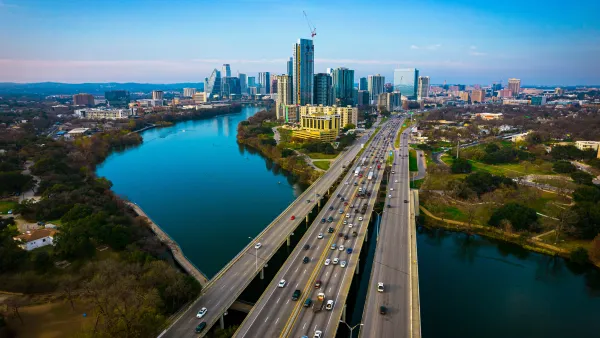
$138 billion Texas transportation plan to prioritize “Clear Lanes” congestion relief, highway construction
The plan includes $95 billion for transportation projects using existing state and federal revenue sources and $45 billion for project development and maintenance.
Why does Maryland's gas tax change every year?
The state's annual gas tax update may still not be enough to keep up with changes in the transportation sector and rising project costs.
Analysis: Suspending the gas tax wouldn't save Americans much on gas this summer
Even if Congress approves a proposal to temporarily lift the federal gas tax, a variety of other factors and transportation and processing delays would mean American consumers would see little difference at the pump.

Planetizen Federal Action Tracker
A weekly monitor of how Trump’s orders and actions are impacting planners and planning in America.

The state-sanctioned urbicide of Austin
People don’t kill cities. Freeways do.

US to reduce Colorado River water deliveries to Mexico
A new Colorado Treaty amendment reduces Mexico’s Colorado River water allocation by 250,000 acre feet.

5 New England states march closer to 800 megawatt wind energy project
Securing federal approval for the project may be complicated under the Trump administration, which has historically been hostile towards domestic wind power.

Baltimore to break ground on $50 million Transit Priority Project
The project will bring faster bus trips, safer streets and better bike connections to Baltimore.

Airbnb launches $250 million 'last-dollar financing' housing accelerator, makes first investment in Austin
The company will put $6.4 million towards affordable housing development in Texas’ capital.

FREE Course: Walkable City 1: Why Walkability?
After describing his path towards focusing on walkability as the essence of good planning, Jeff Speck marches through his five principal reasons for making more walkable places.
Reinventing Malls: Planning Alchemy—Turning Gray Fields Into Gold
The course focuses on the opportunities and imperatives that shape reinvention of mall sites.

Eagle County Government
Harvard University Graduate School of Design
Nashville Planning Department
The Architects Foundation
University of Cincinnati Online
The Pocatello Development Authority
The Urban Renewal Agency of the City of Pocatello
Journal of the American Planning Association