Cities like Vancouver are rethinking parking minimums as they try to meet climate goals, reduce traffic, and reallocate street space to other modes.


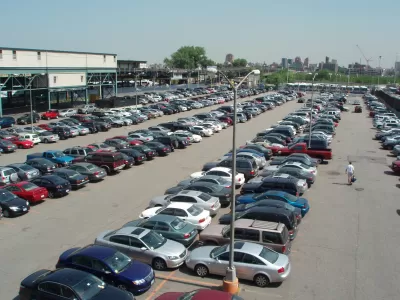
To counter the current model of prioritizing parking with each new development, Vancouver's city council approved a motion shifting focus toward "open option parking," giving developers a choice when it comes to providing on-site parking. Acknowledging that car owners will look for on-street parking, the city is also implementing a permit parking system for resident vehicles. The goal, writes Frances Bula for the Sightline Institute, is to signal to the public that "roads are not free space or a right to free car storage," a mentality that has prevailed for decades in cities.
Like many cities, Vancouver has a parking requirement of roughly one stall for every residential unit and similar rules for different types of commercial and office space. Removing these requirements would make it the second Canadian city, and only one of a few in North America, to legalize optional on-site residential parking in the entire city.
Critics of "excessive" parking mandates argue that the regulations raise the cost of construction, reduce the space available for pedestrians, bikes, and other uses, and prioritize car owners above everyone else. As cities move to reduce greenhouse gas emissions, alleviate congestion, and provide more affordable housing, parking policies have come to signify an outdated planning tool that negatively impacts neighborhoods and the environment.
Read the full story: The Hidden Costs of “Over-Parking” Our Cities

Parking Reform Yields New Housing
As more cities eliminate or reduce their minimum parking requirements, the impact on housing supply is coming into focus.

How Park(ing) Day Leads to Permanent Change
Small-scale interventions can lead the way to major parking reforms.

Birmingham, Ala. Passes ‘Landmark’ Parking Reform
New businesses in Birmingham, Alabama will no longer have to provide a minimum number of parking spaces.

Planetizen Federal Action Tracker
A weekly monitor of how Trump’s orders and actions are impacting planners and planning in America.

Amtrak, CN end decades-long dispute with eight-year agreement
The new operating agreement establishes an updated framework for the companies to work together, including processes to resolve disputes.

Judges permit Denver to divert 77,000 acre feet from the Colorado River for reservoir expansion
Overuse and climate change have caused the Colorado River’s water levels to plummet.

NYC DOT wants faster, more permanent street upgrades
The city is examining ways to build more concrete infrastructure without getting entangled in 'decades-long' projects.

'Something we’ve never seen before:' rising utility rates could strain city finances nationwide
Data centers, climate change and other factors have caused utility rates in the United States to increase by 38% since 2020.

Trump to overrule local leaders, lease millions of acres of America’s Pacific Island territories’ seafloors to mining companies
International law says that the Indigenous people of America’s territories have a right to prior and informed consent regarding projects that impact their countries.

FREE Course: Walkable City 1: Why Walkability?
After describing his path towards focusing on walkability as the essence of good planning, Jeff Speck marches through his five principal reasons for making more walkable places.
Reinventing Malls: Planning Alchemy—Turning Gray Fields Into Gold
The course focuses on the opportunities and imperatives that shape reinvention of mall sites.

Harvard University Graduate School of Design
KFH Group Inc.
Greater Baltimore Committee
The Architects Foundation
University of Cincinnati Online
The Pocatello Development Authority
The Urban Renewal Agency of the City of Pocatello