New businesses in Birmingham, Alabama will no longer have to provide a minimum number of parking spaces.



The Birmingham, Alabama city council passed a “landmark” parking reform measure this week to eliminate minimum parking requirements for new businesses citywide, according to local news outlet WVTM 13. The measure, called the “Right Side Parking Initiative,” is part of the city’s plans to become more walkable, bikeable, and transit accessible.
“The city stated parking spaces will not be totally eliminated for new businesses, but will allow them flexibility in supporting their customers' needs,” and “The Americans with Disabilities Act requirements for parking will remain the same,” reports WVTM 13’s Shannon Delcambre.
With this reform, Birmingham joins the ranks of more than 70 U.S. cities to have eliminated parking minimums, including San Francisco, Ann Arbor, Michigan, Cincinnati, and Minneapolis. Research shows that removing parking mandates can also lower the cost of housing production, encourage affordable workforce housing, and reduces the heating effect on the environment, Delcambre writes.
Read the full story: New parking reform in Birmingham to help city be more walkable, bikeable

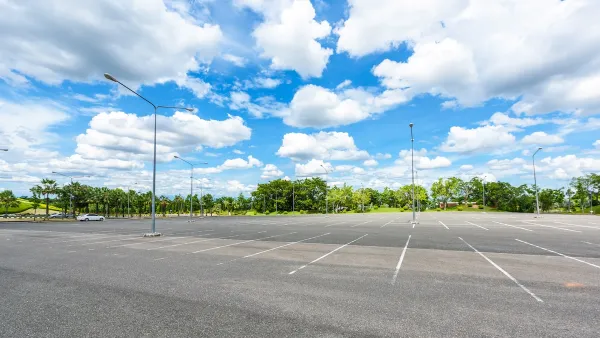
Parking Reform Yields New Housing
As more cities eliminate or reduce their minimum parking requirements, the impact on housing supply is coming into focus.

How Park(ing) Day Leads to Permanent Change
Small-scale interventions can lead the way to major parking reforms.
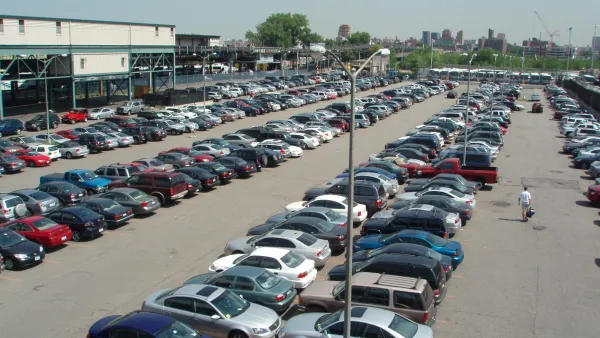
Is the Era of Over-Parking Over?
Cities like Vancouver are rethinking parking minimums as they try to meet climate goals, reduce traffic, and reallocate street space to other modes.

Planetizen Federal Action Tracker
A weekly monitor of how Trump’s orders and actions are impacting planners and planning in America.

California plans to bury El Niño’s downpour
If the state plays its cards right, it may be able to store a billion acre-feet of El Niño’s water in aquifers.

Desperate measures: Advocates weigh draining Lake Powell to fill Colorado River
Draining the reservoir could reduce evaporation losses by a couple hundred thousand acre-feet.

Chicago Avenue bridge construction delays enrages city leaders
The bridge has been closed since 2025. The city originally aimed to re-open it in December, and now expects to finish construction in 2027.

NYC bus network redesign speeds up Queens buses
Rush routes have seen a 4.6% speed increase after the redesign.

California High-Speed Rail Authority picks trainset manufacturer
The California High-Speed Rail Authority aims to start servicing passengers by 2033.

FREE Course: Walkable City 1: Why Walkability?
After describing his path towards focusing on walkability as the essence of good planning, Jeff Speck marches through his five principal reasons for making more walkable places.
Reinventing Malls: Planning Alchemy—Turning Gray Fields Into Gold
The course focuses on the opportunities and imperatives that shape reinvention of mall sites.

City of Rosemead
Rutgers University, Edward J. Bloustein School of Planning and Public Policy
One Hundred Miles
Hunter College, City University of New York (CUNY)
The Architects Foundation
University of Cincinnati Online
City of Cambridge
Montrose County
The Pocatello Development Authority