Colombia's capital city, the birthplace of the Ciclovía, is devoting public space to bikes during lockdown. To reduce traffic, the city plans to allocate even more public space to bike infrastructure and sustainable mobility moving forward.


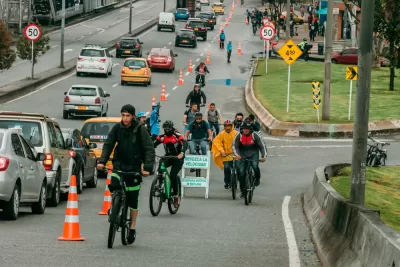
The city of Bogotá has engaged in what Andrea Jaramillo describes as a "bike-lane building spree that could be a model in Latin America" in an effort to mitigate a resurgence of traffic congestion after lockdown. "Currently, almost 7% of overall trips in Bogotá are on bicycles, more than in any other city in Latin America. But the city is aiming much higher: The long-term goal is to have 50% of total trips made on bikes or other micromobility alternatives such as scooters," writes Jaramillo.
Jaramillo's article describes Colombia's capital city's tried relationship with congestion and public transportation. Without a subway system, about 40% of the nation's trips make use of the TransMilenio bus rapid transit system. The famously traffic-laden city is also known for its narrow streets, densely populated neighborhoods, air pollution.
Mayor Claudia López wants to change the city's car-reliant reputation and reality by continuing the work for former mayor Enrique Peñalosa to increase bike infrastructure and encourage more Borotanos to travel by bike. "While 65% of households don’t own a car, 85% of the city’s public space is currently used up by motorized vehicles, Nicolás Estupiñán, Bogotá’s secretary of mobility, said in a webcast in June," reports Jaramillo. One step in the bike direction: setting aside a fifth of parking for bike lanes during the pandemic.
Read the full story: Bogotá Is Building its Future Around Bikes
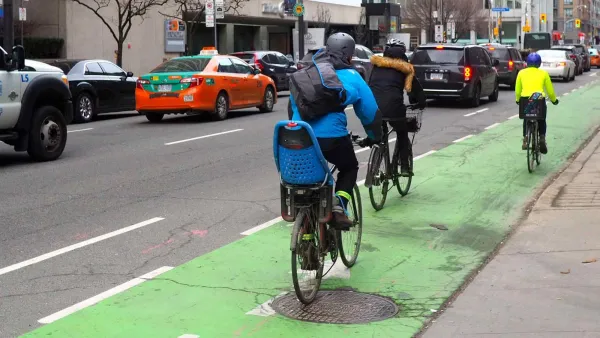
Toronto's Expanded its Bike Infrastructure Network to Run Parallel to Transit Lines
The Toronto City Council approved a quick expansion of bike lanes around the city to provide an alternative to public transit during and after the pandemic.
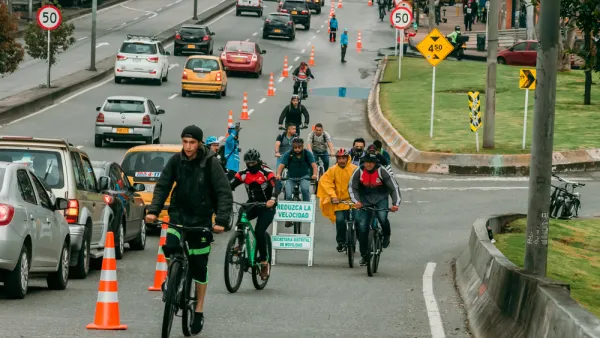
Bogotá Expanding Bike Infrastructure to Respond to Coronavirus
Bogotá, Colombia is preparing for the coronavirus pandemic by making space for people on bikes in the public realm, calling bikes a hygienic option for mobility.
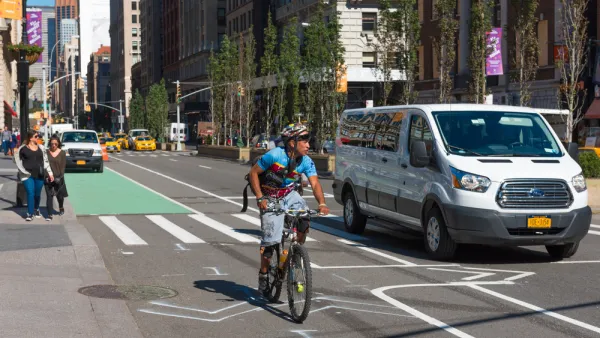
New York Poised to Become a Biking City
Could the pandemic be a tipping point for a century of car-centric planning in New York City's to give way to a more bike-friendly city?

Planetizen Federal Action Tracker
A weekly monitor of how Trump’s orders and actions are impacting planners and planning in America.

Eastern Nebraska is running out of electricity
Data centers and electrification are straining eastern Nebraska’s grid, throttling economic development.

Study reveals best places in the U.S. for cycling, walking
New research from Streetlight Data examines bicycle and pedestrian miles per capita in the 100 largest U.S. cities by population.

Next-generation nuclear reactors are coming to Texas
The reactors will not require towering containment structures thanks to new safety features.

California distributes $1.3 billion to prevent transit service cuts, bolster projects
Twenty-eight projects across California received a portion of the funding.

Pennsylvania Democrats have 15 affordability, clean energy bills for flipped state Senate
Bills in consideration include a bill supporting geothermal energy and a bill supporting solar on warehouses.

FREE Course: Walkable City 1: Why Walkability?
After describing his path towards focusing on walkability as the essence of good planning, Jeff Speck marches through his five principal reasons for making more walkable places.
Reinventing Malls: Planning Alchemy—Turning Gray Fields Into Gold
The course focuses on the opportunities and imperatives that shape reinvention of mall sites.

City of Charlotte
City of Rosemead
Rutgers University, Edward J. Bloustein School of Planning and Public Policy
University of Michigan School for Environment and Sustainability (SEAS)
Hunter College, City University of New York (CUNY)
The Architects Foundation
City of Cambridge
The Pocatello Development Authority
The Urban Renewal Agency of the City of Pocatello