The Toronto City Council approved a quick expansion of bike lanes around the city to provide an alternative to public transit during and after the pandemic.


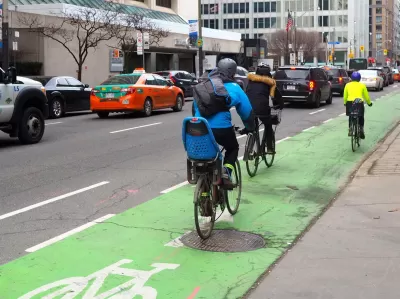
"The city is rolling ahead with a rapid expansion of its cycling network that will see separated bike lanes installed on major thoroughfares including Bloor Street, Danforth Avenue and University Avenue by the end of July," reports Ben Spurr.
The city will add 25 kilometres of new bike bike lanes along Bloor, Danforth, and University—alignments that "mirror previously crowded TTC subway lines that are expected to operate at reduced capacity for the foreseeable future, and the cycling routes are intended to provide residents who previously relied on transit with new travel options," according to Spurr.
More information about the expansion of bike lanes in Toronto is available in an article written by Spurr before the City Council vote.
FULL STORY: Toronto council approves major expansion of bike network

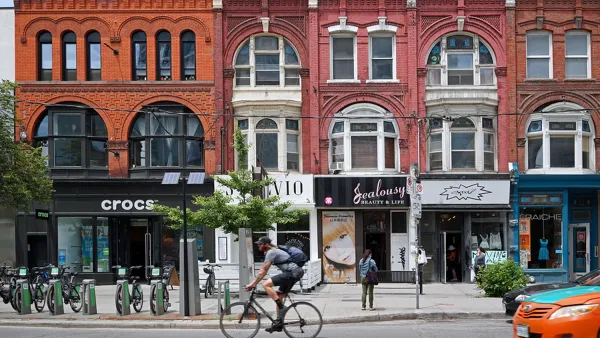
Biking Takes Off in Toronto
People in cities all over the world are choosing the bike as their preferred mode of transportation as the coronavirus shakes up work and travel patterns. Residents of the largest city in Canada are no exception.
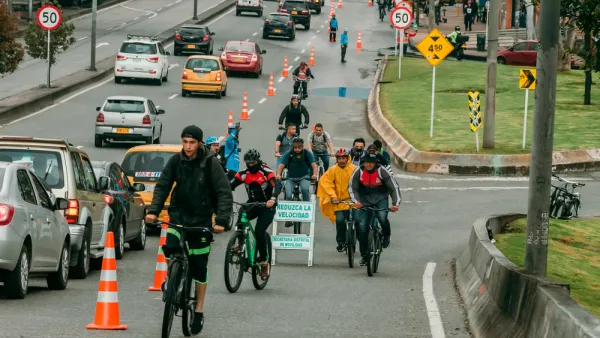
Bogotá Commits to the Bicycle
Colombia's capital city, the birthplace of the Ciclovía, is devoting public space to bikes during lockdown. To reduce traffic, the city plans to allocate even more public space to bike infrastructure and sustainable mobility moving forward.
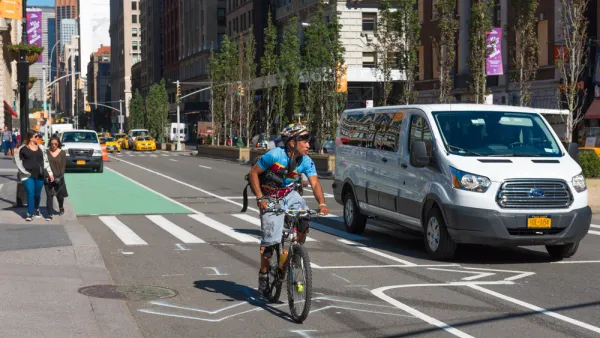
New York Poised to Become a Biking City
Could the pandemic be a tipping point for a century of car-centric planning in New York City's to give way to a more bike-friendly city?

The state-sanctioned urbicide of Austin
People don’t kill cities. Freeways do.

US to reduce Colorado River water deliveries to Mexico
A new Colorado Treaty amendment reduces Mexico’s Colorado River water allocation by 250,000 acre feet.

New Jersey’s second-largest city bans standalone data centers
Jersey City will continue to allow co-location facilities, such as those meant for research institutions that store their own data.

Amtrak not solely to blame for New Jersey commuter rail's unreliability, report finds
A new study from the Garden State Initiative found that NJ Transit’s budget grew 20% across a 4 year period, but reliability declined significantly over the same period.

EPA erases limits on planet-warming pollution from power plants
Under Monday’s plan, power plants would still have some limits on how much mercury, arsenic and other contaminants they can emit.

Phoenix announces new on-demand transit service, more frequent RAPID buses
Both new services will launch in October, and are part of Phoenix's Project Effective Access Solutions for Easing Congestion.

FREE Course: Walkable City 1: Why Walkability?
After describing his path towards focusing on walkability as the essence of good planning, Jeff Speck marches through his five principal reasons for making more walkable places.
Reinventing Malls: Planning Alchemy—Turning Gray Fields Into Gold
The course focuses on the opportunities and imperatives that shape reinvention of mall sites.

Eagle County Government
Harvard University Graduate School of Design
Nashville Planning Department
The Architects Foundation
University of Cincinnati Online
The Pocatello Development Authority
The Urban Renewal Agency of the City of Pocatello
Journal of the American Planning Association