The new normal might be fleeting on buses in New York City, but it's already different than the normal routine during the early months of the pandemic.


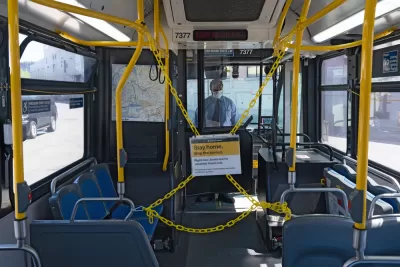
"Riders are getting back on the bus, but speeds are also dropping to pre-pandemic levels because of an increase in both riders and traffic, new MTA data show," according to an article by Dave Colon.
"Bus ridership hit a coronavirus-era high of about 1.2 million riders on July 9, up from a low of 430,000, but is still roughly half of normal ridership," reports Dave Colon regarding the slow climb of bus ridership. Bus speeds, however, "have dropped from the recent high of a citywide average of 9.2 miles per hour, down to 8.6 miles per hour, a 6.5-percent decrease."
New York City Transit Senior Vice President Craig Cipriano is cited by Colon offering several factors as explanation for the declining bus speeds—everything from street closures for Black Lives Matter protests to increased ridership and increased congestion caused by additional cars on the streets.
Read the full story: Good News, Bad News: Riders Return To Buses — But Speeds Are Dropping

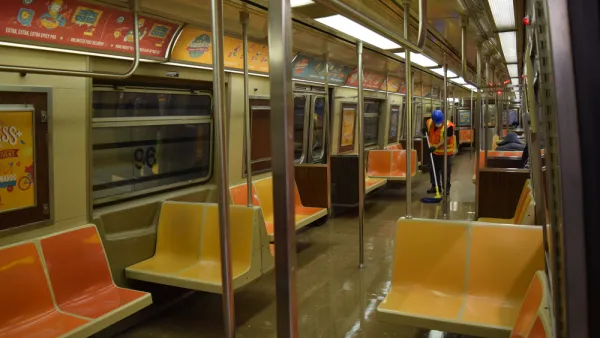
Subway Ridership Starting to Rise in New York City, but not as Quickly as Car Trips
A noticeable increase in subway ridership has been taking place on subway trains in New York City, but not enough to call it a comeback, yet.
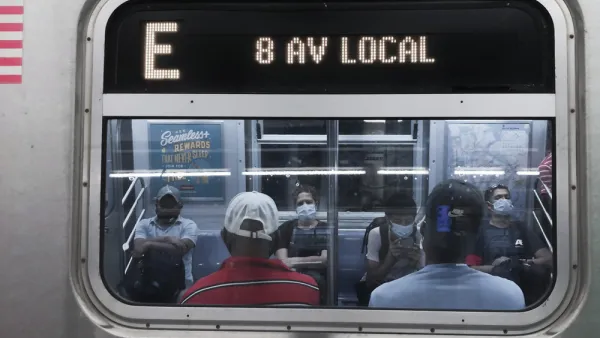
New York Subway Sets Pandemic Ridership Record
With school back in session and Broadway shows open to the public, subway ridership is surging in New York City, but still well below pre-pandemic levels.
Report: New York MTA Facing 'Greatest Crisis' in its History
A new report on the finances of the New York Metropolitan Transportation Authority (MTA) makes a desperate plea for assistance from the federal government.

Planetizen Federal Action Tracker
A weekly monitor of how Trump’s orders and actions are impacting planners and planning in America.

California plans to bury El Niño’s downpour
If the state plays its cards right, it may be able to store a billion acre-feet of El Niño’s water in aquifers.

Chicago breaks ground on $3 billion megadevelopment
The new neighborhood, titled Foundry Park, will one day host 3,700 residences.

California High-Speed Rail Authority CEO resigns after $600,000 scandal
Under Ian Choudri, the authority used taxpayer dollars to fund first class flights and trips to nightclubs.

Want to study the Missouri River? Soon, you may need unanimous approval from 10 states
Legislation would require 10 governors’ permission to study or build projects moving water outside the basin.

Desperate measures: Advocates weigh draining Lake Powell to fill Colorado River
Draining the reservoir could reduce evaporation losses by a couple hundred thousand acre-feet.

FREE Course: Walkable City 1: Why Walkability?
After describing his path towards focusing on walkability as the essence of good planning, Jeff Speck marches through his five principal reasons for making more walkable places.
Reinventing Malls: Planning Alchemy—Turning Gray Fields Into Gold
The course focuses on the opportunities and imperatives that shape reinvention of mall sites.

City of Rosemead
Rutgers University, Edward J. Bloustein School of Planning and Public Policy
One Hundred Miles
Hunter College, City University of New York (CUNY)
The Architects Foundation
University of Cincinnati Online
City of Cambridge
Montrose County
The Pocatello Development Authority