The racist history of planning in Los Angeles is particularly evident in the way Interstate freeways were planned in the region.


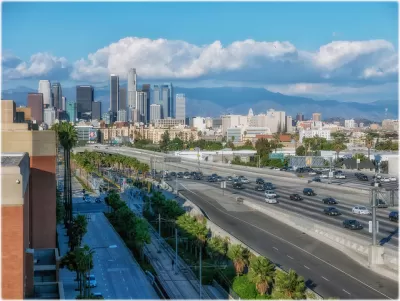
You've probably heard that the construction of the nation's interstate freeway system was racist both in intent and consequence, but Los Angeles' example provides evidence of just how tragically effective they were to those ends.
After recounting the many monuments that have been pulled down by protestors in recent weeks, in a "moment of truth telling," writes Mathew Fleischer, cities like Los Angeles need to reckon with another monument to racism: urban freeways.
"Most Angelenos don’t think about it as we spew carbon monoxide across the city on our way from Point A to Point B, but our toxic exhaust fumes feed into a pot of racism that’s been stewing for nearly a century," writes Fleischer.
After recalling numerous planning decisions that took Black wealth and property around the Los Angeles region as it boomed in population in the first half of the 20th century, Fleischer mentions the coup de grace, the Interstate Highway Act of 1944, signed on June 29, 1956.
"When the 1944 Federal-Aid Highway Act allocated funds for 1,938 miles of freeways in California, planners used the opportunity, with full federal support, to obliterate as much as possible the casual mingling of the races."
Fleischer tells a lot more of the history of racial segregation and disempowerment as manifest by the freeways in Los Angeles, referencing two books along the way for potential additional reading: If You Build It, They Will Move, by Gilbert Estrada, and The Color of Law, by Richard Rothstein.
Eventually, Felischer ties the history of freeways in Los Angeles back to the contemporary moment of truth telling.
"Remedying the enduring effects of white supremacy will be far more challenging — in progressive Los Angeles as much as in Alabama or Mississippi. And it will be impossible if we aren’t honest about the history that made things the way they are —and the massive undertaking it will require to remedy them."
FULL STORY: Want to tear down insidious monuments to racism and segregation? Bulldoze L.A. freeways

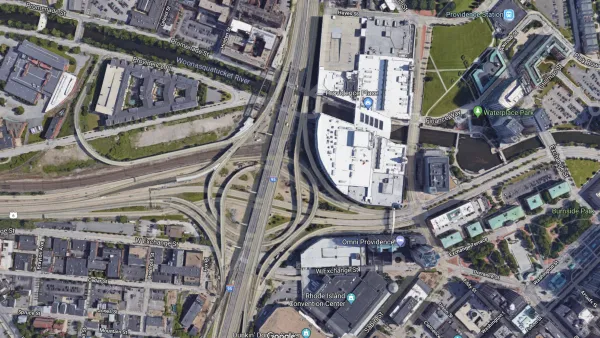
The Foundational Myth of America's Interstate Highway System
The erroneous belief that the negative impacts of interstate highways are simply "unintended consequences" fails to demand accountability for the project's failures.
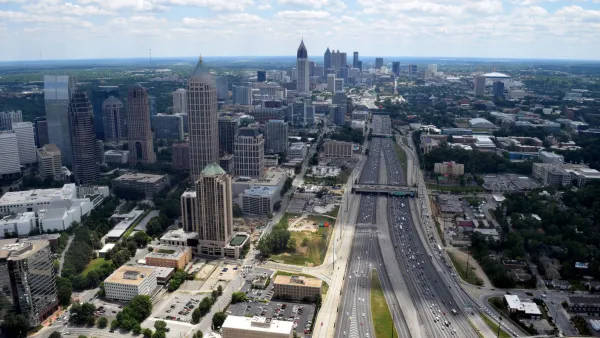
The Deliberate Segregation of U.S. Cities, as Evidenced by Freeway Congestion
A thorough and damning indictment of 20th century land use and infrastructure planning, and its contemporary legacy of segregation and congestion.
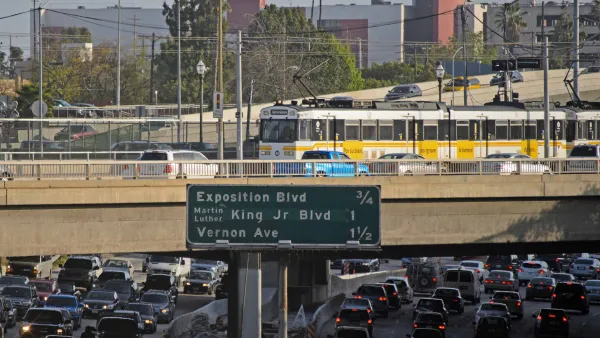
Congestion Pricing Study Taking Shape in Los Angeles
New York City is the furthest along with a congestion pricing scheme, but San Francisco and Los Angeles are catching up in California.

Planetizen Federal Action Tracker
A weekly monitor of how Trump’s orders and actions are impacting planners and planning in America.

The state-sanctioned urbicide of Austin
People don’t kill cities. Freeways do.

US to reduce Colorado River water deliveries to Mexico
A new Colorado Treaty amendment reduces Mexico’s Colorado River water allocation by 250,000 acre feet.

5 New England states march closer to 800 megawatt wind energy project
Securing federal approval for the project may be complicated under the Trump administration, which has historically been hostile towards domestic wind power.

Baltimore to break ground on $50 million Transit Priority Project
The project will bring faster bus trips, safer streets and better bike connections to Baltimore.

Airbnb launches $250 million 'last-dollar financing' housing accelerator, makes first investment in Austin
The company will put $6.4 million towards affordable housing development in Texas’ capital.

FREE Course: Walkable City 1: Why Walkability?
After describing his path towards focusing on walkability as the essence of good planning, Jeff Speck marches through his five principal reasons for making more walkable places.
Reinventing Malls: Planning Alchemy—Turning Gray Fields Into Gold
The course focuses on the opportunities and imperatives that shape reinvention of mall sites.

Eagle County Government
Harvard University Graduate School of Design
Nashville Planning Department
The Architects Foundation
University of Cincinnati Online
The Pocatello Development Authority
The Urban Renewal Agency of the City of Pocatello
Journal of the American Planning Association