The federal government was already slow to cooperate with a plan to charge automobile drivers for entering certain parts of Manhattan, but with coronavirus commanding so much attention, the project isn't likely to move forward any time soon.


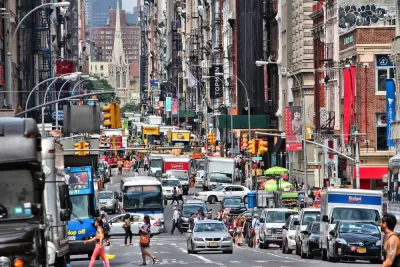
"New York’s congestion pricing plan is on ice thanks in part to the coronavirus pandemic — and the delay could imperil the MTA’s plans to overhaul the city’s mass transit networks," reports Clayton Guse.
"The plan to toll vehicles in Manhattan south of 60th St. is intended to fund $15 billion of the Metropolitan Transportation Authority’s $51.5 billion five-year capital plan, which includes the rapid modernization of delay-inducing subway signals and accessibility additions to 66 subway stations," explains Guse of the transit planning connection to the congestion pricing scheme proposed for automobile drivers on the streets of Manhattan.
As noted by Guse, the congestion pricing scheme had already encountered delays while seeking federal environmental approval for the plan, but the coronavirus adds a new layer of difficulty. "Now, with the feds in the trenches of a pandemic, transit honchos don’t expect congestion pricing to be a priority for officials in the Trump administration," according to Guse.

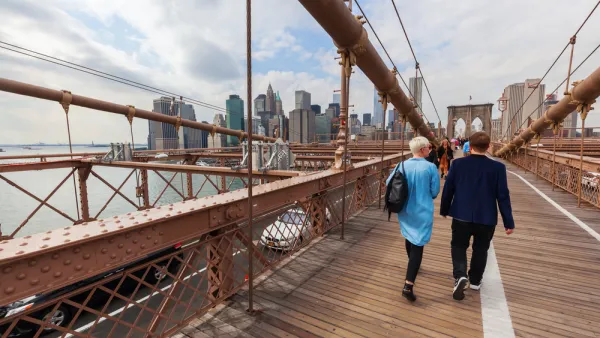
First New Bridge to Manhattan in Decades Proposed Just for Pedestrians and People on Bikes
Introducing the proposed Queens Ribbon Bridge, a $100 million idea to connect Manhattan to Long Island City in Queens, by way of Roosevelt Island.
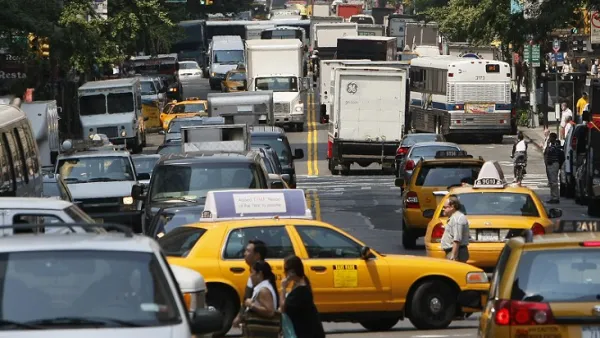
Congestion Pricing Details Emerge From MTA’s Environmental Assessment
After more than a decade of delays and reversals, congestion pricing is expected to take effect in Manhattan in late 2023 or early 2024.
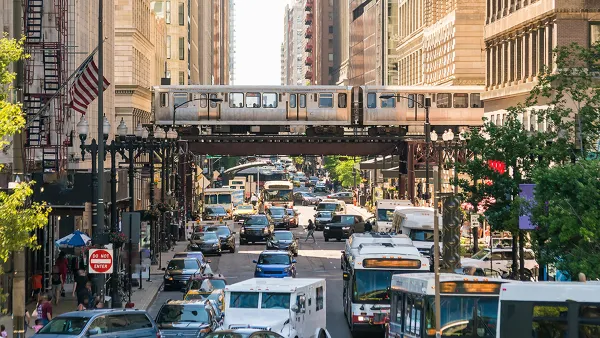
Planning for Congestion Relief
The third and final installment of Planetizen's examination of the role of the planning profession in both perpetuating and solving traffic congestion.

Planetizen Federal Action Tracker
A weekly monitor of how Trump’s orders and actions are impacting planners and planning in America.

The state-sanctioned urbicide of Austin
People don’t kill cities. Freeways do.

US to reduce Colorado River water deliveries to Mexico
A new Colorado Treaty amendment reduces Mexico’s Colorado River water allocation by 250,000 acre feet.

Mamdani overhauls NYC's Vision Zero plan with 100 new policy goals
The overhaul aims to reduce traffic deaths and make streets safer for pedestrians, cyclists and drivers through lower speed limits, new safety infrastructure and more.

Amtrak not solely to blame for New Jersey commuter rail's unreliability, report finds
A new study from the Garden State Initiative found that NJ Transit’s budget grew 20% across a 4 year period, but reliability declined significantly over the same period.

EPA erases limits on planet-warming pollution from power plants
Under Monday’s plan, power plants would still have some limits on how much mercury, arsenic and other contaminants they can emit.

FREE Course: Walkable City 1: Why Walkability?
After describing his path towards focusing on walkability as the essence of good planning, Jeff Speck marches through his five principal reasons for making more walkable places.
Reinventing Malls: Planning Alchemy—Turning Gray Fields Into Gold
The course focuses on the opportunities and imperatives that shape reinvention of mall sites.

Eagle County Government
Harvard University Graduate School of Design
Nashville Planning Department
The Architects Foundation
University of Cincinnati Online
The Pocatello Development Authority
The Urban Renewal Agency of the City of Pocatello
Journal of the American Planning Association