While New York City's congestion pricing scheme waits for needed federal approval, political support seems to waver.


According to Dana Rubinstein, New York City officials still aren’t sure if a proposed congestion pricing scheme requires an environmental assessment or an environmental impact statement. The latter could take years to complete. The reason for the lack of certainty: officials at the U.S. Department of Transportation haven't communicated an answer to that question, despite officials at the city and state level posing the question to federal officials ten months ago.
"That haziness puts MTA officials, and the massive system-wide rehabilitation plan whose funding is reliant on congestion pricing, in a serious bind," writes Rubinstein.
The plan was to launch the congestion pricing scheme in January 2021, but that's looking less likely all the time—especially if the city and the state eventually do have to undertake an environmental impact statement.
In a later, follow up article on the same subject, Rubinstein reports that New York Governor Andrew Cuomo has begun to cast doubt on the program. 'I’m not holding my breath for them to approve congestion pricing,' Cuomo is quoted as saying in the article.
Paul Berger originally reported the federal delay on the congestion pricing scheme in a paywalled article for the Wall Street Journal.
FULL STORY: Why congestion pricing might be delayed

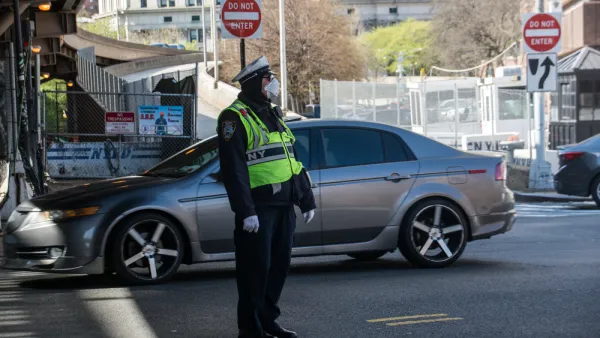
Federal Inaction Delays Congestion Pricing by at Least a Year in New York City
Bad news for one of the most innovative transportation planning schemes in the country, with long-term impacts on planning and construction in New York City.
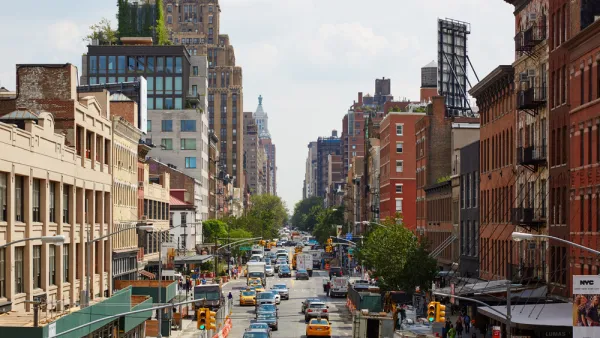
Environmental Assessment for Manhattan Congestion Pricing Scheduled Until December 2022
An idea approved in 2019 which spent the last two years stuck in Trump and Covid limbo, will only now begin a slow march toward final approval.
New U.S. DOT Policy Limits Page Length of Environmental Impact Statements
The U.S. Department of Transportation is following through President Trump's promises to ease the federal government's permitting and approvals processes for infrastructure projects.

The state-sanctioned urbicide of Austin
People don’t kill cities. Freeways do.

US to reduce Colorado River water deliveries to Mexico
A new Colorado Treaty amendment reduces Mexico’s Colorado River water allocation by 250,000 acre feet.

New Jersey’s second-largest city bans standalone data centers
Jersey City will continue to allow co-location facilities, such as those meant for research institutions that store their own data.

Amtrak not solely to blame for New Jersey commuter rail's unreliability, report finds
A new study from the Garden State Initiative found that NJ Transit’s budget grew 20% across a 4 year period, but reliability declined significantly over the same period.

EPA erases limits on planet-warming pollution from power plants
Under Monday’s plan, power plants would still have some limits on how much mercury, arsenic and other contaminants they can emit.

Phoenix announces new on-demand transit service, more frequent RAPID buses
Both new services will launch in October, and are part of Phoenix's Project Effective Access Solutions for Easing Congestion.

FREE Course: Walkable City 1: Why Walkability?
After describing his path towards focusing on walkability as the essence of good planning, Jeff Speck marches through his five principal reasons for making more walkable places.
Reinventing Malls: Planning Alchemy—Turning Gray Fields Into Gold
The course focuses on the opportunities and imperatives that shape reinvention of mall sites.

Eagle County Government
Harvard University Graduate School of Design
Nashville Planning Department
The Architects Foundation
University of Cincinnati Online
The Pocatello Development Authority
The Urban Renewal Agency of the City of Pocatello
Journal of the American Planning Association