The public got its first taste of the ambitions of the Project Connect transit plan in the state capital of Texas.


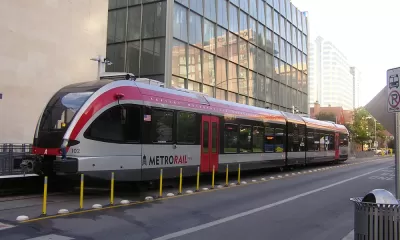
"After months of speculation and rumors, officials Tuesday offered a glimpse at a massive transportation plan — which includes a downtown subway — aimed to usher in a new generation of transit for a growing city," reports Alyssa Gourd.
It was the first time potential details of the Project Connect transit plan were made public, according to Gourd.
The plan is currently under development by the Austin City Council and Capital Metro Board. "The transit plans these groups are looking at range from $3.2-$10.2 billion, depending on the features they select," according to Gourd. "CapMetro explained they believe they can pay for 40% of this amount through federal grants." A public vote is one option for the remainder of funding.
A separate article by Paul Livengood and Hank Cavagnaro summarizes the scope of Project Connect, at this early point in the planning process, thusly: "Capital Metro announced its Project Connect transit system on Tuesday, which includes more MetroRail options and the construction of an underground tunnel housing a light rail system in the Downtown Austin area."
"The tunnel is a portion of one of two proposed transitways designed to alleviate downtown traffic and prevent cars from getting stuck behind a transit vehicle, according to city documents," according to Livengood and Cavagnaro.
The Project Connect website lists four primary visions for the plan: transitways, better bus service, improved commuter rail, and new transit centers.
Planetizen first picked up news about Austin's intentions to complete a big, ambitious transit plan in November 2019.
FULL STORY: A subway in Austin? City leaders explore massive transit expansion


Transit Galore in Capital Metro's New Transit Plan for Austin
New light rail lines, dedicated busways, and expanded bus and commuter rail service are on the Project Connect menu.

Austin’s Project Connect Transit Plan Drastically Reduced
The details of drastic reductions to the proposed building program for Austin’s Project Connect long-range transit plan are now open for public comment.
Revisions Looming, Austin’s Project Connect Reveals the Obstacles of Transit Planning in 2023
A once sprawling and singularly ambitious capital investment plan for the Capital Metro system will soon be reduced in size and scope. The episode is more evidence of an emerging era of transit planning austerity.

Planetizen Federal Action Tracker
A weekly monitor of how Trump’s orders and actions are impacting planners and planning in America.

The state-sanctioned urbicide of Austin
People don’t kill cities. Freeways do.

US to reduce Colorado River water deliveries to Mexico
A new Colorado Treaty amendment reduces Mexico’s Colorado River water allocation by 250,000 acre feet.

Mamdani overhauls NYC's Vision Zero plan with 100 new policy goals
The overhaul aims to reduce traffic deaths and make streets safer for pedestrians, cyclists and drivers through lower speed limits, new safety infrastructure and more.

Amtrak not solely to blame for New Jersey commuter rail's unreliability, report finds
A new study from the Garden State Initiative found that NJ Transit’s budget grew 20% across a 4 year period, but reliability declined significantly over the same period.

EPA erases limits on planet-warming pollution from power plants
Under Monday’s plan, power plants would still have some limits on how much mercury, arsenic and other contaminants they can emit.

FREE Course: Walkable City 1: Why Walkability?
After describing his path towards focusing on walkability as the essence of good planning, Jeff Speck marches through his five principal reasons for making more walkable places.
Reinventing Malls: Planning Alchemy—Turning Gray Fields Into Gold
The course focuses on the opportunities and imperatives that shape reinvention of mall sites.


Eagle County Government
Harvard University Graduate School of Design
Nashville Planning Department
The Architects Foundation
University of Cincinnati Online
The Pocatello Development Authority
The Urban Renewal Agency of the City of Pocatello
Journal of the American Planning Association