With an aggressive plan to build out numerous public transit lines in time for the 2028 Olympics, local officials are scrambling to fill funding gaps as prices continue to rise and catch planners and officials by surprise.


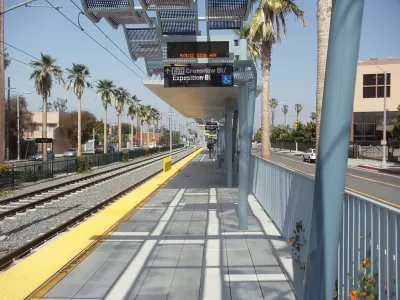
Laura J. Nelson reports on the ongoing funding gaps at major transit construction projects in the Los Angeles region, amounting to billions of dollars.
"With billions of dollars still to secure, and pressure building to open as many lines as possible before the 2028 Summer Olympics in Los Angeles, Metropolitan Transportation Authority officials are beginning to explore new funding models, including long-term deals with the private sector to fund and operate lines," according to Nelson.
Local officials are pressing for four major projects to be added to an already busy construction schedule. A transit line through the Sepulveda Pass, a rail line to Artesia, and an Eastside extension of the Gold Line and a Green Line extension to Torrance would be added to planned construction of "the Westside subway, the downtown Regional Connector subway, and a rail line in the San Fernando Valley," according to Nelson.
"Accelerating those lines would require $3.3 billion more for construction, interest on an additional $10 billion in debt financing and $1.2 billion to operate the lines over a decade, officials said. The figures assume the project costs won’t rise."
All of this funding anxiety comes after several projects have come in significantly over budget in recent years, as documented by Nelson.
FULL STORY: How L.A. Metro plans to close billion-dollar funding gaps on major rail projects

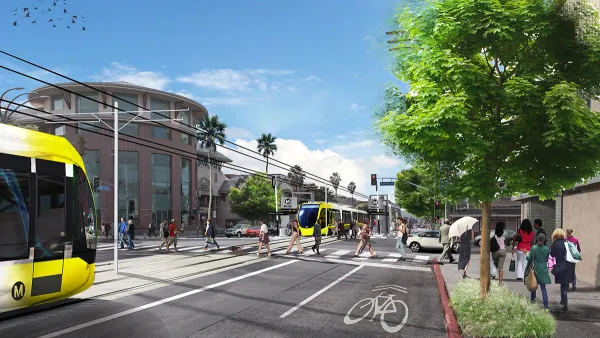
L.A.'s San Fernando Valley $909 Million Closer to Light Rail
The last time rail transit crossed L.A.'s San Fernando Valley was in the early 1950s.
L.A. Seeking Funding for New Transit Projects Prior to the 2028 Summer Olympics
Los Angeles officials have been working for years to deliver a suite of transit projects in time for the 2028 Olympics. Planners now hope federal infrastructure funding could reinvigorate the effort.
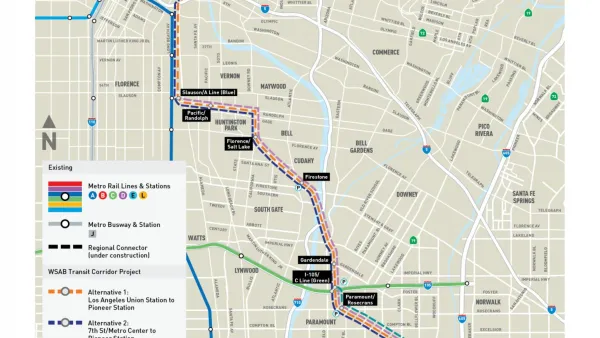
$8.5 Billion, 19.3-Mile Light Rail Line Approved to Connect L.A. and Surrounding Cities
The Los Angeles County Metropolitan Transportation Authority (Metro) has approved a plan to build a light rail route currently called the West Santa Ana Branch Project.

Planetizen Federal Action Tracker
A weekly monitor of how Trump’s orders and actions are impacting planners and planning in America.

The state-sanctioned urbicide of Austin
People don’t kill cities. Freeways do.

US to reduce Colorado River water deliveries to Mexico
A new Colorado Treaty amendment reduces Mexico’s Colorado River water allocation by 250,000 acre feet.

5 New England states march closer to 800 megawatt wind energy project
Securing federal approval for the project may be complicated under the Trump administration, which has historically been hostile towards domestic wind power.

Baltimore to break ground on $50 million Transit Priority Project
The project will bring faster bus trips, safer streets and better bike connections to Baltimore.

Airbnb launches $250 million 'last-dollar financing' housing accelerator, makes first investment in Austin
The company will put $6.4 million towards affordable housing development in Texas’ capital.

FREE Course: Walkable City 1: Why Walkability?
After describing his path towards focusing on walkability as the essence of good planning, Jeff Speck marches through his five principal reasons for making more walkable places.
Reinventing Malls: Planning Alchemy—Turning Gray Fields Into Gold
The course focuses on the opportunities and imperatives that shape reinvention of mall sites.


Eagle County Government
Harvard University Graduate School of Design
Nashville Planning Department
The Architects Foundation
University of Cincinnati Online
The Pocatello Development Authority
The Urban Renewal Agency of the City of Pocatello
Journal of the American Planning Association