When it comes to ignoring matters of housing affordability and public transit during an election cycle of great significance, the United States is not the exception. Candidates in Canada's 2019 Federal Election have mastered the same trick.


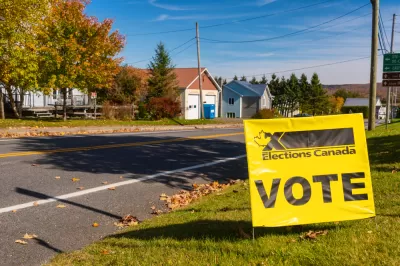
Matt Elliott reports from Canada, which is in the throes of a heated election to decide the next prime minister (or whether to elect the same prime minister to a second term).
Like the much maligned lack of focus on issues of urban issues on the debate stage in the Democratic primary, Elliott notes a conspicuous lack of discussion on subjects that dominate the concern in local governments: housing and transit.
In a recent federal leaders debate, the word housing was only spoken ten times, according to Elliott's count, and transit twice.
There’s good reason to want and demand more discussion of these issues in the federal campaign.
Yes, sure, they’re critically important to Toronto. The TTC is currently trying to scratch together a whopping $23.7 billion by 2033 just to keep existing infrastructure in working condition. Meanwhile, the median price of a home in Toronto is more than $900,000, and the city’s jam-packed shelters suggest a whole lot of people can’t come anywhere close to affording that.
But wanting more focus on these issues isn’t just a whiny centre-of-the-universe Toronto thing. Because affordable housing and transit policy are also critical to responding to an issue federal leaders have spent time talking about: climate change.
Elliott does credit the major parties for including policy proposals on the subjects of housing and transit in their platforms (the Democratic candidates for president have also spilled plenty of ink, if not debate time, to those issues), but laments that those ideas haven't been debated publicly.
FULL STORY: Hey, where’s all the federal election talk about transit and housing?

Planning Trends for 2025: Creative Housing Solutions, Ongoing Transit Woes, and the Ever-Creeping Tentacles of AI
Urban planners have no shortage of urgent issues to delve into, from a deepening housing crisis to an increasingly unpredictable climate to a new federal administration bent on slashing key funding for everything from electric cars to housing assistance.
MBTA 'Resilience Roadmap' plans for climate change's impacts on transit infrastructure
The Massachusetts transit agency says its tunnels and power systems are at greatest risk from increasingly unpredictable extreme weather.
US Senate Passes Housing Bill With Focus on Financing, Deregulation
The proposal would ease regulations, allow banks to invest more in affordable housing, and change a rule that has been holding back manufactured housing.

Planetizen Federal Action Tracker
A weekly monitor of how Trump’s orders and actions are impacting planners and planning in America.

The state-sanctioned urbicide of Austin
People don’t kill cities. Freeways do.

US to reduce Colorado River water deliveries to Mexico
A new Colorado Treaty amendment reduces Mexico’s Colorado River water allocation by 250,000 acre feet.

5 New England states march closer to 800 megawatt wind energy project
Securing federal approval for the project may be complicated under the Trump administration, which has historically been hostile towards domestic wind power.

Baltimore to break ground on $50 million Transit Priority Project
The project will bring faster bus trips, safer streets and better bike connections to Baltimore.

Airbnb launches $250 million 'last-dollar financing' housing accelerator, makes first investment in Austin
The company will put $6.4 million towards affordable housing development in Texas’ capital.

FREE Course: Walkable City 1: Why Walkability?
After describing his path towards focusing on walkability as the essence of good planning, Jeff Speck marches through his five principal reasons for making more walkable places.
Reinventing Malls: Planning Alchemy—Turning Gray Fields Into Gold
The course focuses on the opportunities and imperatives that shape reinvention of mall sites.

Eagle County Government
Harvard University Graduate School of Design
Nashville Planning Department
The Architects Foundation
University of Cincinnati Online
The Pocatello Development Authority
The Urban Renewal Agency of the City of Pocatello
Journal of the American Planning Association