Writing from London in an Op-Ed for Seattle’s Crosscut, Chuck Wolfe argues for a contextual approach to a much-touted search for transportation equity.


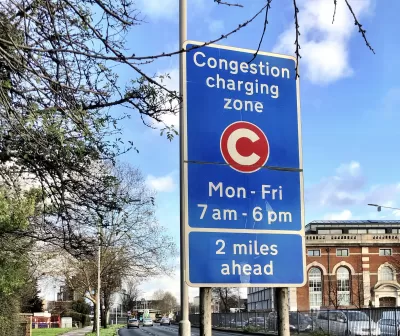
In cities like Seattle, advocates of congestion pricing—tolling those who drive into a designated downtown city zone—often point to London and Stockholm, two cities with robust transportation infrastructure, where the concept was initially unpopular, but now is an accepted fact of life.
In the face of Seattle’s ongoing consideration of congestion pricing tools, Wolfe wonders how this reasoning applies to Seattle and the Puget Sound region in 2019. He suggests greater similarity between Seattle and other cities where congestion pricing is currently on hold.
Now living and working in London and Stockholm, Wolfe counsels against summary comparisons. He contends that implementation of congestion pricing needs to make sense for Seattle, its particular geography, demography, transit service and public access issues, as well as work equitably for city and regional residents: "In Seattle, the deeper issue is how to align policy with local realities, without prematurely borrowing practices from elsewhere along the way."
Read the full story: What London and Stockholm can teach Seattle about congestion pricing


Big Surprise: Congestion Pricing Tolls Don't Poll Well
As Seattle prepares a possible cordon area congestion pricing plan to tackle both traffic congestion and climate change, The Seattle Times did a poll on two applications of congestion pricing: urban tolls and adding express toll lanes to freeways.
Op-Ed: 'Public Mood' Has Turned Against Cars in Cities
A survey of recent planning decisions demonstrates that cities are no longer necessarily looking to more and bigger highways to solve their traffic problems.
Getting the Politics of Cordon Tolling Right
With Mayor Jenny Durkan's announcement that Seattle will pursue cordon area congestion pricing coming five days after New York dropped its plan, a Washington State pro-business publication looks at the difficulties in getting the politics right.

Planetizen Federal Action Tracker
A weekly monitor of how Trump’s orders and actions are impacting planners and planning in America.

California plans to bury El Niño’s downpour
If the state plays its cards right, it may be able to store a billion acre-feet of El Niño’s water in aquifers.

Desperate measures: Advocates weigh draining Lake Powell to fill Colorado River
Draining the reservoir could reduce evaporation losses by a couple hundred thousand acre-feet.

California city breaks ground on transit connector
The project includes three mobility hubs and a pedestrian bridge.

After public outcry, Massachusetts city releases housing development tracker
Cambridge’s tracker currently shows 250 housing projects in various stages of development.

40 years after approval, Chicago breaks ground on new park
The park honors Jean Baptiste Point du Sable, the city’s first permanent non-native settler.

FREE Course: Walkable City 1: Why Walkability?
After describing his path towards focusing on walkability as the essence of good planning, Jeff Speck marches through his five principal reasons for making more walkable places.
Reinventing Malls: Planning Alchemy—Turning Gray Fields Into Gold
The course focuses on the opportunities and imperatives that shape reinvention of mall sites.

City of Rosemead
Rutgers University, Edward J. Bloustein School of Planning and Public Policy
One Hundred Miles
Hunter College, City University of New York (CUNY)
The Architects Foundation
University of Cincinnati Online
City of Cambridge
Montrose County
The Pocatello Development Authority