People who can't vote can still have a say in the processes by which their neighborhoods are planned and developed. An example from New York City illustrates the point.


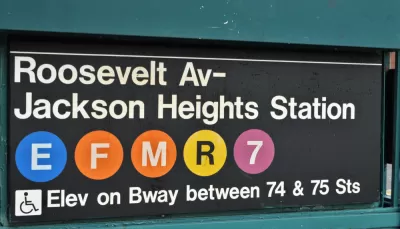
Oscar Perry Abello reports on the work of the neighborhood group Queens Neighborhood United in New York City as an example of how community-based planning can give voices to people cut off from other mechanisms of democracy.
"Many of Queens Neighborhood United’s members can’t vote, but they can still make their voices heard," explains Abello. "[T]his is also a story about what it looks like to participate in community development and democracy, in an era where citizenship status can exclude people who are by other measures lawful, productive members of society."
The most recent campaign championed by Queens Neighborhood United is an opposition to a proposed Target development in a corridor zoned for local business. "Queens Neighborhoods United met the Target developer and the Department of Buildings in New York State Supreme Court this past January to force construction at the site to stop while their zoning challenge continues to play out," explains Abello. The case failed to stop construction, but a second hearing is expected at the Board of Standards and Appeals in May.
FULL STORY: Facebook Twitter Email How All Residents — Not Just Citizens — Have a Voice in Planning


Planning via Zoom: Legal Scrutiny for Pandemic Realities in New York City
The question of whether a public review process conducted by Zoom is sufficient to approve a sweeping rezoning plan is a matter of no small legal concern in New York City.

Lawsuit Challenges Zoom Hearings on Gowanus Rezoning Plan
Planning departments relying on online public hearing processes will want to keep monitor this lawsuit in New York City.

Charlottesville Comprehensive Plan Update Attracts Opponents
An updated version of the Charlottesville comprehensive plan update is now available for public comment, and a recent article in the local paper lets plan opponents air their grievances.

The state-sanctioned urbicide of Austin
People don’t kill cities. Freeways do.

US to reduce Colorado River water deliveries to Mexico
A new Colorado Treaty amendment reduces Mexico’s Colorado River water allocation by 250,000 acre feet.

New Jersey’s second-largest city bans standalone data centers
Jersey City will continue to allow co-location facilities, such as those meant for research institutions that store their own data.

Amtrak not solely to blame for New Jersey commuter rail's unreliability, report finds
A new study from the Garden State Initiative found that NJ Transit’s budget grew 20% across a 4 year period, but reliability declined significantly over the same period.

EPA erases limits on planet-warming pollution from power plants
Under Monday’s plan, power plants would still have some limits on how much mercury, arsenic and other contaminants they can emit.

Phoenix announces new on-demand transit service, more frequent RAPID buses
Both new services will launch in October, and are part of Phoenix's Project Effective Access Solutions for Easing Congestion.

FREE Course: Walkable City 1: Why Walkability?
After describing his path towards focusing on walkability as the essence of good planning, Jeff Speck marches through his five principal reasons for making more walkable places.
Reinventing Malls: Planning Alchemy—Turning Gray Fields Into Gold
The course focuses on the opportunities and imperatives that shape reinvention of mall sites.

Eagle County Government
Harvard University Graduate School of Design
Nashville Planning Department
The Architects Foundation
University of Cincinnati Online
The Pocatello Development Authority
The Urban Renewal Agency of the City of Pocatello
Journal of the American Planning Association