Planning departments relying on online public hearing processes will want to keep monitor this lawsuit in New York City.


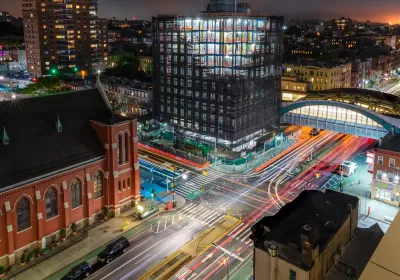
Opponents of the Gowanus Neighborhood Planning Study allege that Zoom meetings do not allow the amount of public engagement required by the city's Uniform Land Use Review Procedure process.
Kevin Duggan reports: "Opponents of the Gowanus rezoning plan to sue the city Friday, alleging the Department of City Planning’s virtual Zoom hearings don’t allow for enough public review for the neighborhood-wide land use changes."
Attorney Jason Zakai is representing the plaintiff in the lawsuit—anti-rezoning group Voice of Gowanus. "There are detailed, step-by-step rules laid out in City law on how to conduct the public review process. They are there for a reason, and the City must follow them, even if that means waiting until the pandemic is over," says Zakai in the article.
The lawsuit aims to shut down the Uniform Land Use Review Procedure for the Gowanus Neighborhood Planning Study until the pandemic is under control and the Department of City Planning can resume normal public hearings ("normal" public hearings, it should be noted, are well documented as favoring wealthier, whiter voices).
"The city is scheduled to officially certify the Gowanus rezoning on Tuesday, Jan. 19, kicking off the roughly seven-to-nine-month public review process," according to Duggan.
In June, advocates who support the Gowanus rezoning pushed to move the process forward despite the constraints of the pandemic.
FULL STORY: GOWANUS REZONING OPPONENTS TO SUE CITY TO STOP VIRTUAL ULURP


Planning via Zoom: Legal Scrutiny for Pandemic Realities in New York City
The question of whether a public review process conducted by Zoom is sufficient to approve a sweeping rezoning plan is a matter of no small legal concern in New York City.

How Broken Planning and Development Processes Hobble the Potential of Neighborhoods
A stinging critique of the public review process in New York City.

Questioning the Fairness of Rezoning During a Pandemic
Virtual reality meetings are a poor substitute for the normal public engagement process included in the city of New York's Uniform Land Use Review Procedure, according ton opinion piece recently published by City Limits.

Planetizen Federal Action Tracker
A weekly monitor of how Trump’s orders and actions are impacting planners and planning in America.

The state-sanctioned urbicide of Austin
People don’t kill cities. Freeways do.

US to reduce Colorado River water deliveries to Mexico
A new Colorado Treaty amendment reduces Mexico’s Colorado River water allocation by 250,000 acre feet.

5 New England states march closer to 800 megawatt wind energy project
Securing federal approval for the project may be complicated under the Trump administration, which has historically been hostile towards domestic wind power.

Baltimore to break ground on $50 million Transit Priority Project
The project will bring faster bus trips, safer streets and better bike connections to Baltimore.

Airbnb launches $250 million 'last-dollar financing' housing accelerator, makes first investment in Austin
The company will put $6.4 million towards affordable housing development in Texas’ capital.

FREE Course: Walkable City 1: Why Walkability?
After describing his path towards focusing on walkability as the essence of good planning, Jeff Speck marches through his five principal reasons for making more walkable places.
Reinventing Malls: Planning Alchemy—Turning Gray Fields Into Gold
The course focuses on the opportunities and imperatives that shape reinvention of mall sites.

Eagle County Government
Harvard University Graduate School of Design
Nashville Planning Department
The Architects Foundation
University of Cincinnati Online
The Pocatello Development Authority
The Urban Renewal Agency of the City of Pocatello
Journal of the American Planning Association