One way, or another, wealthy New Yorkers are probably going to end up contributing to the financial end of the equation for solutions to New York's public transit woes.


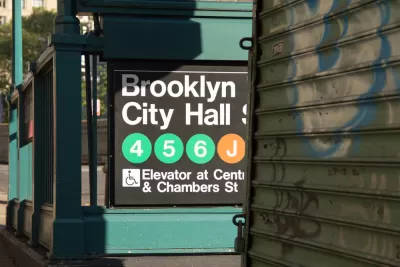
"Pressure to find revenue to finance a $40 billion fix for New York’s subways, buses and regional commuter rail has sparked renewed city and state interest in a tax on wealthy non-residents who own luxury city apartments," reports Henry Goldman.
"New York Governor Andrew Cuomo’s budget director, Robert Mujica, jump-started the idea Wednesday in a statement that totaled up potential revenue sources for regional transit funding: $15 billion from congestion pricing, $5 billion from Internet sales, and $2 billion from yet-to-be-legalized cannabis. The so-called 'pied-à-terre tax' on non-resident owners could raise as much as $9 billion, Mujica said."
Mayor Bill de Blasio has for a long time favored an income tax on millionaire residents in the city to finance transit improvements in the city, but de Blasio recently came to an agreement with New York Governor Andrew Cuomo on a congestion pricing scheme. With the pied-à-terre tax now on the table in the governor's office, Mayor de Blasio expressed support in a soundbite included in the article.
FULL STORY: New York Considers Taxing Non-Resident Owners of Luxury Apartments

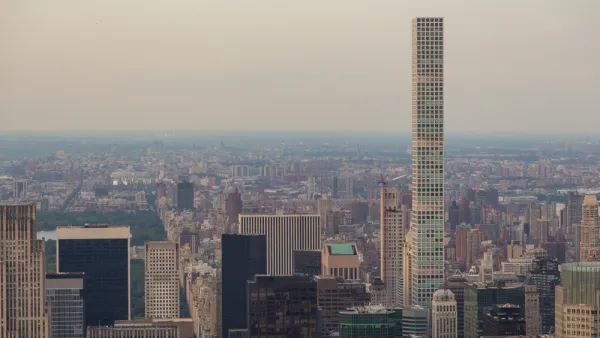
Changes to Proposed NYC Pied-à-Terre Tax Will Yield Less Revenue for Transit
The real estate intervened, and a proposed pied-à-terre tax became a mansion tax.
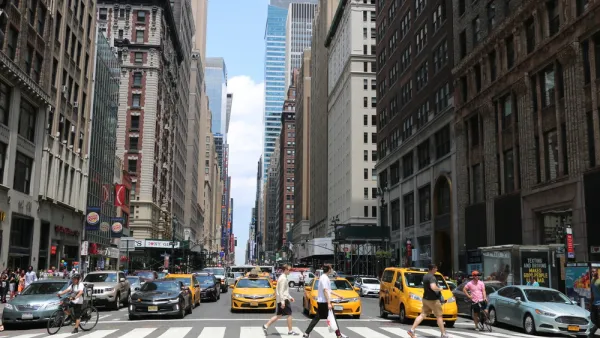
Breaking News: New York State Ready to Embrace Congestion Pricing, Finally
The New York State Legislature is preparing to reverse over a decade of reluctance regarding congestion pricing, according to reports from Albany.
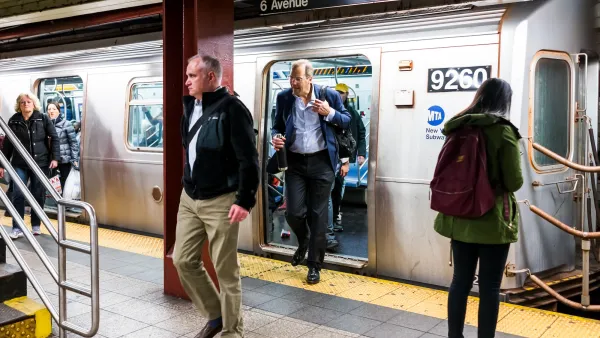
NYC to Upgrade 1/3 of its Subway Car Fleet
The MTA is seeking proposals for up to 2,390 new subway cars to upgrade its aging fleet.

The state-sanctioned urbicide of Austin
People don’t kill cities. Freeways do.

US to reduce Colorado River water deliveries to Mexico
A new Colorado Treaty amendment reduces Mexico’s Colorado River water allocation by 250,000 acre feet.

New Jersey’s second-largest city bans standalone data centers
Jersey City will continue to allow co-location facilities, such as those meant for research institutions that store their own data.

Amtrak not solely to blame for New Jersey commuter rail's unreliability, report finds
A new study from the Garden State Initiative found that NJ Transit’s budget grew 20% across a 4 year period, but reliability declined significantly over the same period.

EPA erases limits on planet-warming pollution from power plants
Under Monday’s plan, power plants would still have some limits on how much mercury, arsenic and other contaminants they can emit.

Phoenix announces new on-demand transit service, more frequent RAPID buses
Both new services will launch in October, and are part of Phoenix's Project Effective Access Solutions for Easing Congestion.

FREE Course: Walkable City 1: Why Walkability?
After describing his path towards focusing on walkability as the essence of good planning, Jeff Speck marches through his five principal reasons for making more walkable places.
Reinventing Malls: Planning Alchemy—Turning Gray Fields Into Gold
The course focuses on the opportunities and imperatives that shape reinvention of mall sites.

Eagle County Government
Harvard University Graduate School of Design
Nashville Planning Department
The Architects Foundation
University of Cincinnati Online
The Pocatello Development Authority
The Urban Renewal Agency of the City of Pocatello
Journal of the American Planning Association