As cities strive to improve mobility for all users, the existing auto paradigm is slow to change


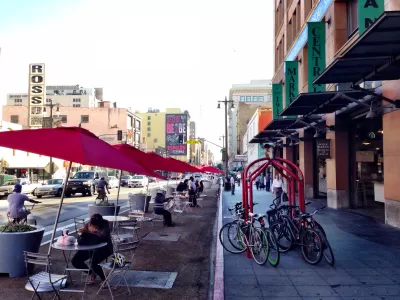
Prof. John Rennie Short with the School of Public Policy at the University of Maryland (Baltimore) writes that "As cities strive to improve the quality of life for their residents, many are working to promote walking and biking. Such policies make sense, since they can, in the long run, lead to less traffic, cleaner air and healthier people. But the results aren’t all positive, especially in the short to medium term."
Across the nation, cyclist fatalities have increased by 25 percent since 2010 and pedestrian deaths have risen by a staggering 45 percent. More people are being killed because cities are encouraging residents to walk and bike, but their roads are still dominated by fast-moving vehicular traffic. As my research has shown, this shifting mix can be deadly.
More initiatives are needed, writes Prof. Short. "The most radical shift will require not only re-engineering urban traffic, but also reimagining our cities. In my view, we need to think of them as shared spaces with slower traffic, and see neighborhood streets as places to live in and share, not just to drive through at high speed."
Read the full story: Why US cities are becoming more dangerous for cyclists and pedestrians

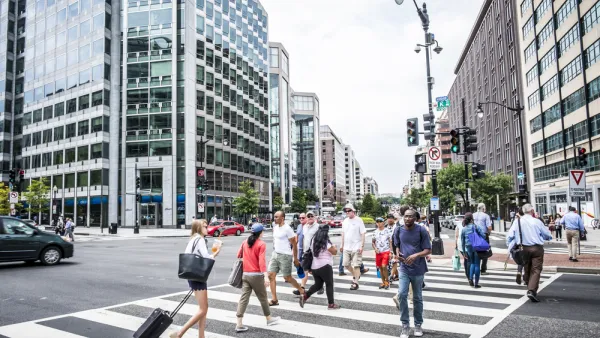
Resources for Safe, Convenient Pedestrian and Bike Infrastructure
Despite the stated goals of state and federal agencies to encourage active modes of transportation, there's still a long way to go to make sure that all cities and communities have safe, convenient sidewalks and bike lanes.
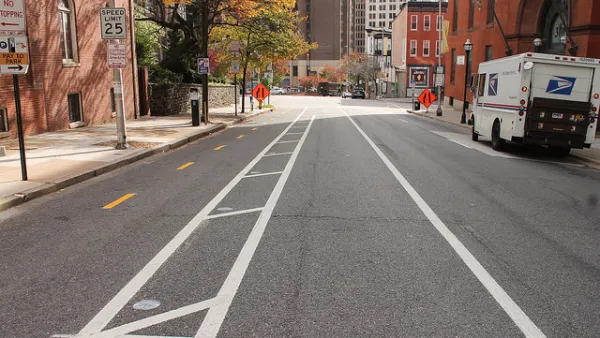
Baltimore Approves Complete Streets Ordinance
Complete streets supporters see multiple benefits from prioritizing non-automobile users of the public right of way.
Complete Streets Policies Still Seeking Equity
Though the quick expansion of complete streets policies is worth celebrating, minority and low-income communities are still being left behind, and killed at a disproportionate rate.

Planetizen Federal Action Tracker
A weekly monitor of how Trump’s orders and actions are impacting planners and planning in America.

California plans to bury El Niño’s downpour
If the state plays its cards right, it may be able to store a billion acre-feet of El Niño’s water in aquifers.

Desperate measures: Advocates weigh draining Lake Powell to fill Colorado River
Draining the reservoir could reduce evaporation losses by a couple hundred thousand acre-feet.

Chicago Avenue bridge construction delays enrages city leaders
The bridge has been closed since 2025. The city originally aimed to re-open it in December, and now expects to finish construction in 2027.

NYC bus network redesign speeds up Queens buses
Rush routes have seen a 4.6% speed increase after the redesign.

California High-Speed Rail Authority picks trainset manufacturer
The California High-Speed Rail Authority aims to start servicing passengers by 2033.

FREE Course: Walkable City 1: Why Walkability?
After describing his path towards focusing on walkability as the essence of good planning, Jeff Speck marches through his five principal reasons for making more walkable places.
Reinventing Malls: Planning Alchemy—Turning Gray Fields Into Gold
The course focuses on the opportunities and imperatives that shape reinvention of mall sites.

City of Rosemead
Rutgers University, Edward J. Bloustein School of Planning and Public Policy
One Hundred Miles
Hunter College, City University of New York (CUNY)
The Architects Foundation
University of Cincinnati Online
City of Cambridge
Montrose County
The Pocatello Development Authority