Complete streets supporters see multiple benefits from prioritizing non-automobile users of the public right of way.


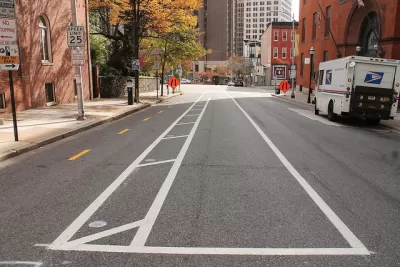
"Baltimore lawmakers voted unanimously Monday to back new 'complete streets' legislation aimed at requiring the city's transportation department to provide more bike lanes, sidewalks and public transit options," reports Luke Broadwater.
"The legislation… is designed to pressure city planners to avoid the practice of years past when they designed a city for cars over other forms of transit," adds Broadwater.
City Councilmember Ryan Dorsey, who sponsored the legislation, made the case for the legislation as a climate change measure, in addition to the intended benefits in traffic safety.
In addition to setting design and planning priority for walking, biking, and public transit, the legislation also establishes the Complete Streets Coordinating Council, tasked with holding the city to its complete streets commitment.
FULL STORY: Baltimore City Council votes for 'Complete Streets' legislation to push public transit, bike lanes

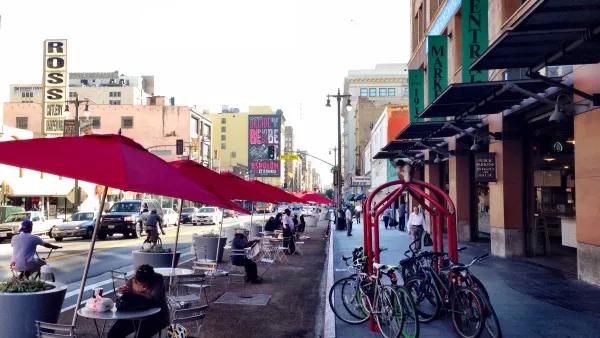
Auto-Centric City Dichotomy: More Mobility Options and More Risk
As cities strive to improve mobility for all users, the existing auto paradigm is slow to change

L.A. Times: California Must Shift Transportation Spending Priorities
Despite its ambitious emissions reduction goals, California continues to spend a majority of transportation funds on car-centric infrastructure.
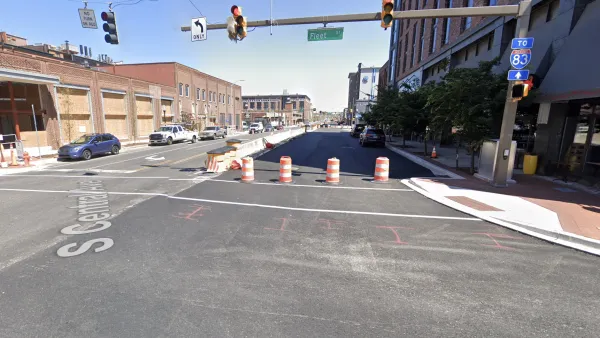
Protected Bike Lanes, Vehicle Lane Reductions Cause Stir in Baltimore
Residents and business operators say they weren’t warned about a road diet planned for a major thoroughfare in Baltimore. Planners and advocates say the changes have been a long time coming.

Planetizen Federal Action Tracker
A weekly monitor of how Trump’s orders and actions are impacting planners and planning in America.

The state-sanctioned urbicide of Austin
People don’t kill cities. Freeways do.

US to reduce Colorado River water deliveries to Mexico
A new Colorado Treaty amendment reduces Mexico’s Colorado River water allocation by 250,000 acre feet.

5 New England states march closer to 800 megawatt wind energy project
Securing federal approval for the project may be complicated under the Trump administration, which has historically been hostile towards domestic wind power.

Baltimore to break ground on $50 million Transit Priority Project
The project will bring faster bus trips, safer streets and better bike connections to Baltimore.

Airbnb launches $250 million 'last-dollar financing' housing accelerator, makes first investment in Austin
The company will put $6.4 million towards affordable housing development in Texas’ capital.

FREE Course: Walkable City 1: Why Walkability?
After describing his path towards focusing on walkability as the essence of good planning, Jeff Speck marches through his five principal reasons for making more walkable places.
Reinventing Malls: Planning Alchemy—Turning Gray Fields Into Gold
The course focuses on the opportunities and imperatives that shape reinvention of mall sites.

Eagle County Government
Harvard University Graduate School of Design
Nashville Planning Department
The Architects Foundation
University of Cincinnati Online
The Pocatello Development Authority
The Urban Renewal Agency of the City of Pocatello
Journal of the American Planning Association