In the state that’s the most deadly for pedestrians, black pedestrians are 72% more likely to be the victims of a car crash than whites.


Florida is the most dangerous state for pedestrians, but it’s 72% more dangerous for black pedestrians. "Of the 20 worst metropolitan areas to walk in, nine are in the Sunshine State, with the Orlando-Kissimmee-Sanford metroplex listed as the deadliest area in the country for pedestrians," according to an article in the Florida Courier.
While the state could benefit from better design and basic infrastructure, like crosswalks in numerous communities, these resources are particularly lacking in black communities. “Unnecessarily wide lanes encourage high speeds ‒ a major factor in the likelihood of surviving a collision ‒ and many streets are designed with wide turning lanes that allow cars to make right turns through crosswalks at high speeds,” according to the article.
Beyond systematic funding issues, there is also research documenting the behavior of individual drivers: "Research by the University of Nevada has shown that drivers are significantly more likely to yield to a White pedestrian in a crosswalk than to a Black pedestrian."
Read the full story: WALKING WHILE BLACK IN FLORIDA IS A KILLER

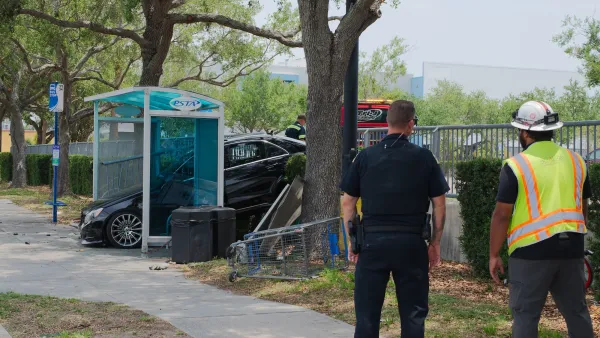
Buses are very safe. The walk to and from stations, not so much.
A disproportionate number of crashes involving pedestrians happen near transit stops.
Traffic Safety Efforts Chug Ahead — Too Slowly for Some
Around the United States, traffic deaths are growing or plateauing, yet efforts to make roads safer still face political opposition.
The Vicious Cycle at the Heart of Pedestrian Safety
When people feel unsafe, they walk less; with fewer pedestrians, walking becomes less safe.

Planetizen Federal Action Tracker
A weekly monitor of how Trump’s orders and actions are impacting planners and planning in America.

The state-sanctioned urbicide of Austin
People don’t kill cities. Freeways do.

US to reduce Colorado River water deliveries to Mexico
A new Colorado Treaty amendment reduces Mexico’s Colorado River water allocation by 250,000 acre feet.

Nation's most wind-powered state turns to coal as data centers increase energy demand
For the first time in decades, Iowa has increased its generation of coal power.

NYC cools commuters with city's first rain garden above a bus stop
New York City officials say the plants in the rain garden can absorb 16 gallons of rainwater during heavy storms.

Brightline West’s future may rely on $6 billion federal loan
The company has until Nov. 2 to make a $400 million equity investment into its proposed high-speed rail line.

FREE Course: Walkable City 1: Why Walkability?
After describing his path towards focusing on walkability as the essence of good planning, Jeff Speck marches through his five principal reasons for making more walkable places.
Reinventing Malls: Planning Alchemy—Turning Gray Fields Into Gold
The course focuses on the opportunities and imperatives that shape reinvention of mall sites.

Eagle County Government
Harvard University Graduate School of Design
Nashville Planning Department
The Architects Foundation
University of Cincinnati Online
The Pocatello Development Authority
The Urban Renewal Agency of the City of Pocatello
Journal of the American Planning Association