The A and G Lines use GPS for their crossing gates, they claim that a new software patch and other improvements would resolve those issues and put the G line on schedule.


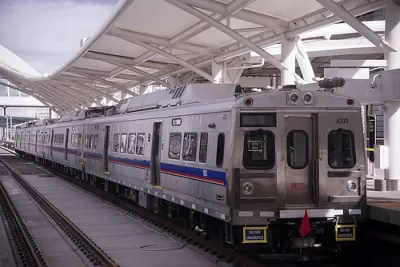
Denver's crossing gates have caused a series of headaches for the city’s transit system. Now the Regional Transportation District (RTD) says the problem is tied to blocked GPS signals. “The document said Denver’s rising skyline around Union Station regularly blocks GPS signals the system relies on to keep the University of Colorado A-Line running smoothly and safely,” John Aguilar writes for the Denver Post. RTD says they have a software patch to fix this issue that they can put into place quickly if the plan is approved at the federal level. “RTD says it is ready to open the long-delayed G-Line to Denver’s western suburbs in the first quarter of 2019 if the Federal Railroad Administration accepts its action plan,” Aguilar reports.
The use of GPS also features in the federally mandated safety feature known as positive train control (PTC). While operators do not currently need to employ PTC, the due date is coming up. RTD officials say they will be ready. Some observers have pointed out that many of the transit systems around the world are in cities with more tall buildings than Denver, without experiencing similar issues.
FULL STORY: Denver’s tall buildings partly to blame for A-Line, G-Line problems, RTD tells feds

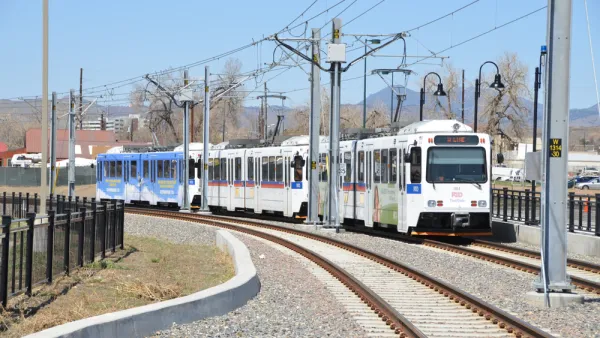
New Colorado Fossil Fuel Fee Will Fund Transit
Lawmakers say the agreement prevents a drawn-out legislative battle and establishes a new source of transit funding.
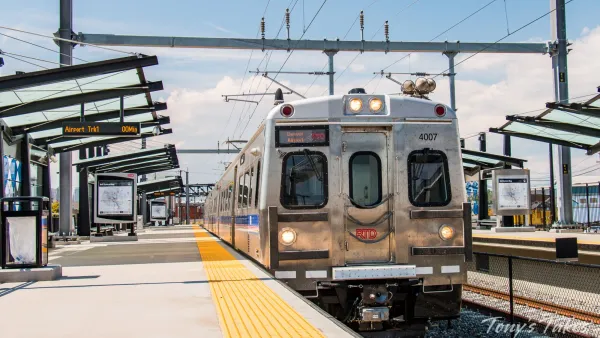
Denver-Area Rail Service Disruptions Expected During Maintenance Work
RTD is beginning maintenance on retaining walls along its southeastern light rail lines that is expected to last roughly six months.
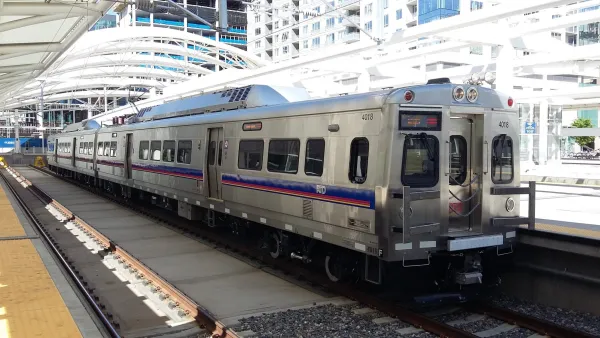
Denver Transit Proposal Could Lower Fares, Make Transit Free for Youth
The agency released a draft plan to eliminate regional zones, make airport trips more affordable, and reduce fares systemwide.

The state-sanctioned urbicide of Austin
People don’t kill cities. Freeways do.

US to reduce Colorado River water deliveries to Mexico
A new Colorado Treaty amendment reduces Mexico’s Colorado River water allocation by 250,000 acre feet.

New Jersey’s second-largest city bans standalone data centers
Jersey City will continue to allow co-location facilities, such as those meant for research institutions that store their own data.

Amtrak not solely to blame for New Jersey commuter rail's unreliability, report finds
A new study from the Garden State Initiative found that NJ Transit’s budget grew 20% across a 4 year period, but reliability declined significantly over the same period.

EPA erases limits on planet-warming pollution from power plants
Under Monday’s plan, power plants would still have some limits on how much mercury, arsenic and other contaminants they can emit.

Phoenix announces new on-demand transit service, more frequent RAPID buses
Both new services will launch in October, and are part of Phoenix's Project Effective Access Solutions for Easing Congestion.

FREE Course: Walkable City 1: Why Walkability?
After describing his path towards focusing on walkability as the essence of good planning, Jeff Speck marches through his five principal reasons for making more walkable places.
Reinventing Malls: Planning Alchemy—Turning Gray Fields Into Gold
The course focuses on the opportunities and imperatives that shape reinvention of mall sites.

Eagle County Government
Harvard University Graduate School of Design
Nashville Planning Department
The Architects Foundation
University of Cincinnati Online
The Pocatello Development Authority
The Urban Renewal Agency of the City of Pocatello
Journal of the American Planning Association