A report highlights the lack of enforcement of Caltrans’ Complete Streets policy in projects around the state.


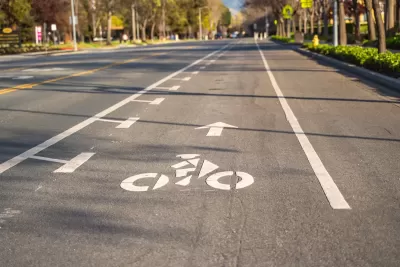
In an excerpt from a CalBike report published in Streetsblog California, the advocacy group reveals that many California districts are ignoring the state’s Complete Streets policy, failing to include walking and biking facilities in new projects as required by Caltrans policy DP-37.
The article documents a project on Beach Boulevard in Orange County, one of the deadliest ‘main streets’ in the state for pedestrians and cyclists. “Over the last decade, there have been 78 vulnerable road users killed on the street, and pedestrians and people biking account for nearly 70 percent of all road user deaths on SR-39.” Yet despite a 2020 study that called for many bike and pedestrian improvements on Beach Boulevard, an 8.5-mile lane rehabilitation project includes no new biking or walking facilities.
Unlike local governments, which may respond to community pressure and fix dangerous infrastructure, especially after someone dies, Caltrans’ response is tepid or in some cases entirely non-responsive to the carnage its streets inflict on the people who use them.
For the authors, “The casual dismissal of well-documented bike and pedestrian needs in the Complete Streets Decision Document for this project emphasizes Caltrans districts’ carelessness about the lives and safety of people biking and walking, and for the agency’s own policies.”
Read the full story: Incomplete Streets Part 2: District 12 Ignores Caltrans Policy on Bike and Pedestrian Needs
California Adds Complete Streets to Transportation Funding Guidelines
The state transportation commission previously declined to include bike and pedestrian infrastructure in its updated funding guidelines, despite a new state law requiring Complete Streets efforts in all Caltrans projects.

California Governor Signs Complete Streets Bill Into Law
The state’s transportation agency will be required to prioritize multimodal transportation infrastructure and improve transparency.
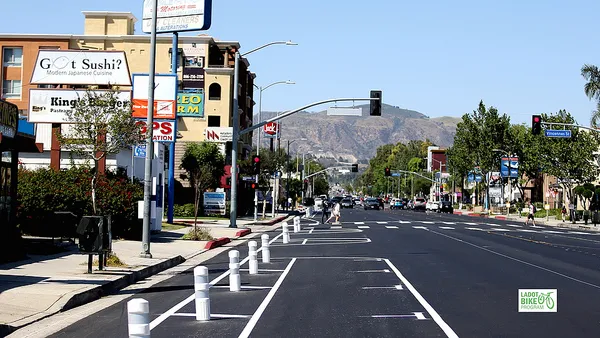
Caltrans Releases Complete Streets Action Plan
The agency’s detailed list of actions highlights the many changes needed to truly implement Complete Streets principles into California road construction and maintenance.

Planetizen Federal Action Tracker
A weekly monitor of how Trump’s orders and actions are impacting planners and planning in America.

California plans to bury El Niño’s downpour
If the state plays its cards right, it may be able to store a billion acre-feet of El Niño’s water in aquifers.

Desperate measures: Advocates weigh draining Lake Powell to fill Colorado River
Draining the reservoir could reduce evaporation losses by a couple hundred thousand acre-feet.

In Texas, data centers are swallowing promised parkland
Residents who moved to Taylor, Texas for a rural community now have to contend with three data centers in their backyard.

How a Chicago-sized wind farm beat the odds and powered on
The project spanned five presidential administrations and a standoff with a U.S. military base.

MTA gives itself 30 days to transform pit into basketball court
The site has been under construction since 2022; the city originally estimated it would finish the court in 2024.

FREE Course: Walkable City 1: Why Walkability?
After describing his path towards focusing on walkability as the essence of good planning, Jeff Speck marches through his five principal reasons for making more walkable places.
Reinventing Malls: Planning Alchemy—Turning Gray Fields Into Gold
The course focuses on the opportunities and imperatives that shape reinvention of mall sites.

City of Rosemead
Rutgers University, Edward J. Bloustein School of Planning and Public Policy
One Hundred Miles
Hunter College, City University of New York (CUNY)
The Architects Foundation
University of Cincinnati Online
City of Cambridge
Montrose County
The Pocatello Development Authority