While state leaders tout their climate goals at COP28, residents back home continue to fight highway expansion projects that induce traffic and increase emissions.


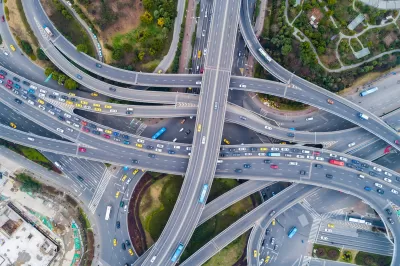
In an opinion piece in Streetsblog California, Kendra Ramsey calls out the state’s hypocrisy when it comes to transportation emissions.
Our state is promoting itself as a climate leader, and in some respects, that’s accurate. But California can’t claim the mantle of responsible climate stewardship while it continues to build freeways that increase emissions and pollute vulnerable communities.
Ramsey points out the contradictions between the state’s stated goals and actual policies: while state officials discuss climate change at COP28, “back in California, Fresno residents have had to sue Caltrans for failing to disclose the carbon impact of two new freeway interchanges that will contribute to a significant increase in truck traffic.”
For Ramsey, the key to real change is reforming Caltrans and other institutions that perpetuate outdated car-centric planning systems and insist on road building as a solution to congestion. Instead, “Caltrans should be inducing demand for active transportation by building protected bikeways with protected intersections that connect to robust local and regional networks of safe bike routes. It should be adding bus-only lanes and bus boarding islands, widening sidewalks, and improving conditions for people who walk or take transit.”
FULL STORY: California Can’t Be a Climate Leader Until it Stops Building Freeways

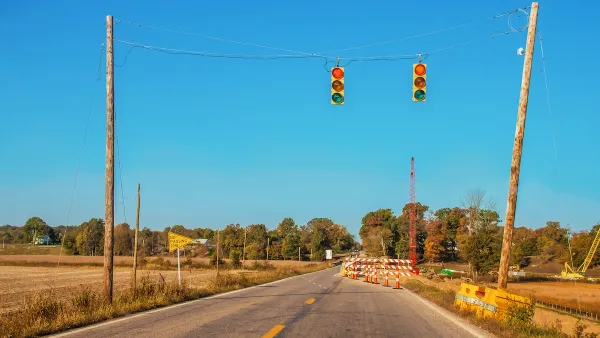
Report: Some Rural States Ahead of More Urbanized Ones in Reducing Transportation Emissions
This is a largely unintended consequence of states with lower populations and resources focusing on repairing existing roads and infrastructure rather than expanding and building new roads.
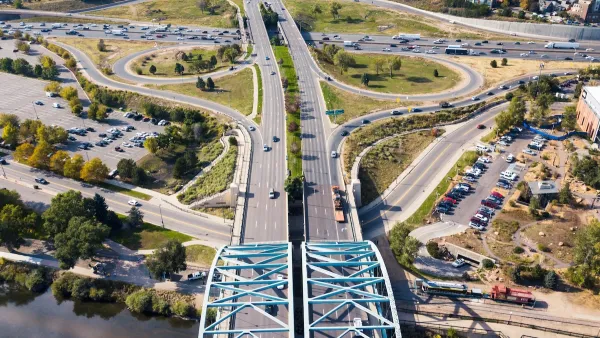
Colorado Requires DOT to Reduce Emissions. Is it Working?
A new rule calling for emissions reduction plans as part of highway projects has led to two canceled road expansions and a shift toward greener transportation investments.
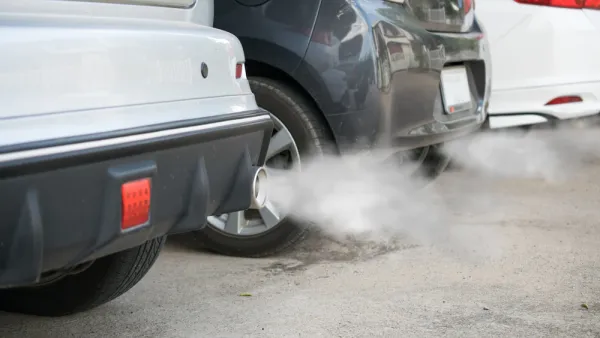
Republican States Challenge Highway Emissions Plan
A federal proposal that would require states to monitor and set targets to cut greenhouse gas emissions, praised by Democrats, is being called “unworkable” by many Republican states.

Planetizen Federal Action Tracker
A weekly monitor of how Trump’s orders and actions are impacting planners and planning in America.

The state-sanctioned urbicide of Austin
People don’t kill cities. Freeways do.

US to reduce Colorado River water deliveries to Mexico
A new Colorado Treaty amendment reduces Mexico’s Colorado River water allocation by 250,000 acre feet.

5 New England states march closer to 800 megawatt wind energy project
Securing federal approval for the project may be complicated under the Trump administration, which has historically been hostile towards domestic wind power.

Baltimore to break ground on $50 million Transit Priority Project
The project will bring faster bus trips, safer streets and better bike connections to Baltimore.

Airbnb launches $250 million 'last-dollar financing' housing accelerator, makes first investment in Austin
The company will put $6.4 million towards affordable housing development in Texas’ capital.

FREE Course: Walkable City 1: Why Walkability?
After describing his path towards focusing on walkability as the essence of good planning, Jeff Speck marches through his five principal reasons for making more walkable places.
Reinventing Malls: Planning Alchemy—Turning Gray Fields Into Gold
The course focuses on the opportunities and imperatives that shape reinvention of mall sites.

Eagle County Government
Harvard University Graduate School of Design
Nashville Planning Department
The Architects Foundation
University of Cincinnati Online
The Pocatello Development Authority
The Urban Renewal Agency of the City of Pocatello
Journal of the American Planning Association