The city will test the efficacy and durability of an electric bike lane sweeper during a six-month pilot program.



The Seattle Department of Transportation (SDOT) is introducing a new all-electric device designed for sweeping bike lanes for a six-month pilot program, reports Ron Johnson in Momentum. “This endeavor represents the first time SDOT is renting and testing an electric protected bike lane (PBL) sweeper, a move intended to inform future purchasing decisions and further align with the city’s climate goals.”
As Johnson explains, the pilot program will help SDOT assess demand, maintenance needs, charging time and charge hold, and durability of the device during adverse weather conditions. “Additionally, the electric sweeper offers a quieter option for cleaning the city’s PBLs compared to traditional street sweepers.”
The program will help keep Seattle’s bike lanes clean and safe year-round. “As climate emissions from transportation remain a significant concern in Seattle, especially from short one to three-mile vehicle trips, ensuring debris-free and leaf-free PBLs plays a crucial role in reducing the city’s climate impact.”
FULL STORY: Check out Seattle’s innovative new bike lane sweeper


Olympian-in-Training Operates New Googly-Eyed Hollywood Bike Lane Sweeper
A bike-towed sweeper will clean Hollywood Boulevard bike lanes twice a month.
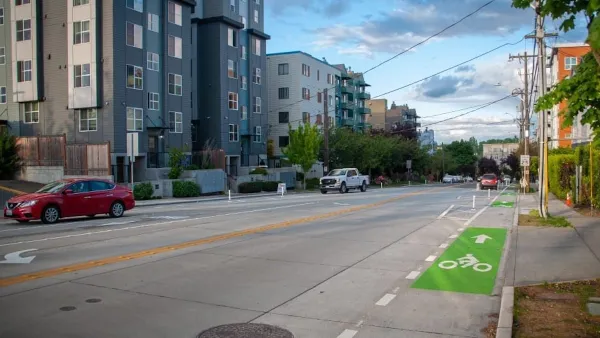
Seattle’s Bike Infrastructure Hamstrings Growth
Design standards that call for minimal road space allocated to bikes are limiting the growth of cycling in the city.
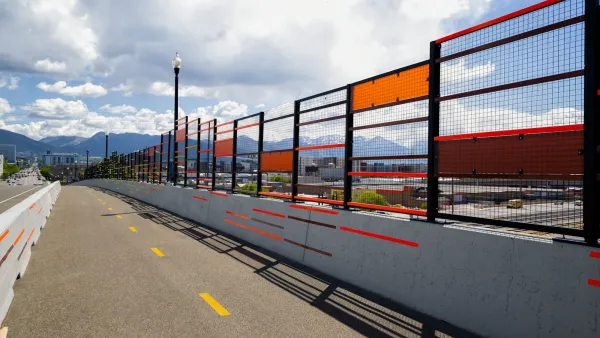
Salt Lake City opens protected bike path on viaduct trail
The 400 South Viaduct Trail features the state's longest continuous piece of public art.

Planetizen Federal Action Tracker
A weekly monitor of how Trump’s orders and actions are impacting planners and planning in America.

The state-sanctioned urbicide of Austin
People don’t kill cities. Freeways do.

US to reduce Colorado River water deliveries to Mexico
A new Colorado Treaty amendment reduces Mexico’s Colorado River water allocation by 250,000 acre feet.

Baltimore to break ground on $50 million Transit Priority Project
The project will bring faster bus trips, safer streets and better bike connections to Baltimore.

Airbnb launches $250 million 'last-dollar financing' housing accelerator, makes first investment in Austin
The company will put $6.4 million towards affordable housing development in Texas’ capital.

Guerilla urbanists are building DIY bus stop benches in Chicago
A before-and-after of one of the bus stops with a new bench. The new benches are not officially sanctioned or permitted, but the residents who placed them hope they will be the start of a network of DIY benches across the city.

FREE Course: Walkable City 1: Why Walkability?
After describing his path towards focusing on walkability as the essence of good planning, Jeff Speck marches through his five principal reasons for making more walkable places.
Reinventing Malls: Planning Alchemy—Turning Gray Fields Into Gold
The course focuses on the opportunities and imperatives that shape reinvention of mall sites.

Eagle County Government
Harvard University Graduate School of Design
Nashville Planning Department
The Architects Foundation
University of Cincinnati Online
The Pocatello Development Authority
The Urban Renewal Agency of the City of Pocatello
Journal of the American Planning Association