L.A. County’s Maggie Hathaway Golf Course getting up to $15 Million from U.S. Open Community Legacy Project to expand access to the sport in South L.A.


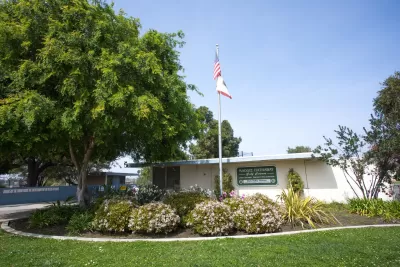
In June 2023, Los Angeles will host the U.S. Open Golf Championship for the first time in 75 years. To commemorate this important event, the Southern California Golf Association (SCGA) in collaboration with the U.S. Golf Association and the 2023 U.S. Open host site, the Los Angeles Country Club, launched the FORE Youth: 2023 U.S. Open Community Legacy Project as a commitment to expand golf access to underserved and underrepresented youth in Los Angeles. The campaign aims to raise funds to expand youth programming and to make a significant investment in the infrastructure needed to expand access to the sport.
The Los Angeles County Department of Parks and Recreation (DPR) has a strong commitment to diversify and grow the sport of golf, especially among communities of high need, youth of color, and women and girls. DPR’s commitment has been demonstrated through their work to launch their first competitive golf sports program for middle-school youth and their free Golf in the Park program. DPR has also had a long-standing partnership with SCGA to provide youth with golf programs at County golf courses, including the Maggie Hathaway Golf Course, located in South Los Angeles, which has been selected as the site for the Legacy Project.
In the racially segregated Los Angeles of the 1950s, the course’s namesake Maggie Mae Hathaway was a widely admired African American sports columnist for the Black-owned Los Angeles Sentinel newspaper. In this role, she became a tireless local advocate for desegregating the game of golf and expanding access to golf for the Black community at a time when opportunities did not exist for people of color to participate in the game. In 1997, Jack Thompson Golf Course, where she had served as the director in the 1970s, was renamed the Maggie Hathaway Golf Course in her honor before her passing in 2001 at the age of 90. First opened in 1962, Maggie Hathaway is a 9-hole, 1,008-yard, Par-3 golf course that occupies a 16-acre site and shares parking with the neighboring Jesse Owens Community Regional Park. The site includes a small, 1,200-square-foot office building and 450-square foot concession stand and a driving range.
The Legacy Project will include capital improvements that support Maggie Hathaway as a place to learn the game of golf. The purpose of the proposed work is to improve the golf learning experience. The Legacy Project is anticipated to include a new practice pitching area and putting green, reconfiguration and renovation of the driving range, restoration of existing buildings and outdoor spaces, and other related improvements. Fore Youth Golf Foundation will donate an initial amount of about $7 million to the County with the option to increase the donation amount to a total of $15 million during the term of the agreement for the Legacy Project.
Read the full story: South L.A. golf course at the center of ambitious community investment effort


Using Data and Partnerships to Build Sports Facilities
Data and partnerships have supported the recent development and improvement of sports facilities in underserved communities in Los Angeles County.
How LA County Parks are Fostering Equity
Los Angeles County's Department of Parks and Recreation actively engages the public through diverse methods to ensure parks and recreation programming align with community needs and priorities.
Addressing Tree Canopy Disparity in South Los Angeles
A new study highlights the complex challenge of addressing tree canopy disparities in South L.A., where historical environmental injustices, budget constraints, and competing community priorities hinder efforts to increase equitable tree coverage.

Planetizen Federal Action Tracker
A weekly monitor of how Trump’s orders and actions are impacting planners and planning in America.

California plans to bury El Niño’s downpour
If the state plays its cards right, it may be able to store a billion acre-feet of El Niño’s water in aquifers.

Desperate measures: Advocates weigh draining Lake Powell to fill Colorado River
Draining the reservoir could reduce evaporation losses by a couple hundred thousand acre-feet.

40 years after approval, Chicago breaks ground on new park
The park honors Jean Baptiste Point du Sable, the city’s first permanent non-native settler.

‘Hoodwinked:’ New Mexico bill aimed at microgrids paves way for data center development
In an interview with High Country News, Padilla said the legislation “ignited” New Mexico's economy.

California’s ‘unrecognizable’ water plan may go down the drain
After four years of regulatory processes, water agencies say the plan to overhaul how cities and farms take water from the Sacramento-San Joaquin Delta has changed dramatically.

FREE Course: Walkable City 1: Why Walkability?
After describing his path towards focusing on walkability as the essence of good planning, Jeff Speck marches through his five principal reasons for making more walkable places.
Reinventing Malls: Planning Alchemy—Turning Gray Fields Into Gold
The course focuses on the opportunities and imperatives that shape reinvention of mall sites.

City of Rosemead
Rutgers University, Edward J. Bloustein School of Planning and Public Policy
One Hundred Miles
Hunter College, City University of New York (CUNY)
The Architects Foundation
University of Cincinnati Online
City of Cambridge
Montrose County
The Pocatello Development Authority