After a pandemic hiatus, Smart Growth America has resumed creating an annual list of cities that are making the strongest commitments to improving street safety and making roads accessible and comfortable for everyone.



After a four-year hiatus, Smart Growth America has released a list of the best Complete Streets policies in the country, highlighting the places that have made the most progress in improving street safety and access for all road users.
Jared Brey describes the rankings in Governing, explaining that Smart Growth America defines ‘complete streets’ as “an approach to planning, designing, building, operating and maintaining streets that enables safe access for all people who need to use them, including pedestrians, bicyclists, motorists and transit riders of all ages and abilities.”
The community at the top, rating a perfect 100 points, is Howard County, Maryland, whose Complete Streets policy emphasizes equity and “is focused on creating a network of roads and paths that accommodate likely trips throughout the county by car, bike, foot and transit, while acknowledging that ‘every street does not necessarily need to provide separate accommodations for every mode.’”
Brey adds that “Cities with high-ranking complete streets policies adopted in the last few years include El Paso, Tucson and Joplin, Mo.” See the source article for a link to the full rankings and an explanation of the method for selecting top policies.
FULL STORY: Ranking the Best Policies for Complete Streets

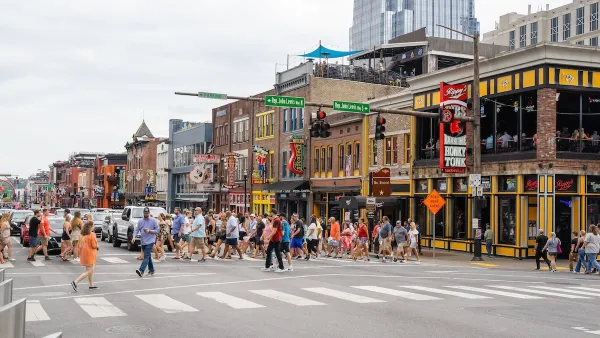
The Best Complete Streets Policies in the US, Ranked
San Antonio and Nashville top the list, with most large cities not making an appearance in the top 40.
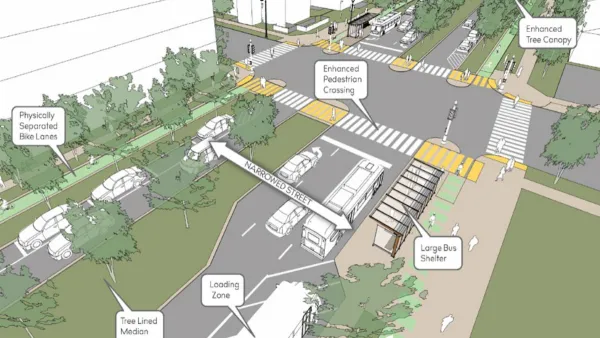
Trump Killed Funding for Milwaukee's Dreamy Multimodal Street. They're Determined to Make it Happen Anyway.
The administration rescinded a $36 million Reconnecting Communities grant aimed at redesigning a 2.6-mile segment of 6th Street.
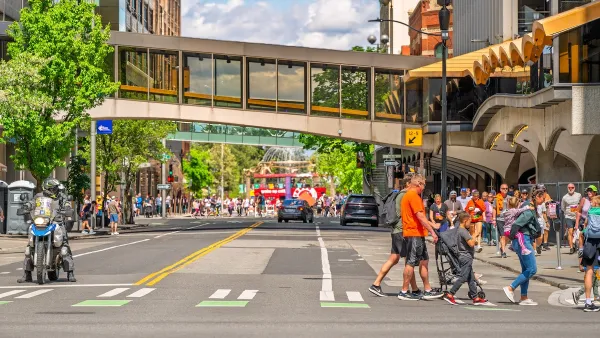
Spokane Updates its Complete Streets Policy
Mayor Lisa Brown signed a revised version of the city’s Complete Streets framework that more closely aligns with state law and the city’s municipal code.

Planetizen Federal Action Tracker
A weekly monitor of how Trump’s orders and actions are impacting planners and planning in America.

The state-sanctioned urbicide of Austin
People don’t kill cities. Freeways do.

US to reduce Colorado River water deliveries to Mexico
A new Colorado Treaty amendment reduces Mexico’s Colorado River water allocation by 250,000 acre feet.

5 New England states march closer to 800 megawatt wind energy project
Securing federal approval for the project may be complicated under the Trump administration, which has historically been hostile towards domestic wind power.

Baltimore to break ground on $50 million Transit Priority Project
The project will bring faster bus trips, safer streets and better bike connections to Baltimore.

Airbnb launches $250 million 'last-dollar financing' housing accelerator, makes first investment in Austin
The company will put $6.4 million towards affordable housing development in Texas’ capital.

FREE Course: Walkable City 1: Why Walkability?
After describing his path towards focusing on walkability as the essence of good planning, Jeff Speck marches through his five principal reasons for making more walkable places.
Reinventing Malls: Planning Alchemy—Turning Gray Fields Into Gold
The course focuses on the opportunities and imperatives that shape reinvention of mall sites.

Eagle County Government
Harvard University Graduate School of Design
Nashville Planning Department
The Architects Foundation
University of Cincinnati Online
The Pocatello Development Authority
The Urban Renewal Agency of the City of Pocatello
Journal of the American Planning Association