The visions of a car-free utopia that might have seemed like a potential silver lining in March and April have given away to a tragic reality.


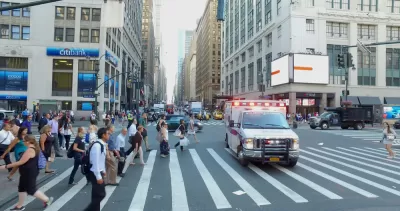
David Meyer reports that New York City has already this year surpassed its number of traffic fatalities from the previous year.
"The city has seen 222 people killed in car crashes as of Sept. 24, the Department of Transportation said — two more than the 220 people killed in all of last year." According to Meyer, that total hasn't even been updated with the latest tragedy.
Traffic safety advocates are using the grim milestone to call attention to the city's lack of effort on its Vision Zero program—a pledge to end traffic fatalities on the city's roads by 2024. "City Hall’s most recent budget — passed amid the city’s COVID-19 budget crisis — docked $18 million from bike lane and bus lane initiatives, which Harris said are key to safer streets," according to Meyer.
Americans have been driving less throughout the pandemic, but traffic fatalities haven't declined along with vehicles miles traveled, as reckless driving has been a much more common behavior on the emptier roads. There are also many first-time car buyers on the roads in new York City as riders stay away from public transit.
Read the full story: NYC traffic deaths for 2020 already more than last year’s toll


Cleveland Ready for Vision Zero
Cleveland is working to become the latest U.S. city to set a goal to eliminate traffic fatalities.
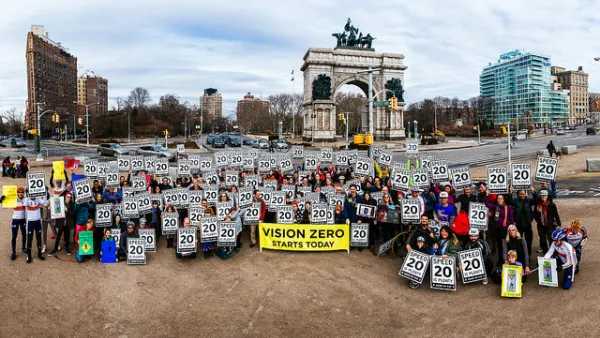
Traffic Fatalities Set Records as Pandemic-Era Road Carnage Shows No Signs of Stopping
An estimated 42,915 people died in automobile crashes in 2021, according to recent federal data. The increasing fatalities continue a trend that began with the outset of the pandemic.
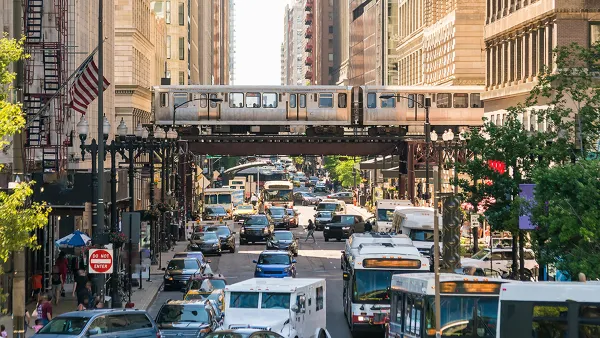
Planning for Congestion Relief
The third and final installment of Planetizen's examination of the role of the planning profession in both perpetuating and solving traffic congestion.

Planetizen Federal Action Tracker
A weekly monitor of how Trump’s orders and actions are impacting planners and planning in America.

California plans to bury El Niño’s downpour
If the state plays its cards right, it may be able to store a billion acre-feet of El Niño’s water in aquifers.

Chicago breaks ground on $3 billion megadevelopment
The new neighborhood, titled Foundry Park, will one day host 3,700 residences.

Satanic Place Names
From streams and lakes to valleys and canyons, I mapped more than 1,000 places named after the Devil.

California High-Speed Rail Authority CEO resigns after $600,000 scandal
Under Ian Choudri, the authority used taxpayer dollars to fund first class flights and trips to nightclubs.

Want to study the Missouri River? Soon, you may need unanimous approval from 10 states
Legislation would require 10 governors’ permission to study or build projects moving water outside the basin.

FREE Course: Walkable City 1: Why Walkability?
After describing his path towards focusing on walkability as the essence of good planning, Jeff Speck marches through his five principal reasons for making more walkable places.
Reinventing Malls: Planning Alchemy—Turning Gray Fields Into Gold
The course focuses on the opportunities and imperatives that shape reinvention of mall sites.

City of Rosemead
Rutgers University, Edward J. Bloustein School of Planning and Public Policy
One Hundred Miles
Hunter College, City University of New York (CUNY)
The Architects Foundation
University of Cincinnati Online
City of Cambridge
Montrose County
The Pocatello Development Authority